
Last updated October 15, 2026
 Whole-home duct cleaning
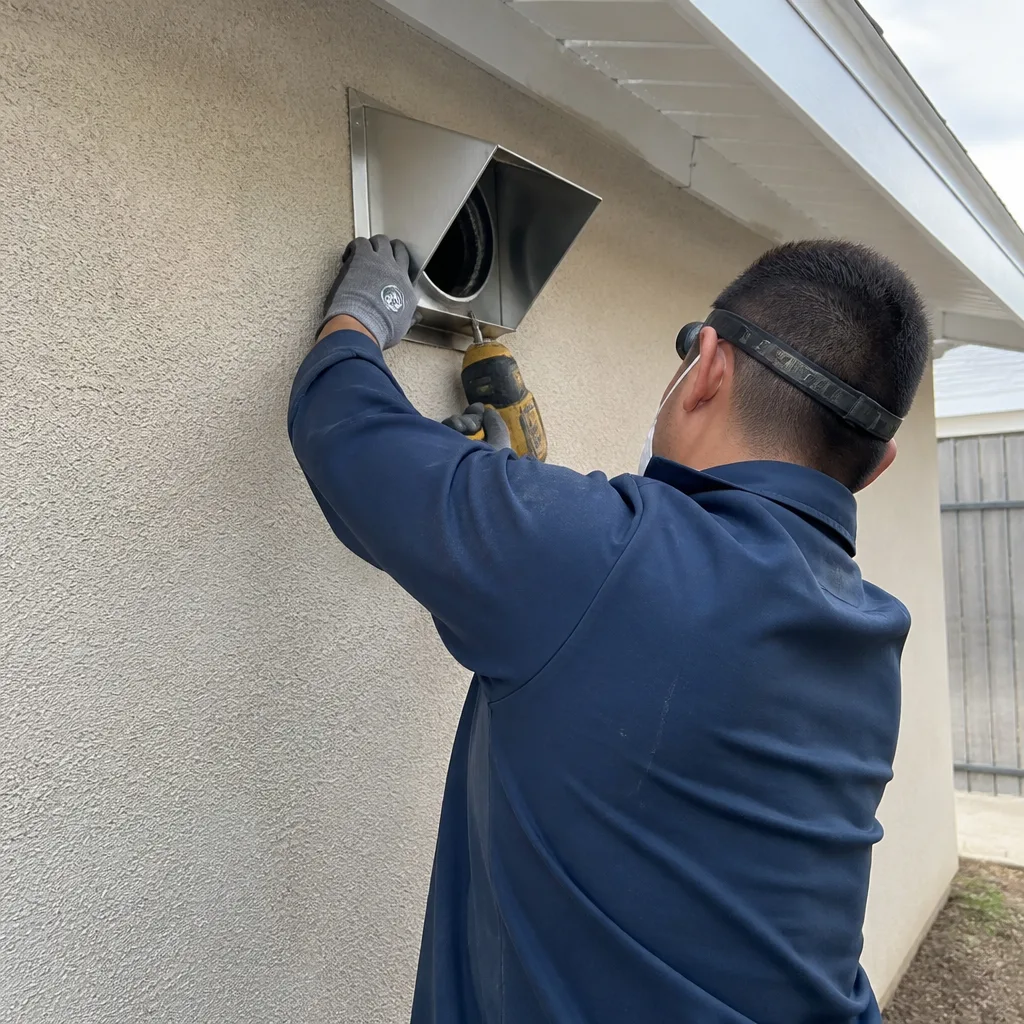
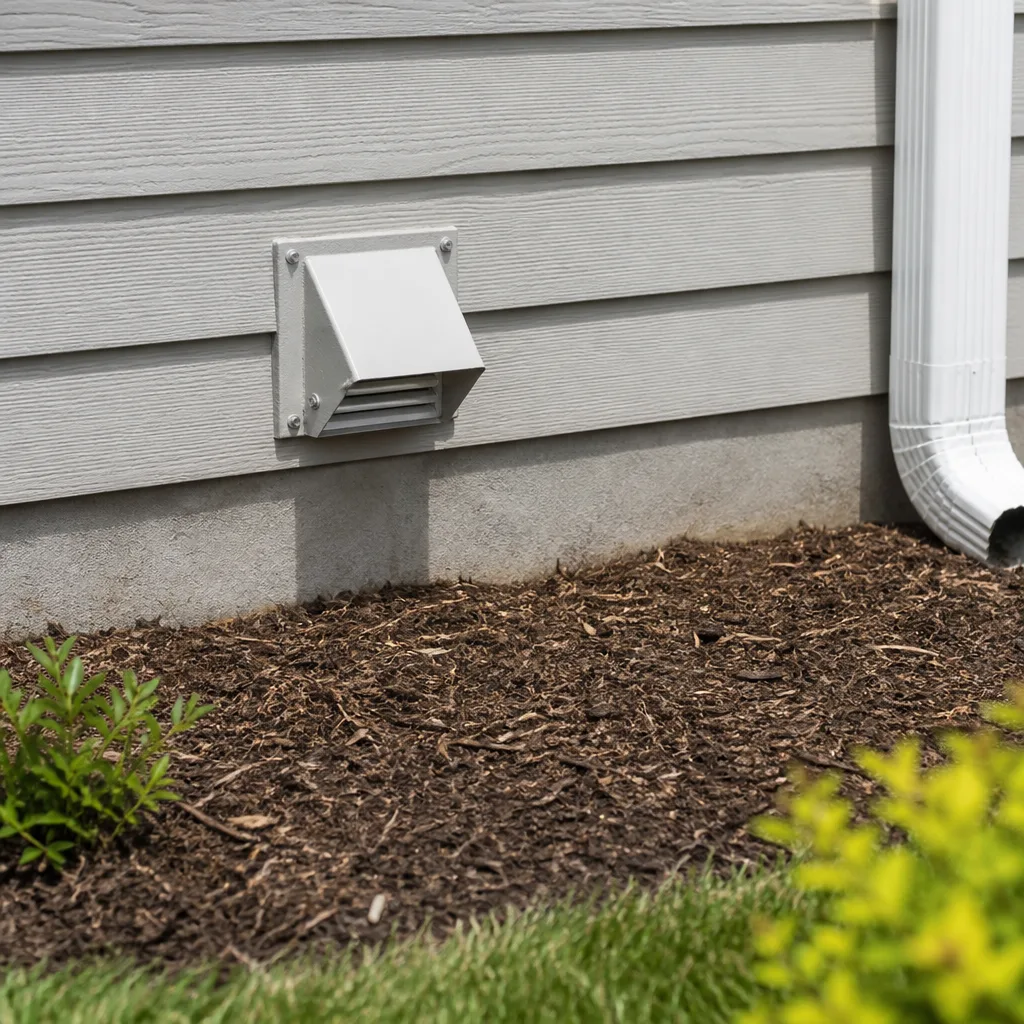 Dryer vent cleaning
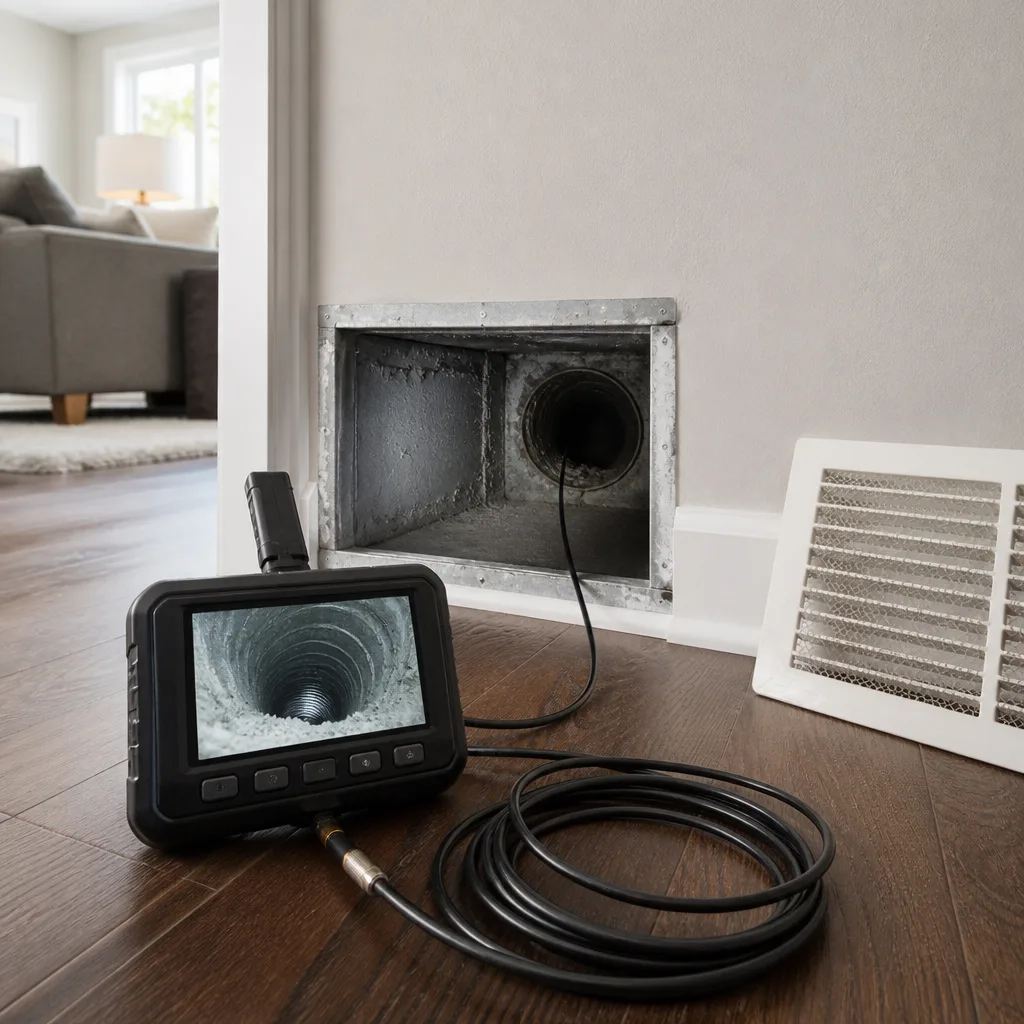 Camera inspection
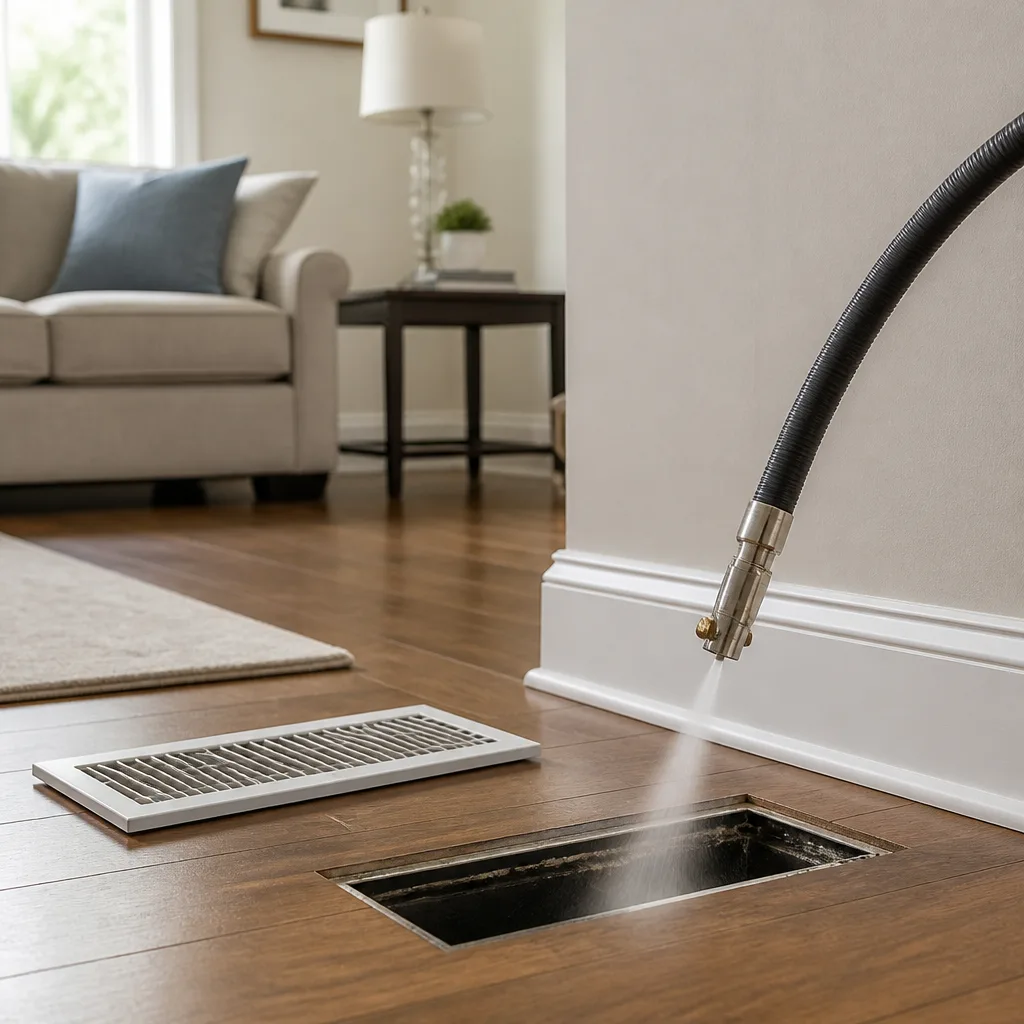 Sanitizing & deodorizing
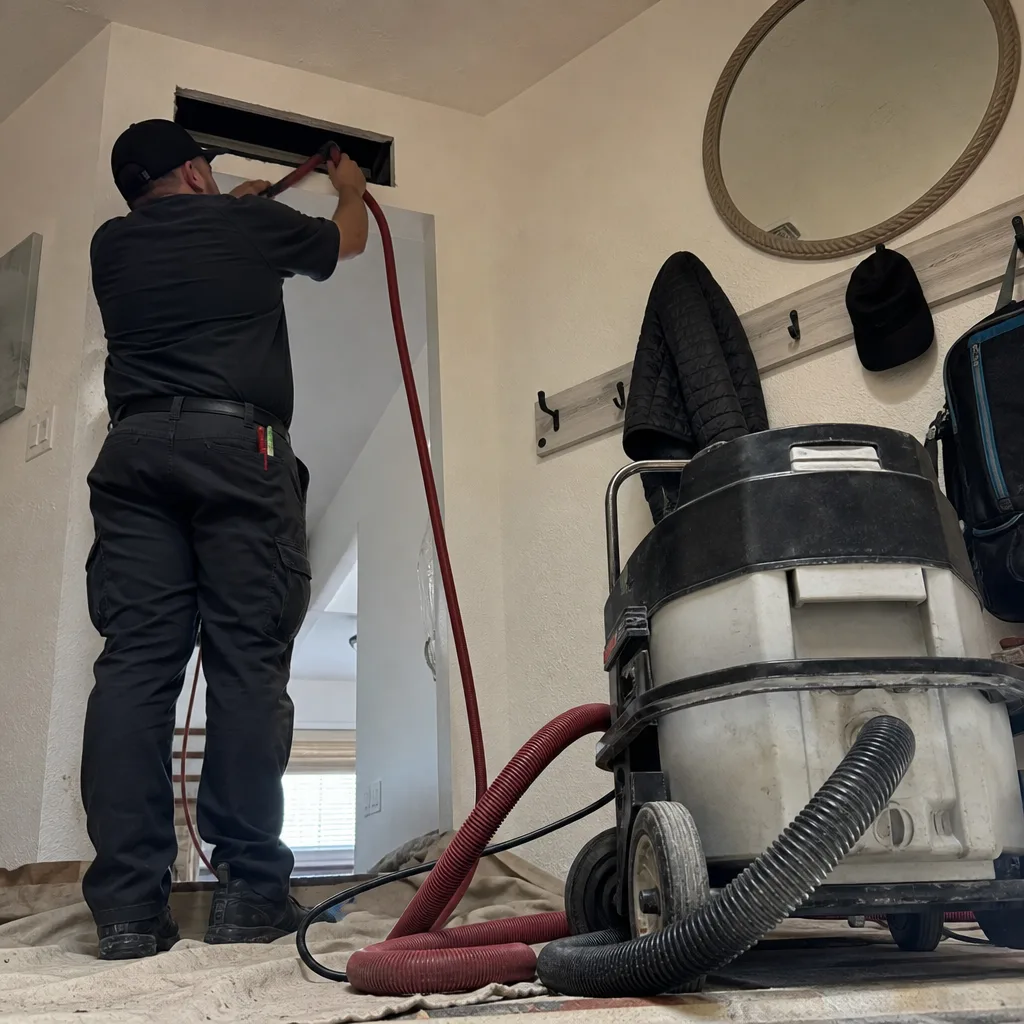
Whole-system duct and dryer vent check with before-and-after photos - you see exactly what came out of your vents
That "$99 whole-house special" is a bait ad - the real number appears once they are in your hallway, or the "clean" is a shop-vac at the register. We photograph the inside of your ducts before and after instead.
Air Duct Cleaning Warning Signs: A Ventura Homeowner’s Reference Guide
Visible dust at a register is the last warning sign, not the first. By the time you can see a gray film building up around a vent cover, the duct system has already been redistributing that material through your living space for weeks. What most Ventura homeowners call a “dust problem” is really a circulation problem, and the distinction matters more than most guides admit. This reference guide gives you a ranked, specific system for reading the warning signs your ducts are sending, distinguishing a cosmetic issue from one that affects air quality, energy bills, or system longevity. For a deeper dive, see The Complete Guide to Air Duct Cleaning in Ventura. We’ve seen thousands of duct systems in Ventura homes, and the pattern is consistent: the earlier you catch a warning sign, the cheaper and simpler the fix.
Quick Answer
The strongest early warning signs of air duct contamination in a Ventura home are a musty or stale odor that returns within an hour of cleaning, visible dust accumulating on surfaces within 48 hours of dusting, and rooms that stay warm or cold no matter how the thermostat is set. If you notice any two of these three signs together, a professional duct inspection is warranted. A single sign alone often points to a simpler issue like a clogged filter, but combined signals usually mean the duct system itself is involved.
Styles & brands we work with
Table of Contents
- The Tiered Warning System: How to Rank What You’re Seeing
- Ventura-Specific Warning Signs Most National Guides Miss
- How to Distinguish a Duct Problem from a Filter, Mechanical, or Building Envelope Problem
- What to Document Before You Call: Facts Beat Sales Pitches
- When an Immediate Call Is Warranted
- How Low-Bid Contractors Exploit Warning Signs to Upsell
- Common Mistakes to Avoid
- When to Call a Professional
The Tiered Warning System: How to Rank What You’re Seeing
Not every warning sign deserves the same response. A faint musty smell after a week of rain is different from a blast of dust when the furnace kicks on in November. We’ve developed a three-tier framework for Ventura homeowners that helps you sort signal from noise. Here it is, ranked from least urgent to most urgent.
Tier 1: Signs You Can Monitor Yourself
These signs are worth tracking but don’t require an immediate call. Monitor them for 30 days before deciding whether to schedule an inspection.
- Dust accumulation within 48 hours of cleaning. One room, occasional dust, single vent. If it’s consistent and you can narrow it to one vent run, note it and watch whether it spreads.
- Faint stale odor when the system first starts. A brief whiff that disappears within 60 seconds of startup is common and often means dust has settled in the supply registers during the off-season.
- Slightly louder airflow from one vent. A register that whistles or rushes more than the others can signal a damper out of position or a minor leak at a connection point, not necessarily a contamination issue.
- Filter changing color faster than expected. If your filter is darkening noticeably in under four weeks, your ducts are delivering more particulate than they should. Track it. If it happens two filter cycles in a row, move to Tier 2.
What ties these Tier 1 signs together is that they’re localized or intermittent. A single vent, a brief odor, a filter that needs a little more attention. You have time.
Tier 2: Signs That Warrant a Professional Inspection Within 30 Days
These signs are more persistent or more widespread. They suggest the duct system itself is holding and redistributing material, not just passing normal household dust through.
- The musty odor returns within an hour of cleaning. If you’ve wiped down surfaces, vacuumed, and changed the filter, and the smell still comes back from the vents, the source is inside the ductwork, not in the room.
- Dust accumulation on surfaces in multiple rooms within 48 hours of dusting. When the problem stops being localized, the distribution system is involved.
- Visible dust or debris blowing from a vent when the system starts. You can see puffs or small particles exit the register. This is direct evidence that the ducts are shedding material into your living space.
- Uneven room temperatures persist after checking dampers and registers. If some rooms in your Ventura home are consistently 5 degrees or more off from the thermostat setting, and you’ve confirmed the registers are open and dampers are set correctly, airflow is being lost or blocked inside the duct system.
- Filter darkening significantly in under three weeks. At this point, the volume of particulate moving through the system is high enough to justify a professional look at what’s inside the ducts.
Tier 2 is where most Ventura homes that need air duct cleaning in Ventura first show up on our schedule. The signs are clear, but they’re not yet causing damage or driving energy bills through the roof.
Tier 3: Signs That Warrant an Immediate Call
These signs mean the system is already failing in a way that affects health, safety, or the integrity of the HVAC equipment. Do not wait 30 days.
- Mold visible on or around register covers, inside accessible ductwork, or on the air handler. Visible mold on any part of the air distribution system is a health concern and an immediate call. Don’t wipe it. Leave it for professional assessment.
- A persistent burning smell when the system runs. This can indicate a failing blower motor, scorched wiring, or accumulated debris on a heating element. Turn the system off and call an HVAC or duct professional.
- Sudden, unexplained increase in allergy symptoms or respiratory irritation in household members. If symptoms spike only when the system runs and improve when it’s off or when you’re away from home, the air distribution system is a likely vector.
- Evidence of pest activity in or around the ductwork. Droppings, nesting material, or scratching sounds from inside the ducts or vents. Rodent or insect intrusion into the duct system is a contamination event that needs professional remediation.
- Visible damage to duct runs in the attic or crawlspace. Collapsed flex duct, separated connections, or crushed sections you can see when you access those spaces. Damaged ducts pull attic or crawlspace air directly into your living space.
The common thread across Tier 3: the duct system is no longer just dirty. It’s compromised. These conditions don’t improve on their own and many get worse quickly.
Ventura-Specific Warning Signs Most National Guides Miss
Most air duct cleaning warning sign articles are written for a national audience, which means they miss the conditions specific to coastal Southern California homes. Ventura has a unique climate profile that produces warning signs you won’t find in a generic guide. Here are the ones we see most often in our local work.
Post-Santa Ana Particulate Infiltration
Santa Ana winds push fine, dry particulate through every gap in a home’s envelope. In Ventura, the problem is amplified by two factors: our homes are often designed for passive ventilation, and the dry air carries dust that’s finer than what you’d see in humid climates. That fine particulate doesn’t just settle on surfaces. It gets pulled into the return air stream and deposited inside the duct system.
What to watch for: in the two to three weeks following a strong Santa Ana event, pay attention to whether your filter darkens faster than normal. If it does, that fine particulate has found its way into the system and is now being recirculated. A single Santa Ana season won’t ruin a duct system, but repeated exposure without cleaning builds a layer of fine, talc-like dust inside the ducts that sticks to fan blades, dampers, and coil surfaces.
Musty Odor After Marine Layer Mornings
Ventura’s marine layer brings morning humidity, especially from late spring through early fall. That humidity doesn’t always dry out by midday in homes with shaded side yards or older insulation. When humid air sits inside a duct system that already contains a fine layer of dust, you get a distinctive musty odor, not from mold necessarily, but from humidified dust. It’s a warning sign that the ducts are holding material that’s absorbing moisture.
The key diagnostic: does the musty smell appear on marine layer mornings and fade by afternoon? If it fades when the air dries out, you’re smelling humidified dust, not active mold. That’s a cleaning problem, not a remediation problem. But if the odor persists through warm afternoons and into evening, you’ve moved into mold territory and need a professional assessment.
Uneven Cooling in Homes with Older Flex Duct
A significant portion of Ventura’s housing stock was built in the 1960s through the 1980s, and many of those homes have had flex duct installed or retrofitted over the years. Flex duct is the flexible, insulated plastic-and-wire ductwork commonly used in attics and crawlspaces. It’s efficient and quiet when installed correctly, but it has a specific failure mode: the inner liner can separate from the outer insulation, or the duct can sag, kink, or pull loose from its connections.
The warning sign is specific: rooms on the far end of a duct run stay warm in summer even when the system runs constantly, while rooms close to the air handler are comfortable. In our experience working in Ventura neighborhoods like Midtown, College Area, and Eastside, older flex duct is one of the most common culprits behind uneven cooling complaints. If you have a single-story home with a long duct run to the back bedrooms and those rooms stay 8 to 10 degrees warmer than the front of the house, the duct system itself is likely losing conditioned air.
Salt Air and Duct Corrosion
Homes within a mile or two of the Ventura coastline deal with salt-laden air. Salt accelerates corrosion on metal components, including duct connections, damper hardware, and the fasteners holding duct sections together. The warning sign is often subtle: a rust-colored dust or streaking around metal register covers, or a slight rattle from a register that used to be quiet. Salt corrosion doesn’t usually destroy a duct system outright, but it weakens connections and creates small gaps that leak conditioned air and pull in whatever is around the duct, usually attic dust or crawlspace air.
How to Distinguish a Duct Problem from a Filter, Mechanical, or Building Envelope Problem
Here’s the part most guides skip entirely: not every symptom that looks like a duct problem is a duct problem. Misdiagnosing wastes money and leaves the real issue untouched. Before you call anyone, here’s how to narrow down which system is actually misbehaving.
Step 1: Rule Out the Filter
The filter is the cheapest, simplest, most commonly overlooked component in the entire HVAC chain. A clogged or undersized filter starves the system for air and causes a cascade of symptoms that mimic duct contamination: poor airflow, uneven temperatures, musty smells, and dust recirculation.
- Find your filter. It’s usually in the return air grille, a slot in the air handler cabinet, or a filter housing near the furnace.
- Remove it and hold it up to a light. If you cannot see light through it clearly, it’s past due for replacement.
- Replace it with a new filter of the same size and rated MERV value. Do not “upgrade” to a much higher MERV filter without confirming your system can handle the added airflow resistance, especially with older equipment.
- Run the system for 48 hours and reassess the symptoms.
If symptoms improve noticeably, your ducts may need a cleaning but the filter was the dominant problem. If symptoms persist or return quickly, move to Step 2.
Step 2: Rule Out Mechanical Issues
Mechanical problems, meaning problems with the blower motor, the condenser, the evaporator coil, or the duct connections themselves, can masquerade as contamination issues.
Blower motor failure signals: weak airflow from all registers simultaneously, a humming or rattling sound from the air handler, or intermittent airflow that stops and starts. A failing blower doesn’t need duct cleaning. It needs a motor replacement or repair.
Coil problems: an evaporator coil caked with dust or mold produces musty odors and reduced cooling. The coil sits inside the air handler, not in the ducts, but dirty ducts contribute to dirty coils. If the coil is the source of the odor, cleaning the ducts alone won’t fix it. The coil needs to be cleaned as part of the service.
Duct disconnection or damage: a duct run that has come loose from its register boot or been crushed in the attic or crawlspace will cause a specific pattern: one room with dramatically reduced airflow while the rest of the house is fine. This is a repair issue, not a cleaning issue. A competent duct cleaning technician will find it during the inspection and tell you it needs repair before or instead of cleaning.
If you suspect a mechanical issue, you need an HVAC or duct professional, not a cleaning-only call. In our experience, homeowners who call a cleaning company and get a technician who never looks at the mechanical side of the system end up paying for a cleaning that doesn’t fix the underlying problem.
Step 3: Rule Out the Building Envelope
In Ventura, some “duct problems” are actually building envelope problems. A home with leaky windows, unsealed wall penetrations, or an attic that’s not properly insulated will pull outside air through the living space, carrying dust and humidity with it. The symptoms look like duct contamination because dust appears on surfaces and odors linger, but cleaning the ducts won’t stop the infiltration.
How to test it: choose a time when the HVAC system is off. Place a tissue or a thin strip of paper near a window frame or exterior door. If it moves when there’s no system airflow, your home has an envelope leak. The dust and odors are coming through the structure, not through the ducts. Fix the envelope first. A duct cleaning can still be worthwhile if the system has accumulated years of dust, but it won’t solve the envelope problem.
The point of this three-step process: know what you’re dealing with before you spend money. A reputable Linden Air Duct Ventura home inspection always starts with these distinctions, because treating the wrong problem is worse than treating none at all.
What to Document Before You Call: Facts Beat Sales Pitches
The duct cleaning industry has a reputation problem, and much of it comes from how diagnoses are made. A technician arrives, looks at your system for 15 minutes, and hands you a quote based on what he says he sees. If you haven’t done your own homework, you’re betting that the technician is honest. Here’s how to take the bet off the table.
Before you schedule a service call, document the following. This will make your diagnosis conversation factual and your comparison shopping meaningful.
- Photograph every register and return grille. Take close-up photos that show dust accumulation, discoloration, or staining. Date the photos. These serve as your baseline. If a technician tells you the contamination is severe, you have a visual record to compare against.
- Record the dates you notice specific symptoms. “Musty smell on morning of June 3rd, faded by 11am. Reappeared June 4th.” A simple note in your phone is enough. Patterns are diagnostic. One-off events are not.
- Track filter changes. Write the date you installed each filter and the date you noticed significant darkening. If a filter installed on July 1st is dark by July 20th, that’s measurable data about particulate load.
- Note which rooms are affected and which are not. Draw a simple map. Rooms that stay warm, rooms that smell, rooms that collect dust. This spatial information tells a technician more than any single symptom.
- Check the date of your last duct cleaning or HVAC service. If you’ve never had the ducts cleaned in a 20-year-old home, that’s relevant. If you had them cleaned 18 months ago and the symptoms are back, that’s also relevant, and it changes the conversation.
- If you can safely access your attic or crawlspace, photograph the visible duct runs. Look for sagging, kinking, separated connections, or dust accumulation on the outside of the ducts. Do not walk on ceiling joists if you’re not comfortable doing so, and do not enter a crawlspace without a mask and a flashlight. If you’re unsure, leave this step to the professional.
When you have this documentation, you can have a very different conversation with a technician. Instead of “my house seems dusty,” you can say “the filter is darkening every three weeks, two back bedrooms are 8 degrees warm in summer, and I have dated photos of dust buildup at three registers.” That’s a factual starting point. A technician who gives you a vague or hand-wavy explanation in response is not doing real diagnosis.
When an Immediate Call Is Warranted
Some warning signs don’t allow for a 30-day observation window. Here are the scenarios where you should call a professional immediately, not tomorrow, not next week.
Visible Mold on Any Part of the Air Distribution System
Mold on register covers, inside visible ductwork, or on the air handler cabinet is a health concern. Mold spores move through the air distribution system and into your living space every time the system runs. In a coastal climate like Ventura’s, mold can establish quickly once the conditions are right. Don’t attempt to clean it yourself. You risk spreading spores and you won’t reach the source. A professional can assess whether the mold is surface-level or has penetrated the duct lining, and whether cleaning or replacement is the right response.
Persistent Burning Odor from the Vents
A burning smell that doesn’t clear within a few minutes of startup, or that returns every time the system runs, is a red flag. On a gas furnace system, it can signal dust accumulation on the heat exchanger, which is normal in small amounts and burns off quickly. But if the smell persists, it can indicate a failing blower motor, scorched wiring, or debris resting against hot components. Turn the system off at the thermostat and call a professional. Do not run it again until it’s been inspected.
Evidence of Pests in or Around the Ductwork
Rodent droppings near registers, nesting material visible in ducts, or scratching sounds coming from the vents when the system is off all mean animals have accessed the duct system. In Ventura, roof rats are a known issue in attic spaces, and they will nest in duct insulation and chew through flex duct in search of warmth and shelter. Pest intrusion into ducts is a contamination event that requires professional cleaning and often duct replacement for damaged sections. It’s also a safety issue: rodent droppings and urine inside the air distribution system are not something to handle as a DIY project.
How Low-Bid Contractors Exploit Warning Signs to Upsell
Every warning sign in this guide is legitimate. But here’s the part that makes homeowners cynical about the duct cleaning industry: the same warning signs are used by low-bid contractors to justify unnecessary upsells. Knowing how the game is played protects you from it.
What Low-Bid Contractors Do
A low-bid contractor quotes you a rate that looks too good to pass up. Often it’s a flat rate below market, or a per-vent rate that seems cheap until you multiply it. Once the technician arrives, he finds “additional issues” that weren’t in the original quote. The warning signs in this guide, dust on registers, musty odors, uneven temperatures, become the justification. The final invoice is two to three times the original quote.
The pattern is so common that it has a name in the industry: the bait-and-switch inspection. The initial quote is bait. The inspection is the switch, where the technician tells you that your system has “severe contamination” requiring a “deep cleaning,” “sanitizing treatment,” or “mold remediation.” Some of these services are legitimate when needed. Many are not needed, and the diagnosis is invented to inflate the invoice.
How to Evaluate Whether the Diagnosis Is Legitimate
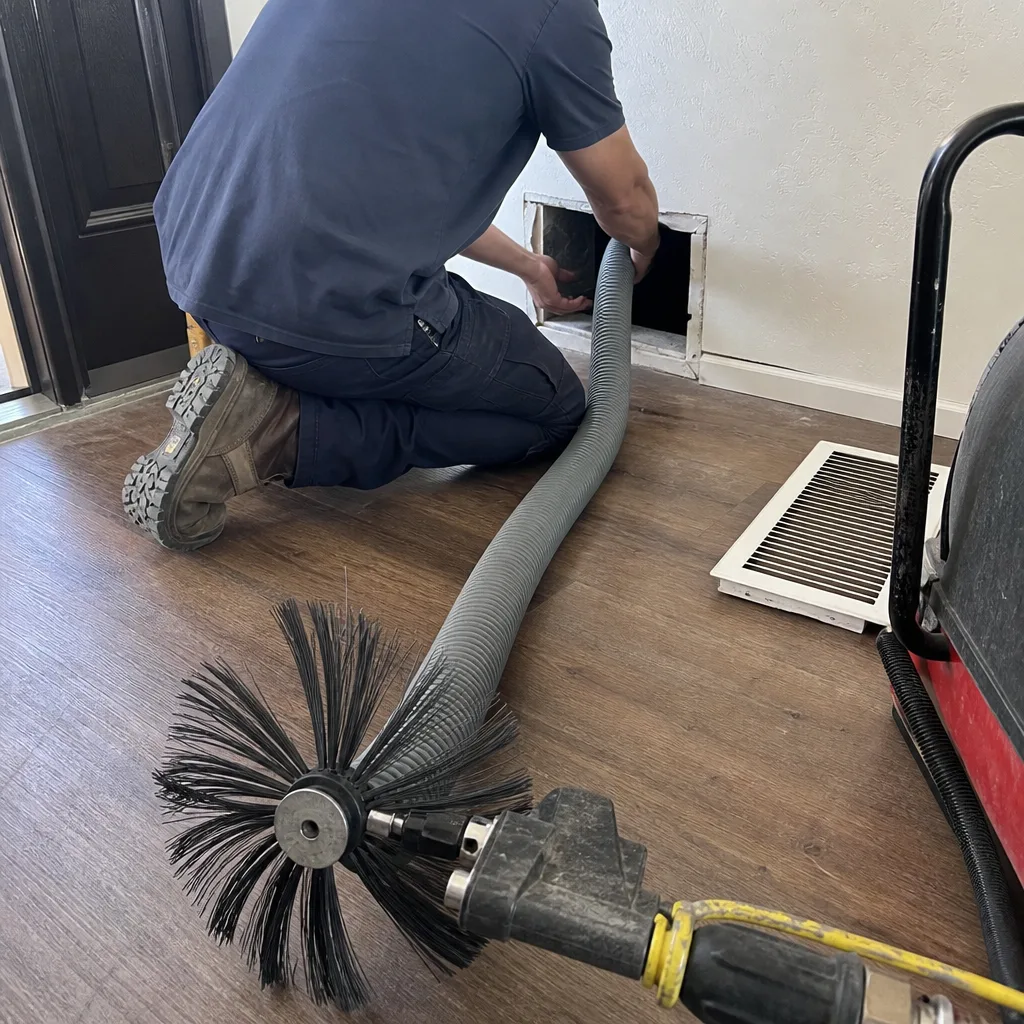
Ask to see the evidence. A reputable technician can show you what he’s seeing. With the equipment we use, including Rotobrush and Nikro inspection and cleaning systems, a technician can insert a camera into the duct run and show you live footage of the interior. You see the dust, the debris, the mold. If a technician claims severe contamination but cannot or will not show you the evidence, that’s a red flag.
Ask for the recommendation in writing, with photos. A written recommendation with supporting images is a fundamentally different thing from a verbal claim. Reputable companies include written documentation with every job we quote.
Ask what problem each recommended service solves. “Sanitizing treatment” sounds important, but what specific problem is it solving? If the answer is vague, it’s upsell language, not diagnosis. If the answer is specific, “You have visible mold on the evaporator coil, and the sanitizing treatment addresses that,” then the recommendation is based on a real finding.
Check the price structure. Per-vent pricing is the classic upsell mechanism. A low per-vent price multiplied by 20 or 30 vents creates a large final invoice. The honest pricing model is one flat rate for the whole system, agreed in writing before any work begins. That’s how Linden Air Duct Ventura structures every quote. The price you approve is the price you pay.
Ask about the guarantee. If a contractor recommends a significant additional service, ask what guarantee covers that service. A repair that fails without recourse is a bad bet. Air duct repair in Ventura done by us includes a written guarantee and a free second visit if the repair fails. That’s the standard you should expect from any contractor.
Common Mistakes to Avoid
- Waiting until the dust is visible at the register before acting. By the time you can see it, the system has been shedding material into your living space for weeks or months. The first warning signs, the ones discussed in Tier 1, are subtler. Track them and act before the problem becomes visible.
- Changing the filter once and assuming the problem is solved. A clogged filter is often a problem, but rarely the problem. If a fresh filter darkens within three weeks, the system is still pulling particulate from somewhere, most likely the ductwork itself.
- Accepting a diagnosis without seeing photographic evidence. Any reputable technician working on your duct system can show you camera footage of the interior. If the diagnosis is “severe contamination” and there’s no image to back it up, you’re being asked to take a sales claim on faith.
- Treating all musty odors as mold. In Ventura’s coastal climate, humidified dust produces a musty odor that fades when the air dries out. It’s a cleaning issue, not a remediation issue. Misdiagnosing it as mold leads to expensive treatments that don’t address the real problem.
- Skipping the building envelope check. In homes near the coastline, drafty windows and unsealed penetrations pull in outside air and dust, mimicking duct contamination. Clean the ducts without addressing the envelope and the symptoms return within months.
- Scheduling a cleaning before checking for mechanical issues. A failing blower motor or a disconnected duct run can’t be fixed by cleaning. If airflow is weak from every register simultaneously, the problem is likely mechanical, not contamination. Diagnose before you clean.
- Choosing a contractor on price alone. The low-bid model in duct cleaning is built on the upsell. A contractor who quotes you a rate that’s significantly below market is planning to make it up during the inspection. The honest pricing model is one flat rate for the system, in writing, before work begins. That’s the number to compare.
When to Call a Professional
You should call a professional when you’ve documented persistent Tier 2 signs for 30 days or touched any Tier 3 sign at all. More specifically: visible mold anywhere on the air distribution system, a persistent burning odor from the vents, evidence of pest intrusion, or rooms that stay consistently 5 degrees or more off the thermostat setting after you’ve confirmed filters and registers are clear. If you’ve tracked filter darkening under three weeks for two consecutive filter cycles, that’s also a clear signal. In our experience, homeowners who call at the Tier 2 stage get a cleaning and move on. Those who wait until Tier 3 often need repairs alongside the cleaning, and sometimes duct section replacement. Linden Air Duct Ventura offers free estimates in Ventura, and we’ll walk you through exactly what we find before any work is quoted. Call (559) 315-0418 to schedule.
See the difference
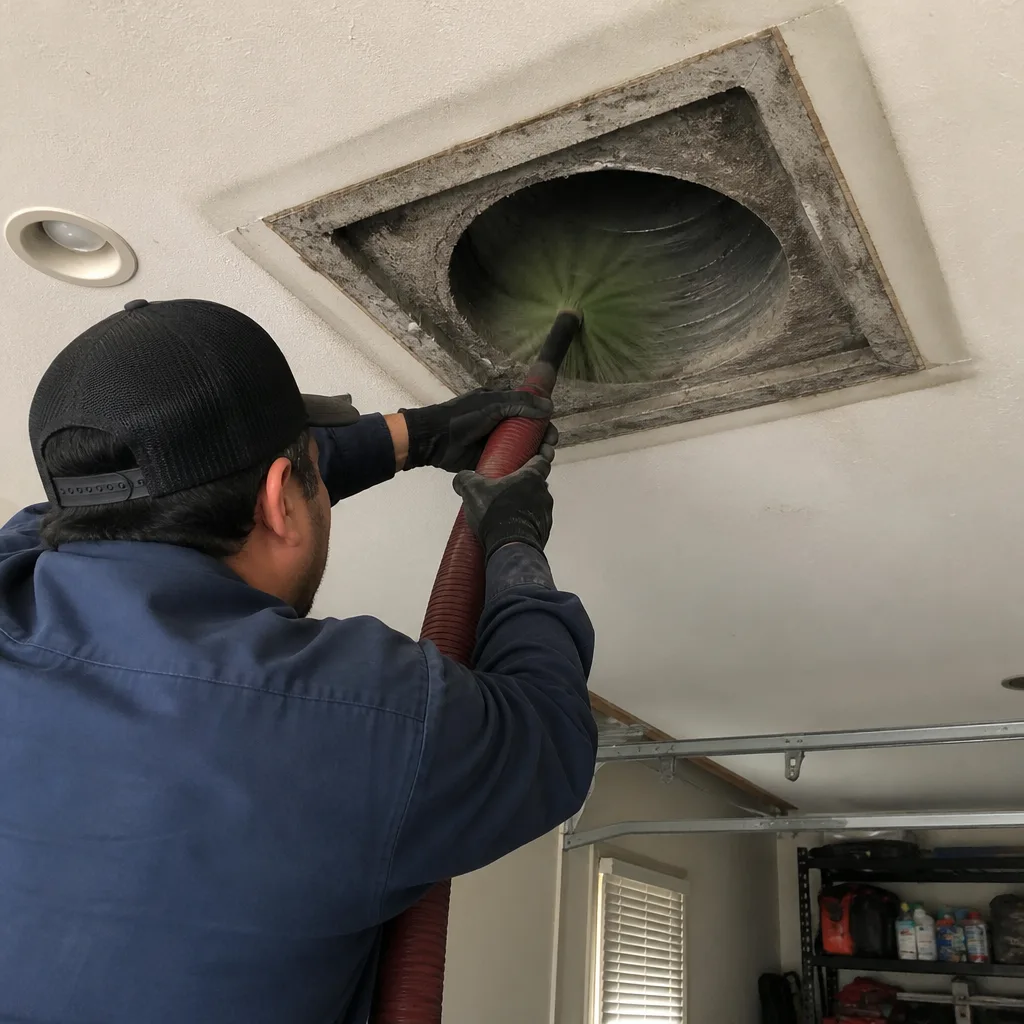 Before
 After
After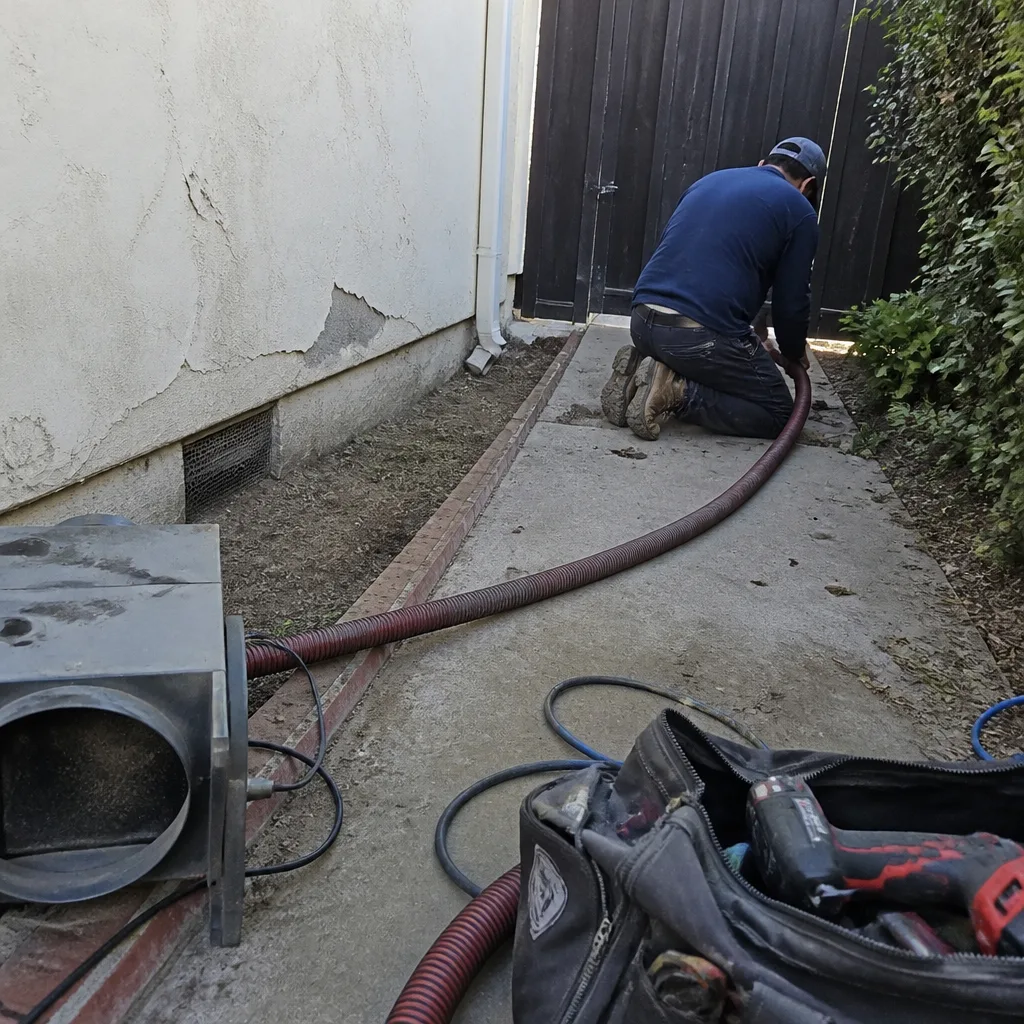 Before
 After
After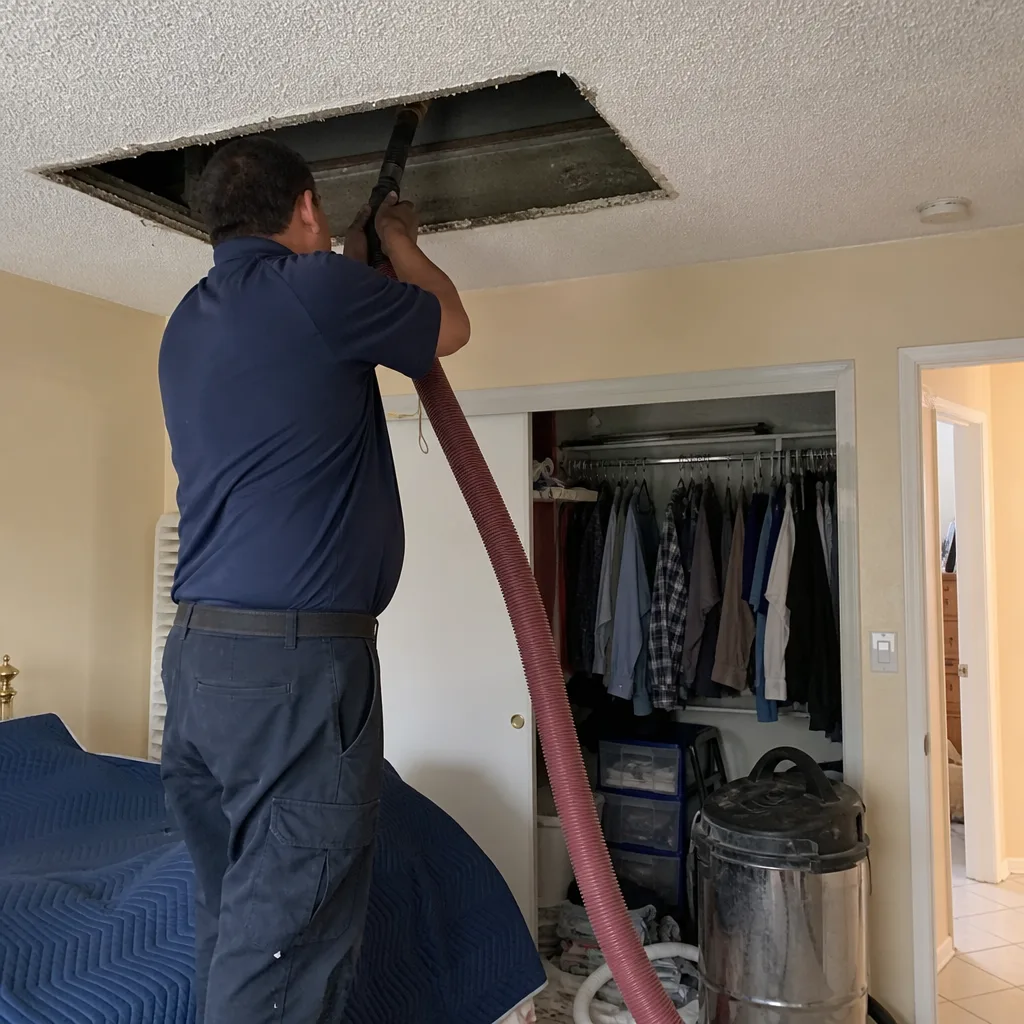 Before
 After
AfterFrequently Asked Questions
Whole-system air duct cleaning in Ventura typically ranges from about $350 to $650 for an average 3-bedroom, 2-bath home, with larger homes or systems with significant contamination running higher. The final price depends on the size of the home, the number of returns and registers, accessibility of the ductwork in the attic or crawlspace, and the level of contamination. At Linden Air Duct Ventura, the price is put in writing before any work begins, so there are no surprise invoices at the end. Explore more guides & resources on our blog. For an exact quote on your home, call (559) 315-0418, estimates are free.
Every 5 to 7 years is the standard interval for most Ventura homes, though homes near the coastline or in high-wind areas may need cleaning every 3 to 4 years. The specific answer depends on three factors: how much dust your home generates (pets, foot traffic, renovation work), how well your home’s envelope seals against outside air, and whether anyone in the household has allergies or respiratory conditions that make cleaner ducts more important. If you’ve never had your ducts cleaned and your home is over 15 years old, you’re likely due.
Low quotes in the duct cleaning industry are almost always subsidized by upsells on the back end. A contractor quotes a low flat rate or a low per-vent rate, then the technician arrives and “finds” additional issues during the inspection that inflate the final invoice by two to three times. The honest pricing model is one flat rate for the entire system, quoted in writing before work begins, covering the cleaning itself with no additional fees. When you compare prices, compare the total system price, not the initial quote.
Ask for before-and-after photos. A reputable duct cleaning company will insert a camera into the duct runs before cleaning and again after, and show you both sets of images. At Linden Air Duct Ventura, we document every job with inspection footage from our Rotobrush and Nikro equipment, and we walk you through what we found and what we cleaned. If a contractor cannot or will not show you photographic evidence of the work, that’s a signal to look elsewhere. Call (559) 315-0418 and we’ll walk you through what a documented job looks like.
No. In Ventura’s climate, a musty smell that appears on marine layer mornings and fades as the air dries out is usually humidified dust, not mold. Dust inside the ducts absorbs moisture from humid air, and that damp dust produces a musty odor. It’s a cleaning problem. A musty smell that persists through warm afternoons and into evening, or one that comes with visible staining around the registers, is more concerning and may indicate mold. The only way to know is a professional inspection with a camera.
Yes, dirty ducts can increase energy costs, though the mechanism is airflow restriction rather than added heating or cooling load. When ducts are lined with dust and debris, the air handler has to work harder to push conditioned air through the system. That means longer run times and higher electricity consumption. In extreme cases with significant buildup on the evaporator coil, cooling efficiency drops measurably. A clean duct system runs at the efficiency the equipment was designed for. If your bills have been creeping up and you’ve ruled out other causes, the ducts are worth a professional look.
The Bottom Line
The warning signs your Ventura home’s duct system sends are ranked, not random. Tier 1 signs, localized dust, intermittent odors, a single underperforming vent, are worth 30 days of monitoring. Tier 2 signs, persistent musty odors, multi-room dust accumulation, filter darkening in under three weeks, warrant a professional inspection that month. Tier 3 signs, visible mold, burning odors, pest evidence, a clearly disconnected duct run, warrant an immediate call and usually involve repair, not just cleaning. Document what you see before you call. Ask for photographic evidence of any diagnosis. And choose a company that puts the price in writing before any work begins. That’s the standard we hold ourselves to at Linden Air Duct Ventura, and it’s the standard you should hold every contractor to. Call (559) 315-0418 for a free estimate.
Written by Marcus Veale, Owner at Linden Air Duct Ventura, serving Ventura since 2004.