
Last updated October 15, 2026
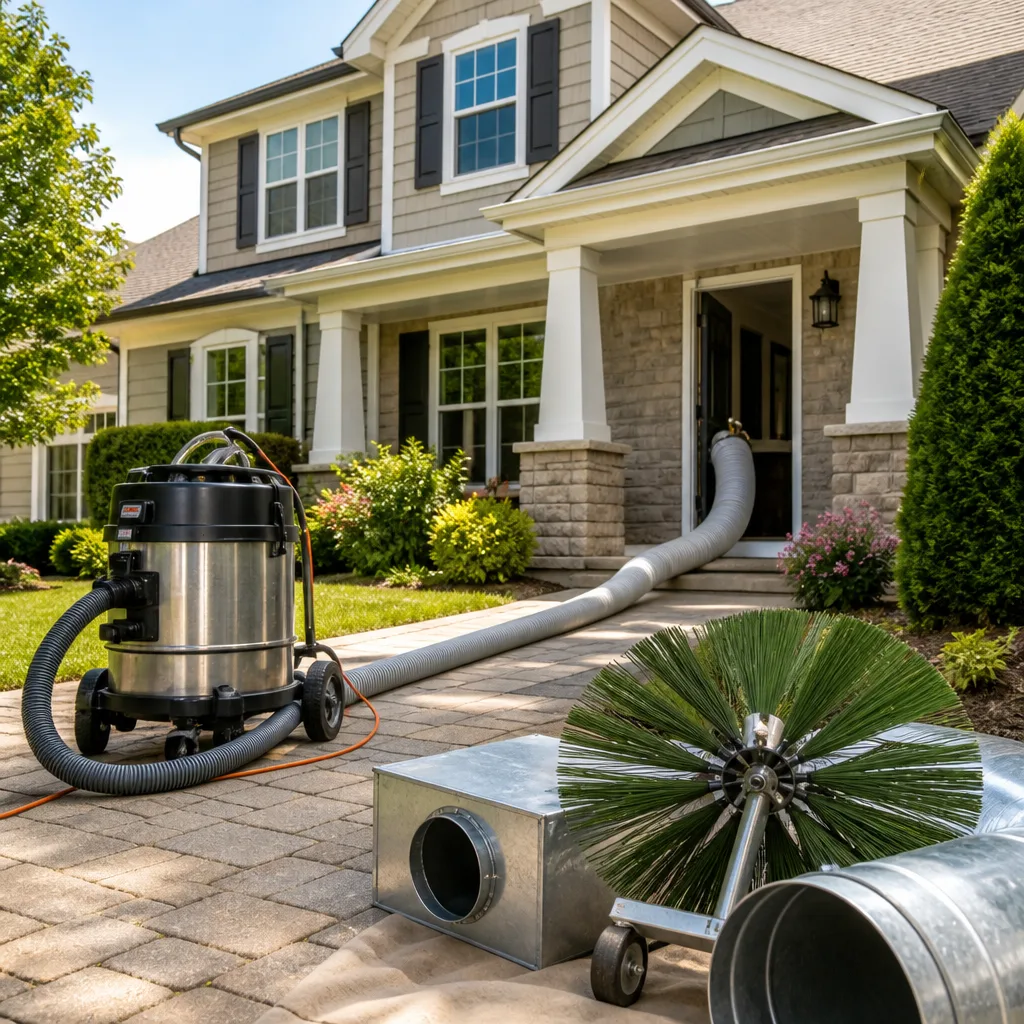 Whole-home duct cleaning
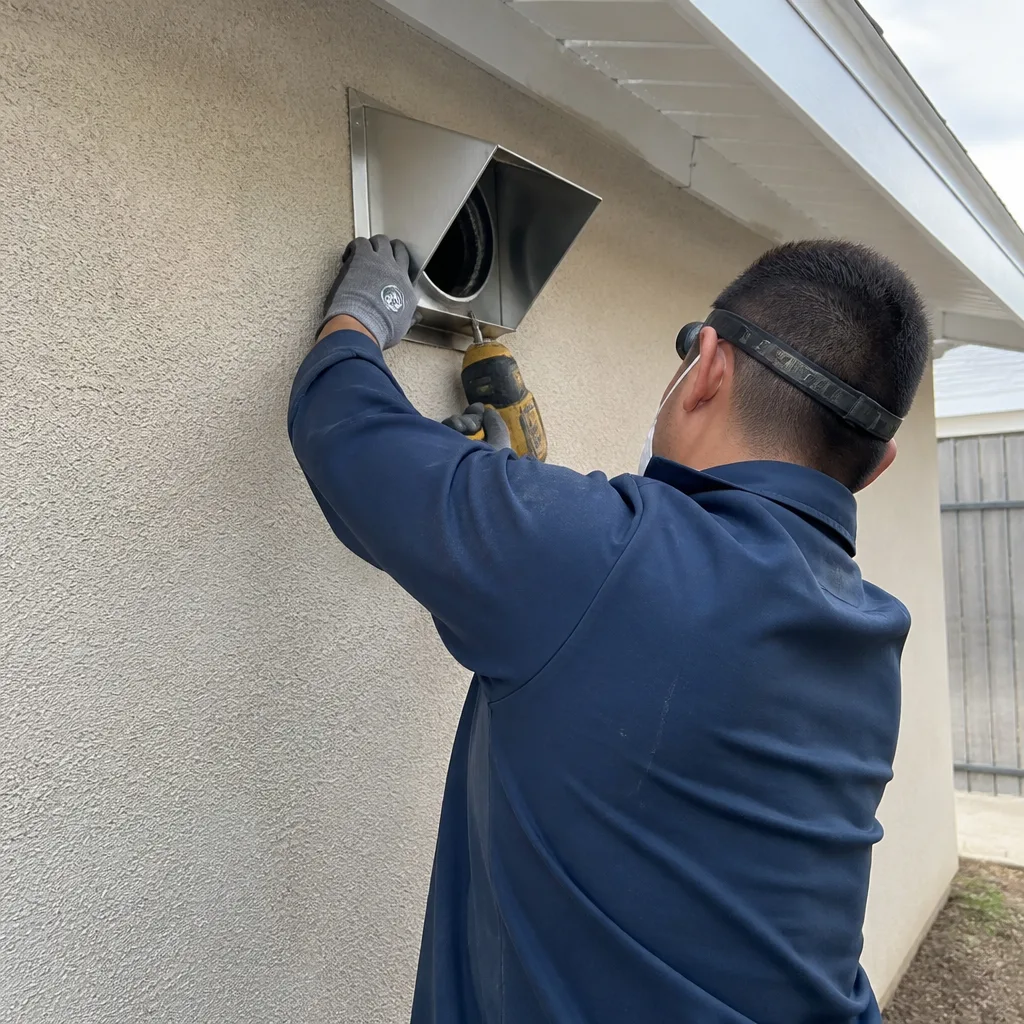
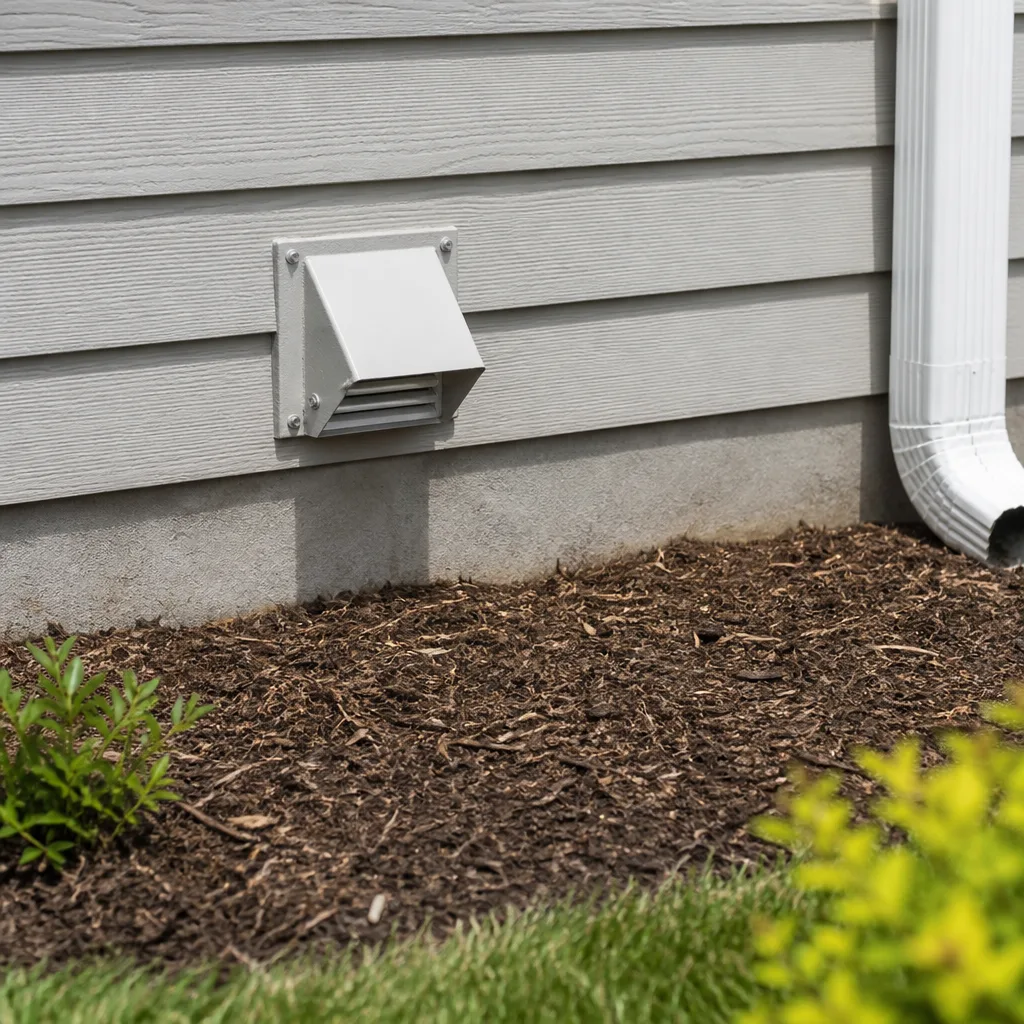 Dryer vent cleaning
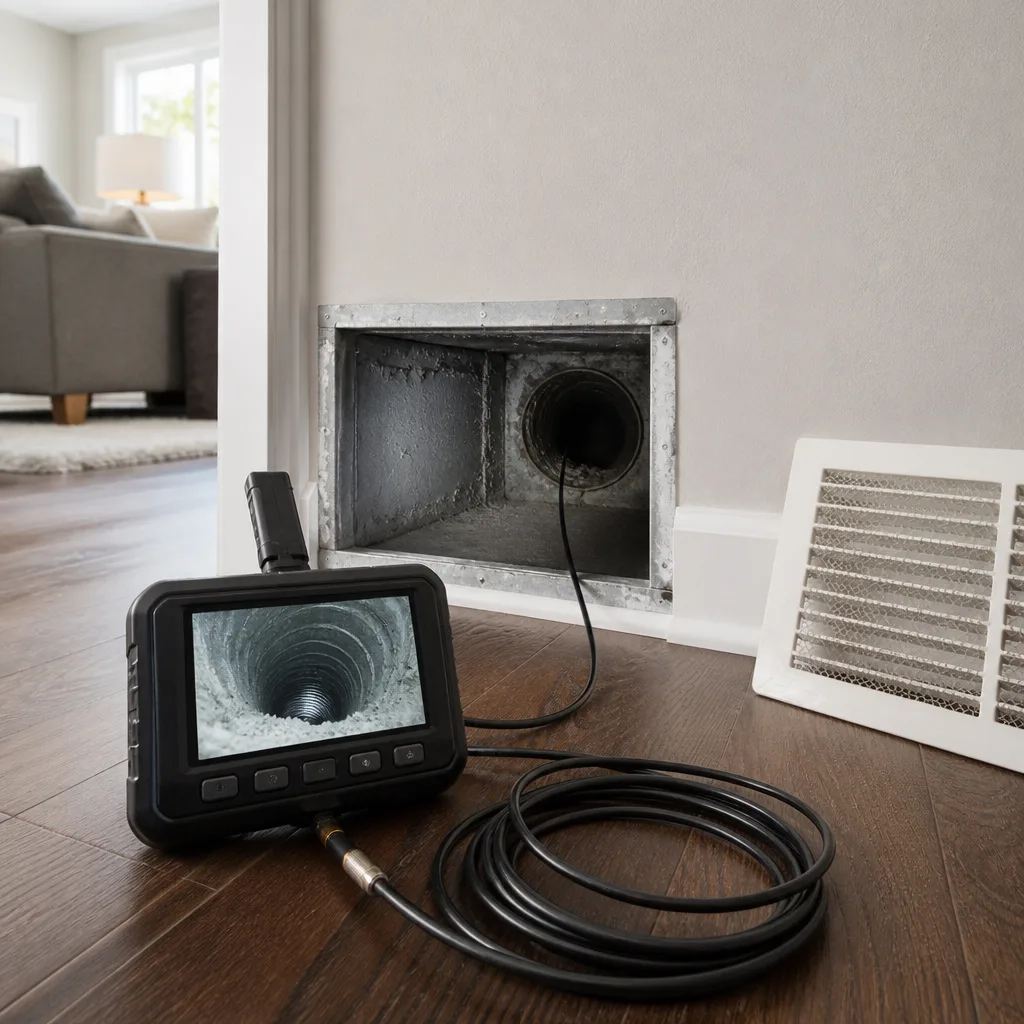 Camera inspection
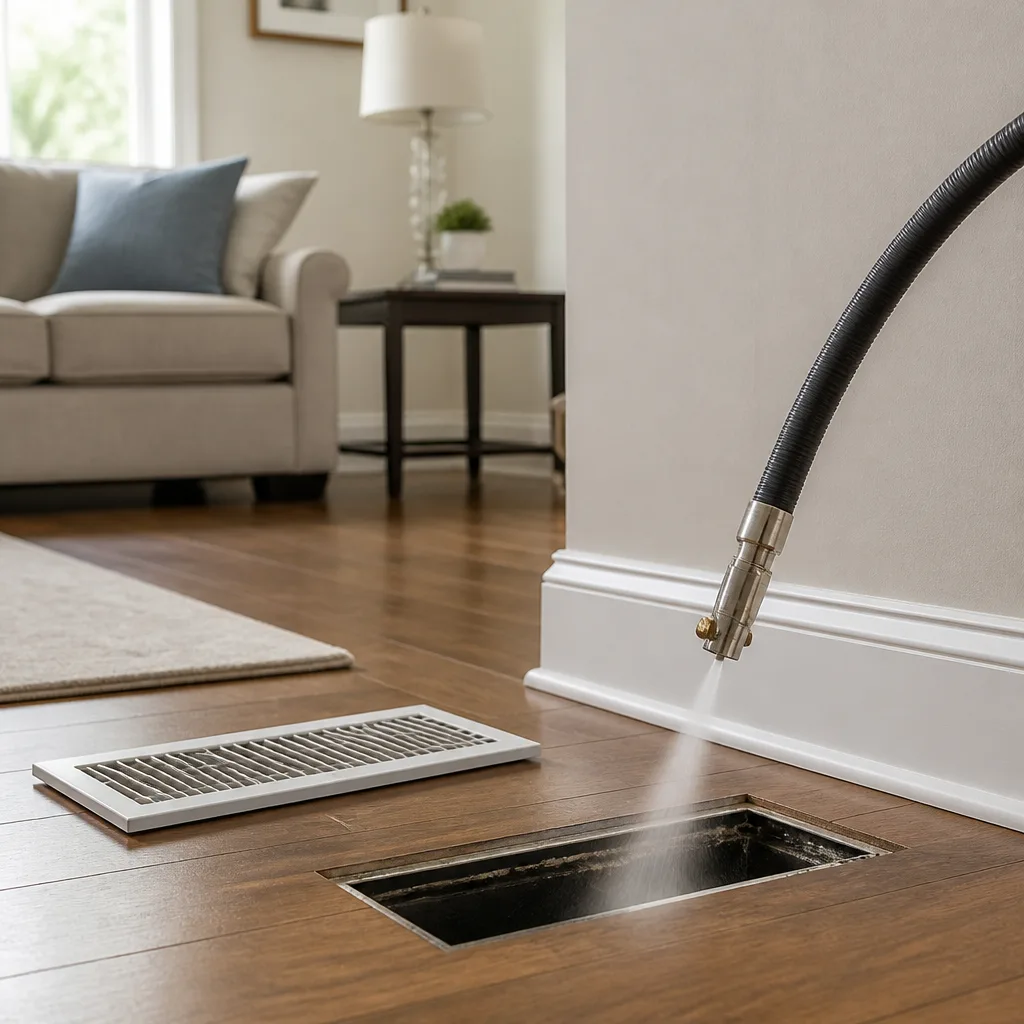 Sanitizing & deodorizing
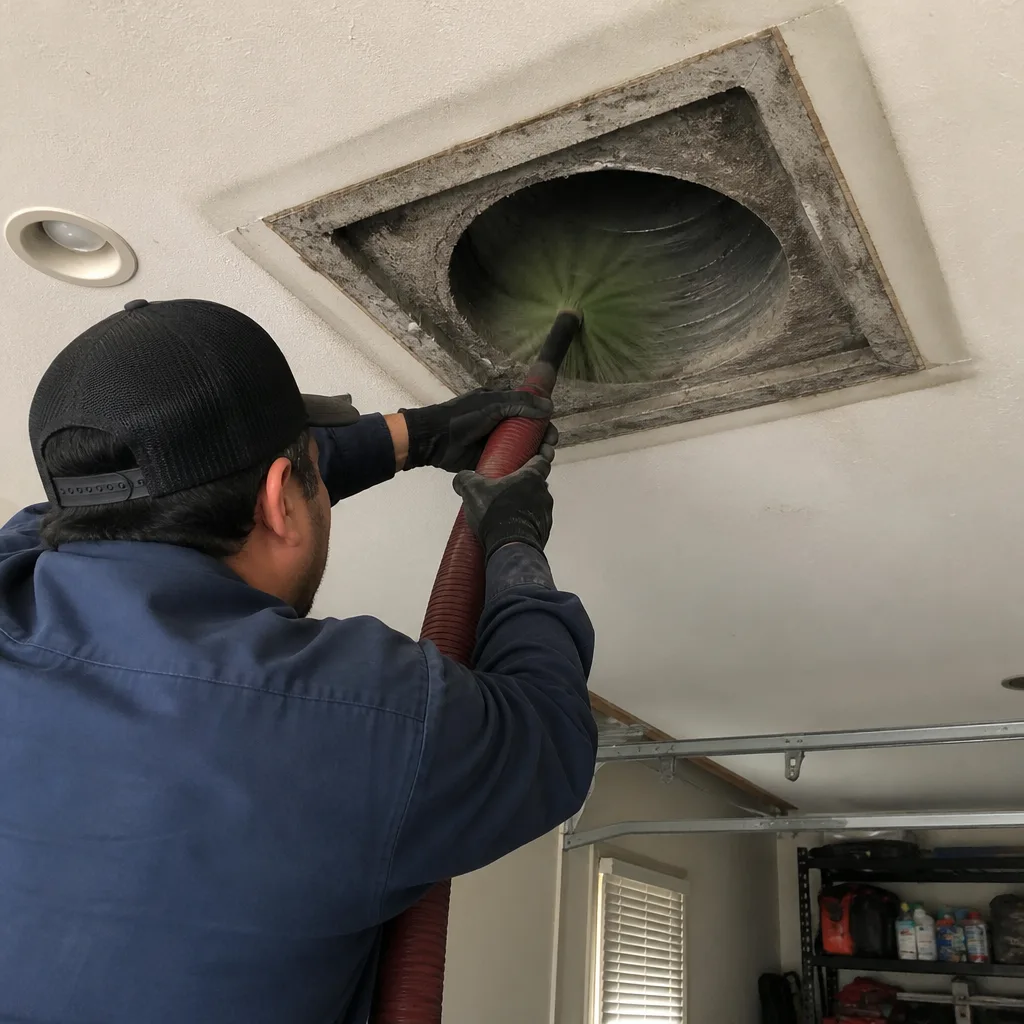
Whole-system duct and dryer vent check with before-and-after photos - you see exactly what came out of your vents
That "$99 whole-house special" is a bait ad - the real number appears once they are in your hallway, or the "clean" is a shop-vac at the register. We photograph the inside of your ducts before and after instead.
DIY vs Professional Air Duct Cleaning: The Ventura Homeowner’s Decision Guide
A shop vac and a brush can clean the first 12 inches of a duct run. That happens to be the section least likely to hold the contamination affecting your air quality, because the particulate that matters settles deepest in the horizontal trunk lines a homeowner simply cannot reach. This guide walks through what a determined DIY effort actually accomplishes in a typical Ventura single-family home, what it misses, and how to decide when Air Duct Cleaning services make sense. By the end, you’ll know the equipment gap, the realistic cost differences, and the specific scenarios where calling a pro in Ventura is not just easier but genuinely necessary.
Styles & brands we work with
Quick Answer
Yes, you can partially clean your own air ducts, but only the first few feet of each accessible register. In most Ventura homes, the majority of the duct system, including the main trunk lines where dust, dander, and debris settle, requires professional negative-pressure extraction equipment to actually remove. DIY is a reasonable first step for light surface dust and a smart way to inspect before calling, but it is not a substitute for a full system cleaning when contamination runs deep or involves mold, rodent debris, or post-wildfire smoke.
Table of Contents
- What a Thorough DIY Effort Can and Cannot Reach in a Ventura Home
- When DIY Is a Legitimate First Step
- When DIY Is Not Enough and Delay Creates Real Cost
- The Equipment Gap: Negative-Pressure Systems vs Consumer Tools
- How to Use a Partial DIY Inspection to Prepare for a Professional Visit
- What DIY Actually Costs vs Professional Cleaning in Ventura
- Common Mistakes to Avoid
- When to Call a Professional
- Frequently Asked Questions
- The Bottom Line
What a Thorough DIY Effort Can and Cannot Reach in a Ventura Home
The single biggest misconception we hear from Ventura homeowners is that ductwork is one continuous open pipe you can push a brush through. It’s not. Most Ventura homes built since the 1980s use flexible ductwork, which means insulated, accordion-style tubes that snake through attics and crawl spaces. A brush pushed into a flex duct snags on the interior ridges. A shop vac hose reaches maybe a foot or two past the register boot before the hose itself becomes the limiting factor.
A thorough DIY effort typically achieves three things. First, it removes visible dust from the register covers and the first few inches of visible duct behind them. Second, it clears debris from the register boots themselves, which is where lint, pet hair, and larger particles often collect. Third, it gives you a useful visual baseline of what is actually in your ducts, which can inform whether a professional cleaning is worth scheduling.
What DIY cannot reach is the main trunk line, the large rectangular or round duct that runs horizontally through your attic or under your house, distributing air to all the branch runs. In a typical 1,800-square-foot Ventura home, that trunk line can run 30 to 50 feet, and it is rarely straight. It makes turns, drops, and transitions. The particulate that settles there, fine dust, dander, cooking residue, and in coastal Ventura neighborhoods, salt-laden dust and moisture-driven debris, sits in the horizontal runs where gravity keeps it. No homeowner tool gets to that material. That is not a shortcoming of your effort. It is a physical limitation of the tools.
Ventura’s climate adds a specific wrinkle. Morning marine layer humidity, especially in neighborhoods closer to the coast like Midtown and the Harbor, means duct interiors are not the bone-dry environments found in inland cities. Dust that would stay loose and blow away in Bakersfield can cake onto duct walls in Ventura. Once caked, it will not vacuum out with a household machine. It requires agitation and extraction.
When DIY Is a Legitimate First Step
DIY is not a fake option. There are real scenarios in a Ventura home where a homeowner cleaning the accessible portions of their system is a sensible first move, and the result is genuinely useful.
- Post-renovation surface debris. If you recently had drywall work, flooring replacement, or painting done in Ventura, construction dust settles on register covers and inside the first few inches of duct. Removing register covers, vacuuming what you can reach, and wiping down the visible boot surface is a legitimate cleanup step. It does not require professional equipment, and you can do it the same day.
- Light dust accumulation around registers. If you notice a light gray film on your register covers and the first visible inch of duct, that’s surface-level. Vacuuming the registers and wiping them down with a damp cloth restores airflow and appearance. In many Ventura homes, this is a seasonal task tied to Santa Ana wind events, when fine dust gets pulled into the HVAC system.
- Pre-decision inspection. Before you decide whether to hire anyone, pull two or three register covers and look inside with a flashlight. What you see tells you a lot. Light dust is one thing. Dark, clumped, or greasy buildup is another. Visible mold growth or rodent droppings settles the question immediately. This is the highest-value DIY move available to a Ventura homeowner: knowing what you are dealing with before you spend a dollar.
In these scenarios, the homeowner’s effort is appropriate to the problem. The key is honesty about what the effort did and did not accomplish. You cleaned the visible register area. You did not clean the system. If the visible area was the only affected area, the job is genuinely done. If the trunk line holds years of accumulated material, the job has not started.
When DIY Is Not Enough and Delay Creates Real Cost
Some contamination in a Ventura duct system is not a cleaning problem. It is a health and safety problem. In these scenarios, DIY is not insufficient. It is the wrong tool entirely, and delaying professional attention creates measurable cost downstream.
Mold presence. Ventura’s marine layer humidity is mold’s best friend. If you see dark, greenish, or black growth on duct surfaces, or if you smell a musty odor when the system runs, that is not surface dust. Mold in ducts sends spores through every room the system serves. Cleaning this properly requires agitation, extraction, and in many cases treatment of the duct surfaces. A homeowner cannot do this. A homeowner should not try, because partial removal without proper extraction simply loosens spores and distributes them further.
Rodent or pest debris. Rats and mice find attics and crawl spaces in Ventura’s older neighborhoods, like the Avenues and Eastside, especially attractive. Their droppings and dried urine in ductwork present a genuine biohazard. This is not a matter of vacuuming what you can see. It requires containment, removal, and sanitization of the affected runs. Professional equipment includes HEPA filtration that traps what gets kicked up during cleaning. A shop vac without HEPA filtration does the opposite: it aerosolizes the debris you are trying to remove.
Post-wildfire smoke infiltration. The Thomas Fire affected every corner of Ventura, and homeowners across the city, from the hillside neighborhoods to downtown, dealt with smoke infiltration in the months that followed. Wildfire smoke particulate is extraordinarily fine. It penetrates deep into duct systems and settles in the trunk lines. This type of contamination requires a negative-pressure extraction system with proper filtration. It is not reachable with consumer tools, and the health stakes of leaving it are real, particularly for households with children, older adults, or anyone with respiratory conditions.
System-wide contamination. If every register in the house shows the same dark, greasy buildup, you are not looking at a localized issue. Something in the system is distributing contamination evenly, and that something lives in the trunk line. No amount of register-level cleaning addresses it. The cost of delaying in this scenario is higher energy bills from reduced airflow, faster filter clogging, and a system that is actively degrading indoor air quality every time it cycles.
The Equipment Gap: Negative-Pressure Systems vs Consumer Tools
The difference between what a homeowner can do and what a professional does is not effort. It is physics. Professional air duct cleaning in Ventura relies on negative-pressure extraction, and the name describes the method precisely: the system is placed under negative pressure, meaning air is pulled out rather than air being pushed in.
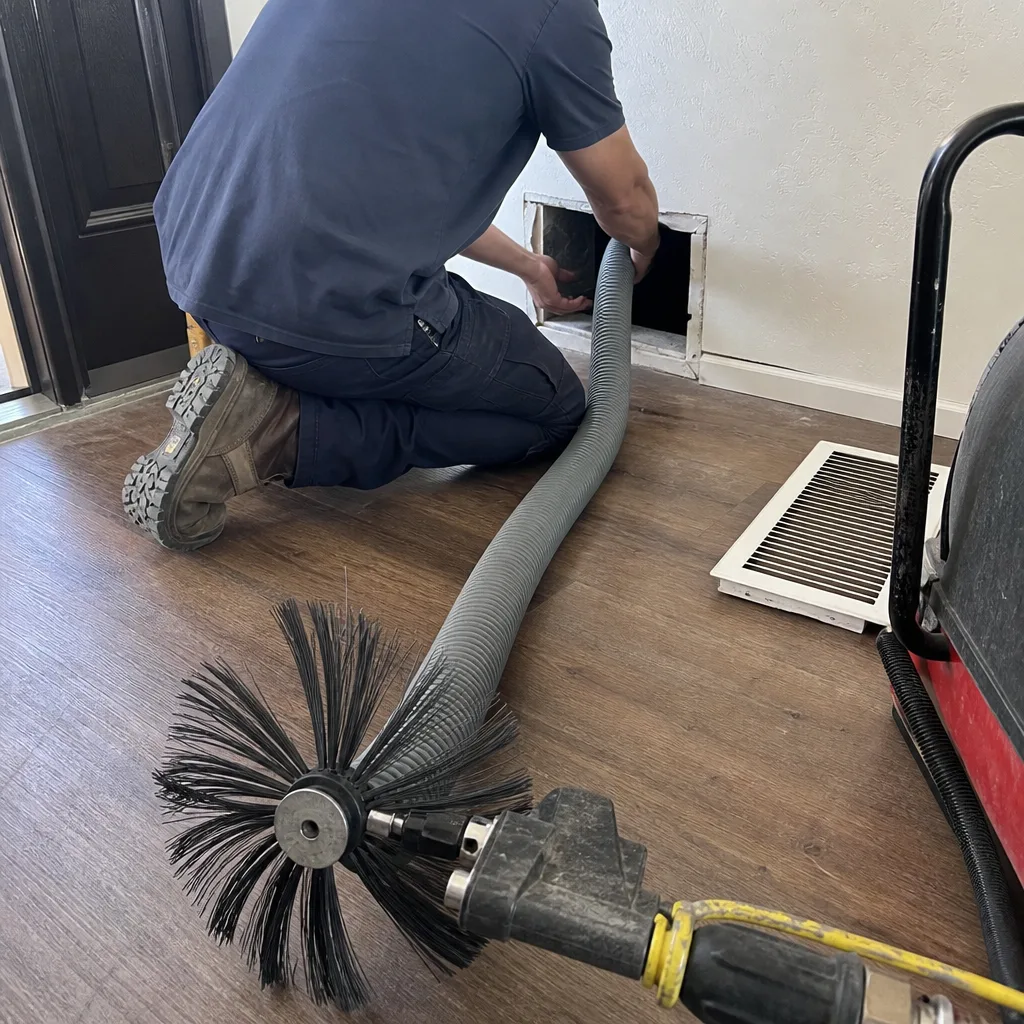
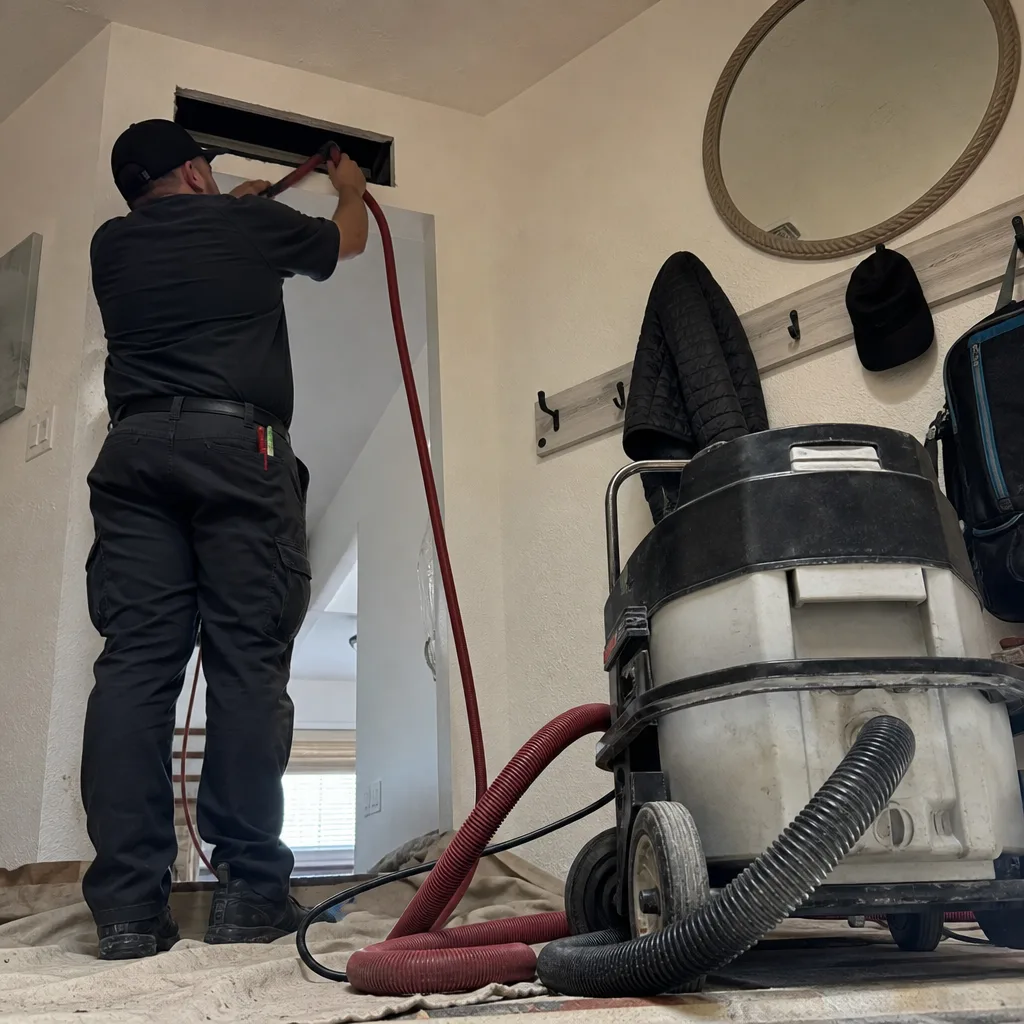
Here is how the process works in plain terms. A powerful vacuum unit connects to the main trunk line, typically at the furnace or air handler. This creates continuous suction throughout the entire duct system. With the system under negative pressure, a technician agitates the duct walls using rotating brushes and high-pressure air tools. Every particle that gets loosened is immediately drawn into the vacuum, captured in a filtration system, and removed from the house.
A shop vac works on a fundamentally different principle. It creates localized suction at the end of the hose. If you agitate dust three feet past where your hose reaches, that dust is not being pulled anywhere. It is settling back down, often slightly further along the duct than where it started. You are rearranging contamination, not removing it.
The filtration difference is starker. Professional equipment from trade-trusted brands like Rotobrush and Nikro uses HEPA filtration that traps particles down to 0.3 microns. A standard shop vac without a HEPA filter exhausts the finest particulates back into the room. In a Ventura home where wildfire smoke particulate has settled in the ducts, this is the difference between removing the problem and redistributing it through the living space.
There is also the matter of access. Professional technicians cut access ports into the trunk line where necessary, insert the agitation tools, clean the entire run, and then reseal the ports properly. A homeowner does not have the tools to create access, and should not be cutting into ductwork without knowing how to reseal it to code. A poorly sealed access point leaks conditioned air into the attic, which in Ventura’s summer heat means the AC works harder and bills climb.
How to Use a Partial DIY Inspection to Prepare for a Professional Visit
The smartest sequence for a Ventura homeowner is not DIY or professional. It is DIY, then professional, with the DIY portion used as an information-gathering step. Here is a practical sequence to follow before you call anyone, and you can find more guides & resources on our blog.
- Turn off the HVAC system at the thermostat. You want still air so dust is not being pulled through the registers while you are looking at them.
- Pull register covers in three locations. Choose one near the air handler, one in a far room, and one in the most-used room, which is often the family room or primary bedroom. Use a screwdriver for floor registers. Many Ventura homes have ceiling registers that unscrew or pop out with gentle pressure.
- Photograph what you see before you touch anything. Your phone camera with the flash on gives a clear view a few inches into the duct. These photos are useful, both for your own reference and to show a technician when they arrive.
- Clean the visible register boot area if it needs it. Use a vacuum with a hose attachment and a damp cloth for the register covers. This is the legitimate DIY portion.
- Note three specifics before placing a call. What color is the material you see: light gray, dark gray, brown, black? Is it loose and dusty, or clumped and greasy? Do you see any dark spotting on the duct surfaces, or any pellet-shaped debris that could indicate rodent activity? This information lets the scheduling team tell you whether a cleaning is the right service or whether a diagnostic visit makes more sense.
When you have those three observations, you are calling with information rather than calling with uncertainty. The technician’s diagnosis starts with your observations, and that makes the entire appointment more efficient. We have seen Ventura homeowners walk into a professional appointment with a clear set of facts from exactly this process, and the result is a focused visit rather than a generic inspection.
What DIY Actually Costs vs Professional Cleaning in Ventura
There is a difference between the purchase price of a shop vac and the true cost of cleaning your own ducts. The true cost includes time, results, and the possibility of making things worse.
- Consumer tools. A capable shop vac with a hose attachment runs $80 to $200 at any Ventura hardware store. A brush kit marketed specifically for duct cleaning adds another $30 to $60. Most of these brushes are sized for dryer vents, not main trunk lines, and they are not long enough or stiff enough to effectively agitate anything beyond the register area.
- Professional whole-system cleaning. In the Ventura market, a complete air duct cleaning for a typical single-family home falls in the $350 to $700 range, depending on the number of systems, the number of registers, and the level of contamination present. Homes with two systems or extensive trunk line runs fall toward the upper end. This is a flat per-system price, not a per-vent price that multiplies once the job begins.
The cost comparison that matters is not the $120 shop vac against the $500 professional cleaning. It is what each accomplishes. The shop vac cleans the visible register area. The professional system removes years of accumulated material from the trunk lines that move air through your entire home. Paying $120 to rearrange dust is not savings. It is the cost of coming to a conclusion, which has value if the conclusion is that the ducts were already clear.
One more thing about pricing in Ventura. The lowest quoted price is rarely the final price in this trade. Some companies advertise a low base rate and then add charges per vent, per system, and per access point once the technician is in the home. Linden Air Duct Ventura puts the price in writing before any work begins, every single time. That is the number on the invoice, not a starting point for negotiation. It is a threshold-level difference in how the job is priced, and it matters most to the homeowner who has never hired a duct cleaner before. For help choosing the right company, read our How to Hire a Air Duct Cleaning Contractor in Ventura: A Step-by-Step Guide.
Common Mistakes to Avoid
- Using a leaf blower to “blow out” the ducts. This seems logical, and it is the most destructive DIY duct mistake we hear about in Ventura. A leaf blower pressurizes the duct system and forces dust, debris, and whatever else is in there through the air handler and into the living space. The force is uncontrolled, the debris goes everywhere, and the cleanup is worse than the original problem. Do not do this.
- Sticking a brush into a duct without securing it. Brushes detach from their handles. If a brush head comes loose inside a flex duct, it becomes an obstruction. Retrieving it often requires cutting an access port, which is now a repair rather than a cleaning.
- Cleaning registers while the system is running. The blower fan is pulling air through the system. Anything you loosen at the register gets sucked deeper into the trunk line. Always turn the system off first.
- Using liquid cleaners inside ducts. Interior duct surfaces should not be wet, ever. Ventura’s humidity is already a moisture variable. Adding liquid cleaner to duct interiors creates the conditions mold needs. Dry agitation and extraction is the correct method.
- Ignoring the return side. Many homeowners clean the supply registers, the ones that blow air out, and never think about the return side. The return is where air being pulled into the system deposits whatever it carries. In a Ventura home with pets, the return side is often the most contaminated part of the system.
- Assuming one clean register means the whole system is clean. The register you can reach is the one least likely to hold deep contamination. The horizontal trunk lines, which you cannot reach, are where the material settles. Do not let a clean-looking register talk you out of a closer look.
- Failing to change the HVAC filter after any cleaning effort. Whatever you do loosen will find its way to the filter. A clogged filter reduces airflow and strains the system. Always install a fresh filter after any duct work, DIY or professional.
When to Call a Professional
Call a professional when what you found in your inspection goes beyond light surface dust. Dark, clumped, or greasy buildup, any sign of mold, rodent droppings, or a persistent musty smell when the system runs all point to contamination that is not reachable with consumer tools. Post-wildfire smoke infiltration and system-wide buildup are also professional jobs by definition. If you have done the inspection and the facts point toward a full system cleaning, Linden Air Duct Ventura home offers free estimates in Ventura. Call (559) 315-0418 and a live person answers, any hour, any day. The tech’s name and photo are sent before the visit, and a photo ID badge is shown at the door every time. That is the air duct repair in Ventura standard we have operated under since 2004, and it applies to every cleaning and every dryer vent cleaning in Ventura as well.
Frequently Asked Questions
You can clean the visible portion of your air ducts, which is the register covers and the first few inches of duct behind each register. You cannot clean the main trunk lines or branch runs where most contamination settles, because consumer tools do not reach those areas. A thorough DIY effort is a legitimate first step for light dust, but it is not a substitute for a professional cleaning when the system holds deep accumulation.
In Ventura, a professional whole-system air duct cleaning for a typical single-family home generally runs between $350 and $700, depending on system size, number of registers, and contamination level. At Linden Air Duct Ventura, the price is put in writing before any work begins, so the number you approve is the number on the invoice. Call (559) 315-0418 for a free estimate specific to your home.
Some companies quote a low base rate and then add charges per vent, per system, or per access point once the technician is in your home. The final invoice can double or triple the quoted figure. A flat per-system price quoted before work begins is a different pricing model, and it is the model Linden Air Duct Ventura uses. Always ask whether the quoted price covers the entire system or just the first portion of it.
Before-and-after photos of your own ducts are the standard proof. At Linden Air Duct Ventura, the technician photographs the interior of your ducts before and after cleaning, so you can see the difference in the trunk lines and not just the register covers. This is part of the 365-Day Done Right Promise: if the work is not right, Linden makes it right, backed in writing on every job.
Homes in Ventura typically need a professional cleaning every 3 to 5 years, though homes with pets, smokers, recent renovation activity, or wildfire smoke exposure may need it more often. The marine layer humidity in coastal Ventura neighborhoods also means dust cakes onto duct walls more quickly than in drier inland climates. See our Seasonal Air Duct Cleaning Care for Ventura: Year-Round Homeowner’s Guide for maintenance timing tips. A visual inspection of your registers and trunk line is the most reliable way to know whether your system is due.
It can, particularly if you damage flex duct runs or improperly reseal access points, and manufacturers may decline warranty claims on the air handler or furnace if the duct system has been altered by an unqualified person. Professional cleaning uses tools designed for flex duct and proper sealing methods that keep your system within warranty terms. If you have any uncertainty, have a professional handle the trunk line access.
The Bottom Line
The honest answer to the DIY question is that partial cleaning is possible, and it is a useful first step when the contamination is light and visible. What DIY cannot do is reach the horizontal trunk lines where the material that actually affects your air quality settles. Ventura homes have specific challenges ranging from marine layer humidity to wildfire smoke that make professional negative-pressure extraction the only real solution for deep contamination. Do the inspection yourself, gather the facts, and then make a call based on what you found. When the facts point toward a professional cleaning, call (559) 315-0418 for a free estimate, a written price before work begins, and the 365-Day Done Right Promise in writing.
Written by Marcus Veale, Owner at Linden Air Duct Ventura, serving Ventura since 2004.
See the difference
 Before
 After
After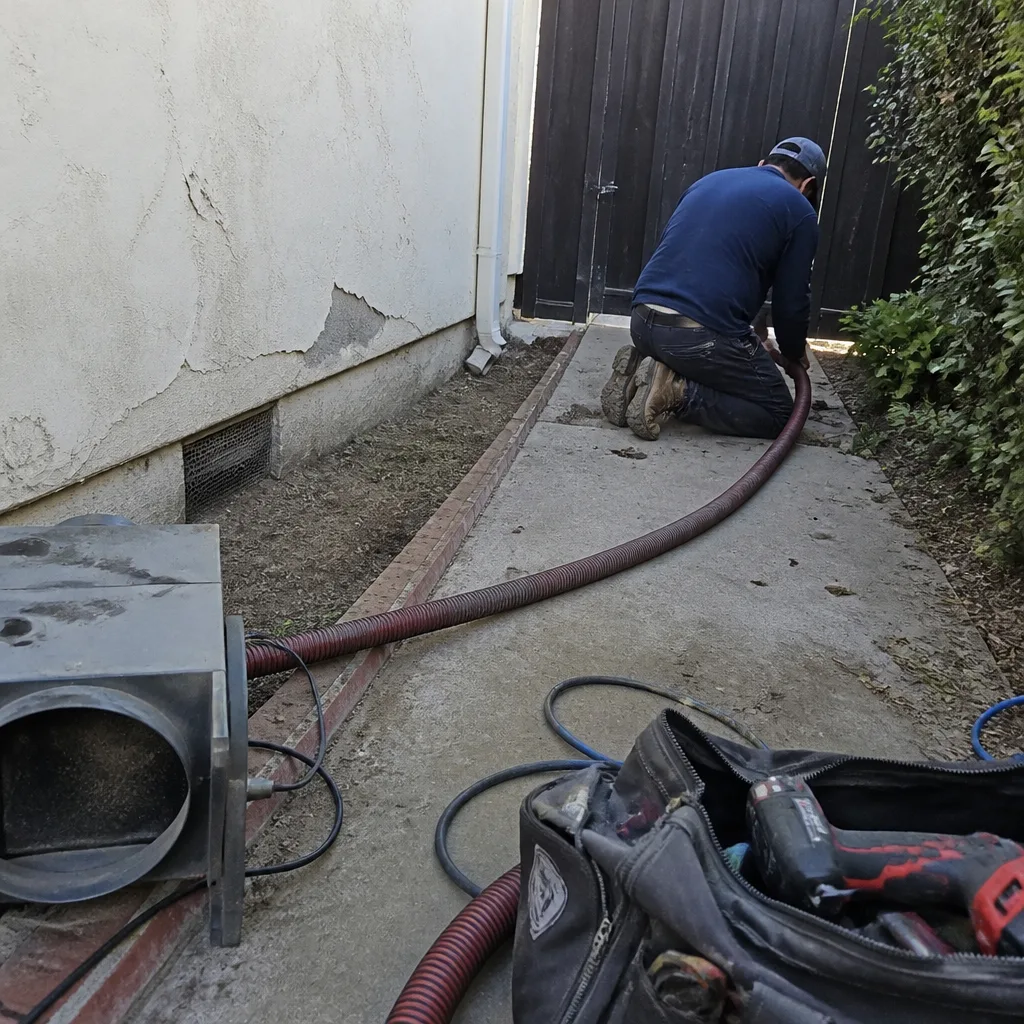 Before
 After
After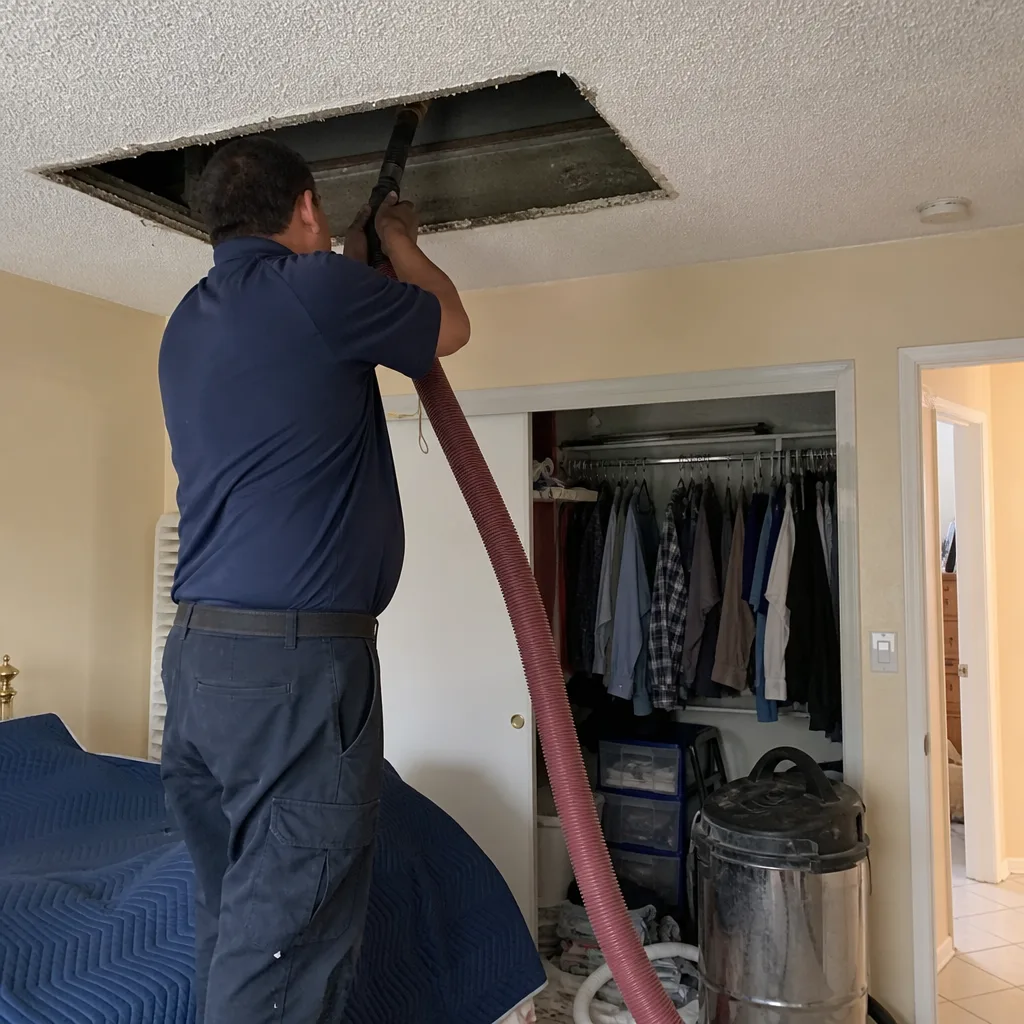 Before
 After
After