
 Whole-home duct cleaning
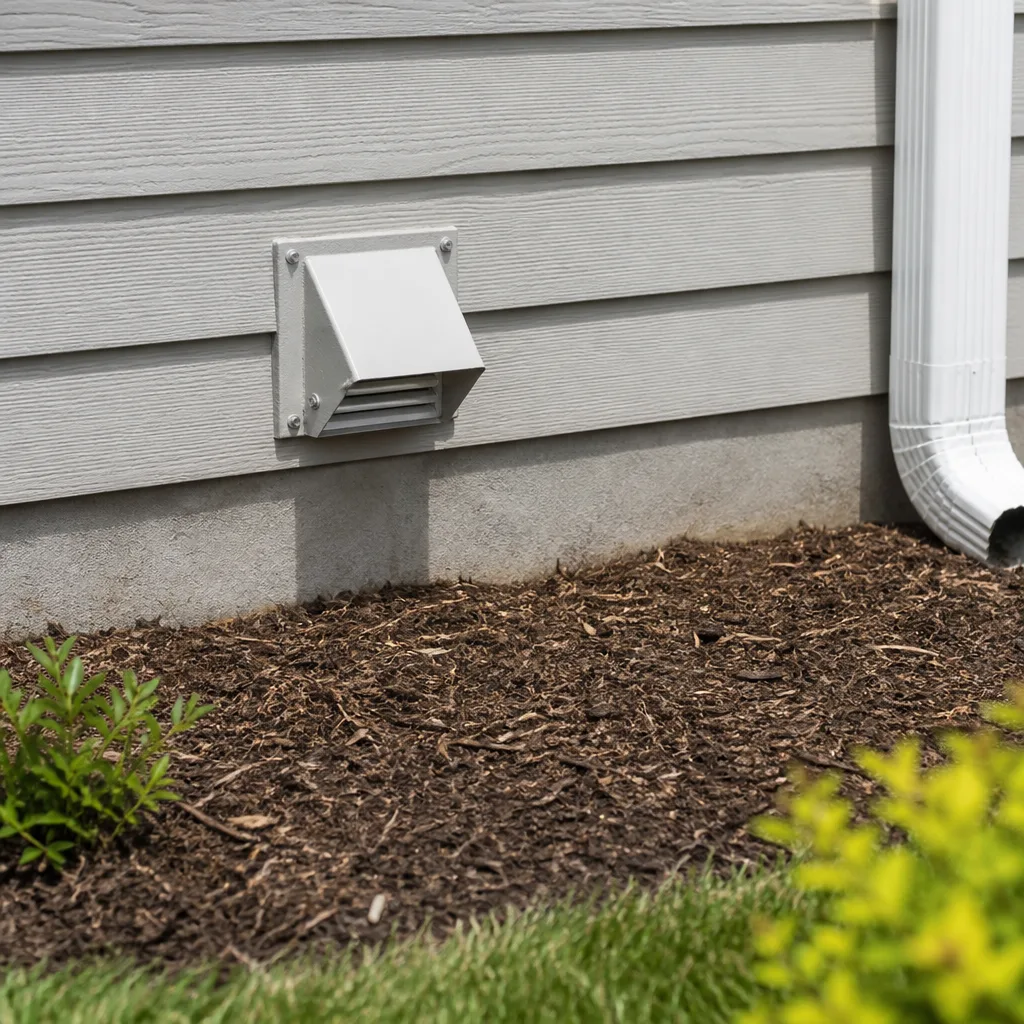 Dryer vent cleaning
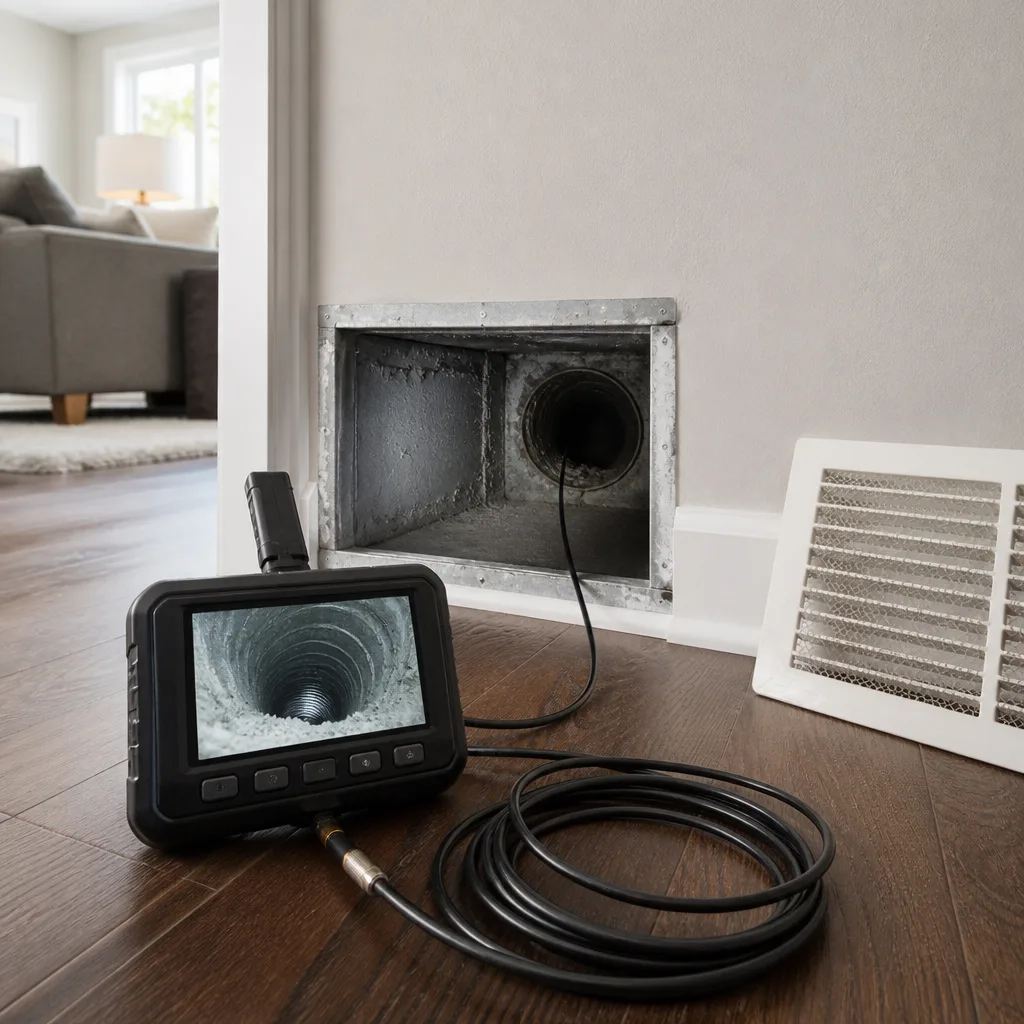 Camera inspection
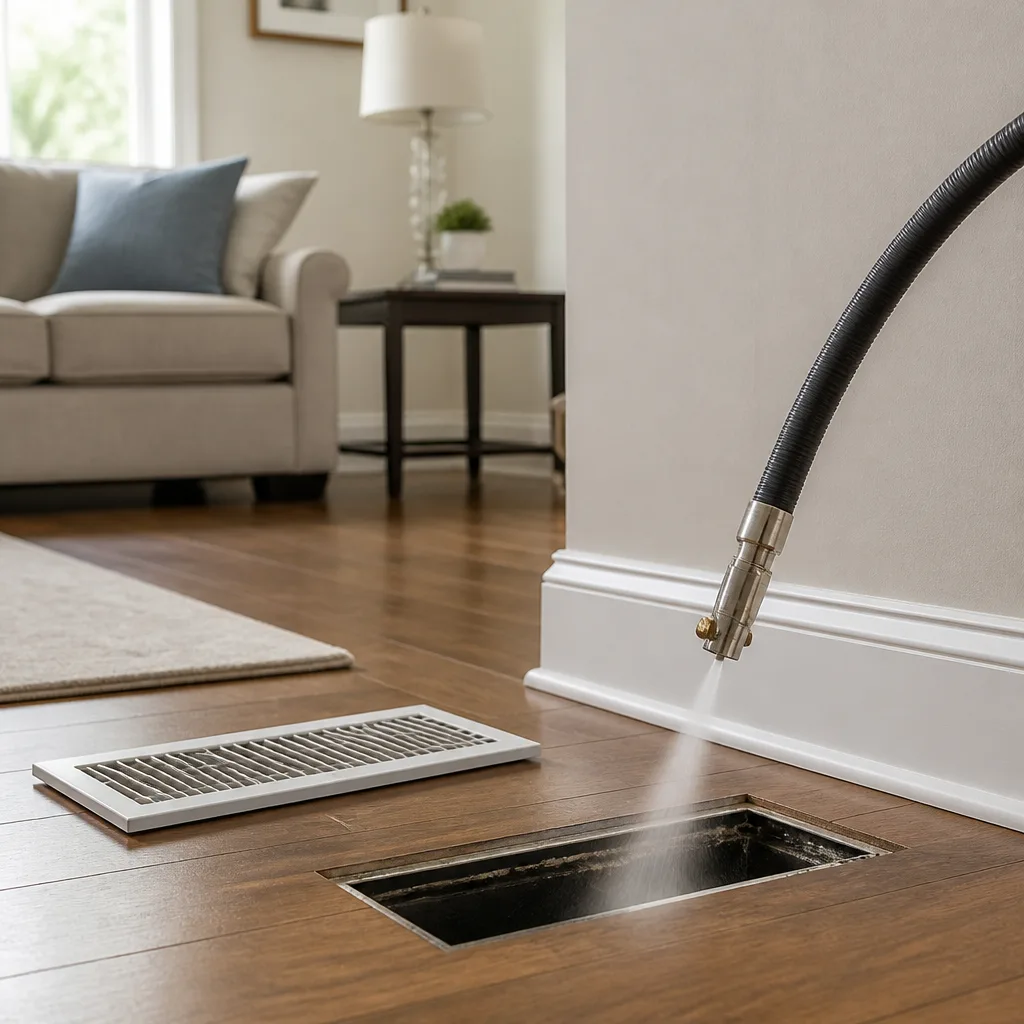 Sanitizing & deodorizing
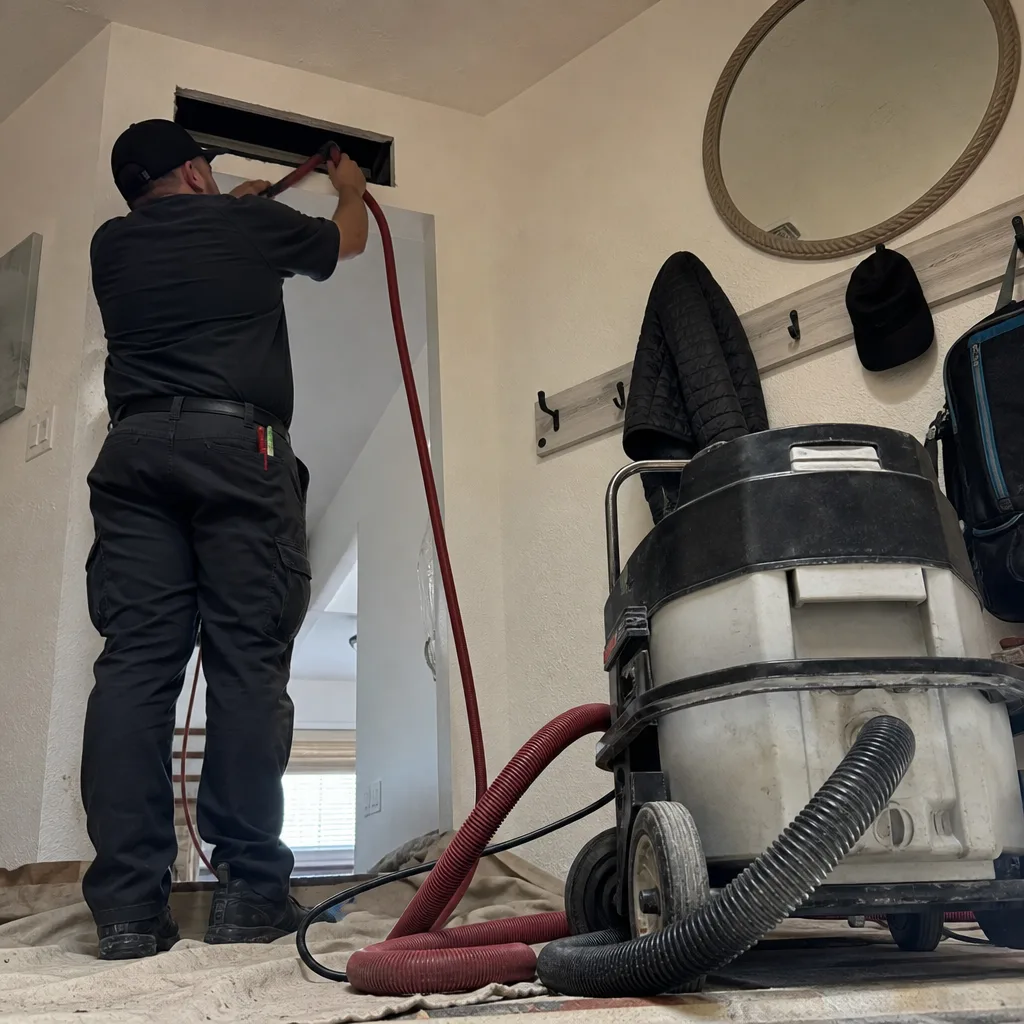
Whole-system duct and dryer vent check with before-and-after photos - you see exactly what came out of your vents
That "$99 whole-house special" is a bait ad - the real number appears once they are in your hallway, or the "clean" is a shop-vac at the register. We photograph the inside of your ducts before and after instead.
Rotobrush Register & Grille Cleaning: The Ventura Owner’s Guide
If your Rotobrush register and grille cleaning attachment has stopped spinning, lost suction, or no longer seats properly against the vent, we stock Rotobrush-compatible parts on the truck and can typically get you running again for between $85 and $190 installed, depending on what failed. Most Ventura owners discover the problem mid-job: the nylon brush stops rotating against the register face, or the vacuum collar no longer seals and dust spills back into the room instead of getting pulled into the collection bag. You’re not crazy, and the part didn’t wear out because you used it wrong. These attachments live a hard life against painted metal edges, and the wear patterns are predictable.
We see it regularly in homes across Ventura, from Midtown bungalows to the newer tracts out east. The register tool on a Rotobrush system takes more abuse than almost any other attachment because it’s the one that makes direct, repeated contact with fixed metal. The bristles flex thousands of times per job, the plastic hub absorbs vibration, and the collar that mates to the vacuum hose gets knocked around in transit. When one of those three things goes, the tool stops doing its job, and the rest of the system is fine. You don’t need a new machine. You need the right replacement part, matched to your model.
Which Rotobrush Models This Applies To
The register and grille cleaning attachment is used across most Rotobrush air duct cleaning systems, but the exact part you need depends on which generation of machine you own. The newer Rotobrush aiR+ and the R5000 series use a quick-connect register tool with a specific collar diameter, while older units from the early 2000s, the models still running in a lot of older Ventura homes, use a friction-fit collar that’s slightly narrower. If you order a register attachment without checking, you’ll either get a tool that won’t seat or one that leaks air around the collar.
Here’s the compatibility gotcha we run into most often: the brush hub threading changed between production runs, and a tool that fits a 2015 aiR+ may not thread onto a unit sold in 2019, even though both machines look identical from the outside. The stamping on the tool body tells you what you need to know. Look for the model code printed on the plastic hub, usually a two-letter prefix followed by three digits. If the stamping is worn off, measure the collar opening with a tape measure. We’ve also matched plenty of tools by photo, so if you can get a picture of the failed part next to a quarter for scale, that usually settles it.
As for OEM versus aftermarket: Rotobrush-branded replacement tools hold up well, and for the register attachment specifically, we lean toward OEM. The aftermarket equivalents we’ve tested tend to use a softer nylon blend in the bristles that mushrooms out after a few dozen jobs. That said, we stock quality aftermarket vacuum collars because the OEM collar is a wear item anyway, and a good aftermarket collar at half the price makes sense when it’s the third one you’ve replaced.
We also keep parts on hand for Lennox, Trane, and Carrier systems, but the register tool conversation is usually a Rotobrush one.
Styles & brands we work with
Signs Your Rotobrush Register & Grille Cleaning Attachment Is Failing
- The brush spins inconsistently or stops under light pressure. The nylon bristles have worn down to the hub, or the internal bearing that lets the tool rotate freely has accumulated enough fine dust to bind. In Ventura’s dry climate, that dust is finer than what you’d see in humid regions, and it works its way into the bearing faster than you’d expect.
- You can hear air leaking at the collar while the vacuum runs. The foam or rubber gasket inside the collar has compressed permanently. Once that seal goes, suction at the register face drops and dust escapes around the tool instead of getting pulled into the collection system.
- The tool won’t stay seated against the register. The plastic lip that catches the register edge has chipped. This happens when the tool gets dropped or knocked around the truck between jobs. A chipped lip means the tool rocks while you work, and the cleaning pattern gets uneven.
- You see visible cracking around the hub where the bristles attach. UV exposure and heat cycling, especially if the tool lives in a truck that sits in the Ventura sun, makes the plastic brittle. Once cracking starts, the hub will eventually split under load.
- The tool leaves streaks on the register face it used to clean cleanly. Bristle wear is rarely even across the brush face. When the center bristles wear faster than the edges, the tool cleans a ring but misses the middle, and you can see the result immediately on painted registers.
See the difference
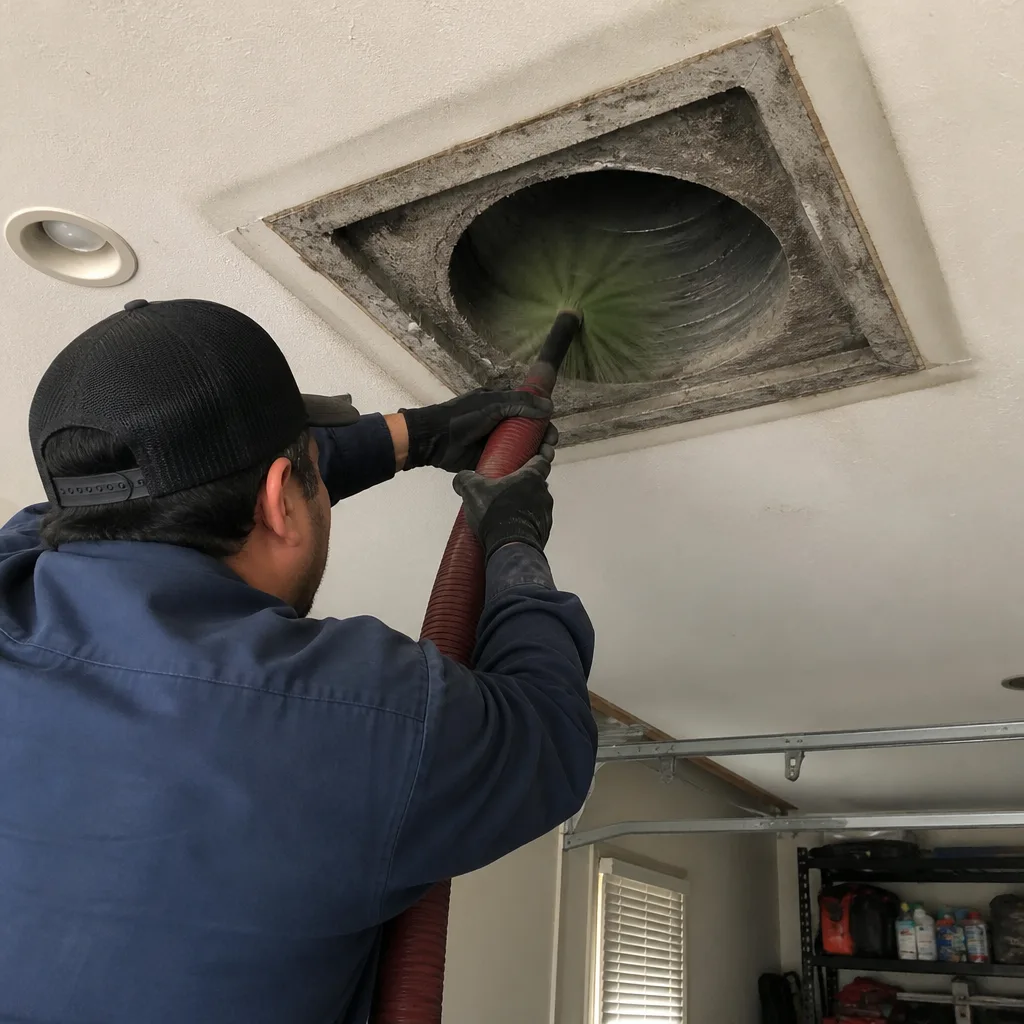 Before
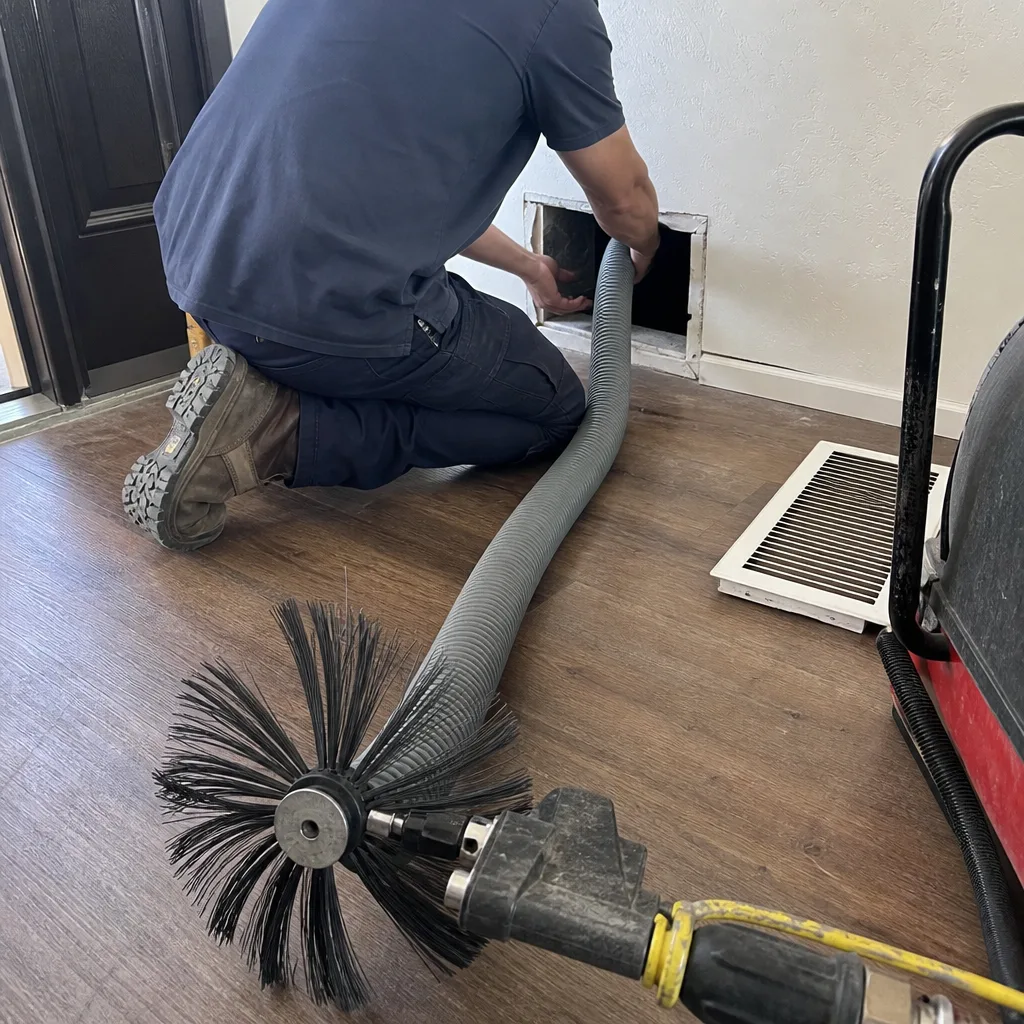 After
After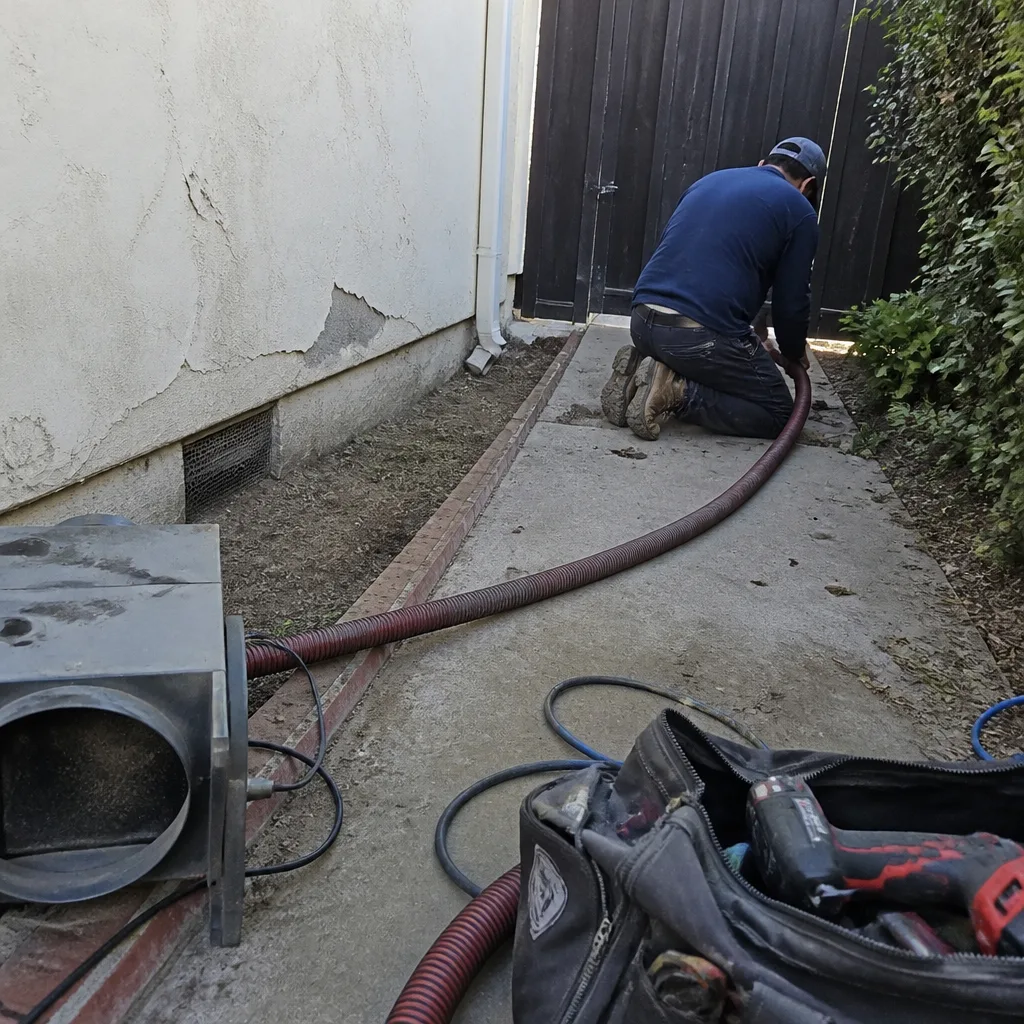 Before
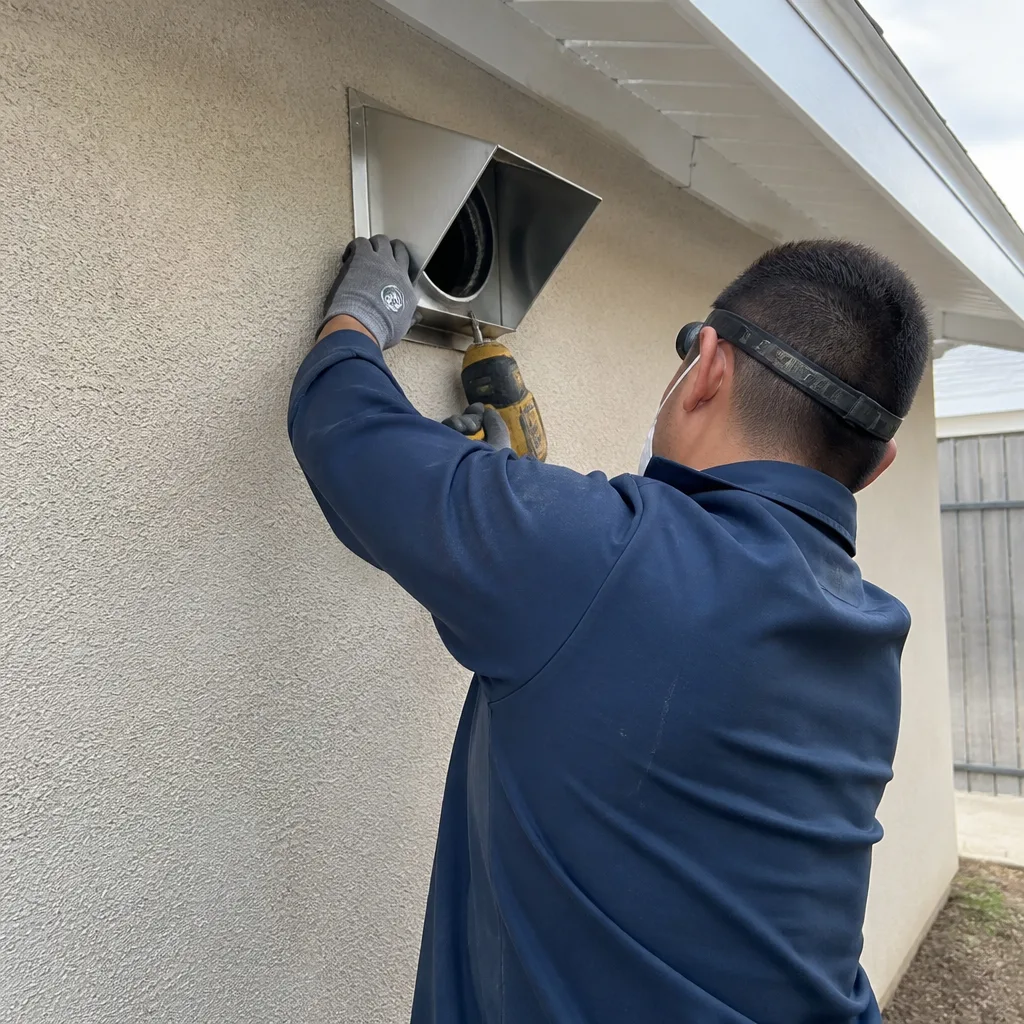 After
After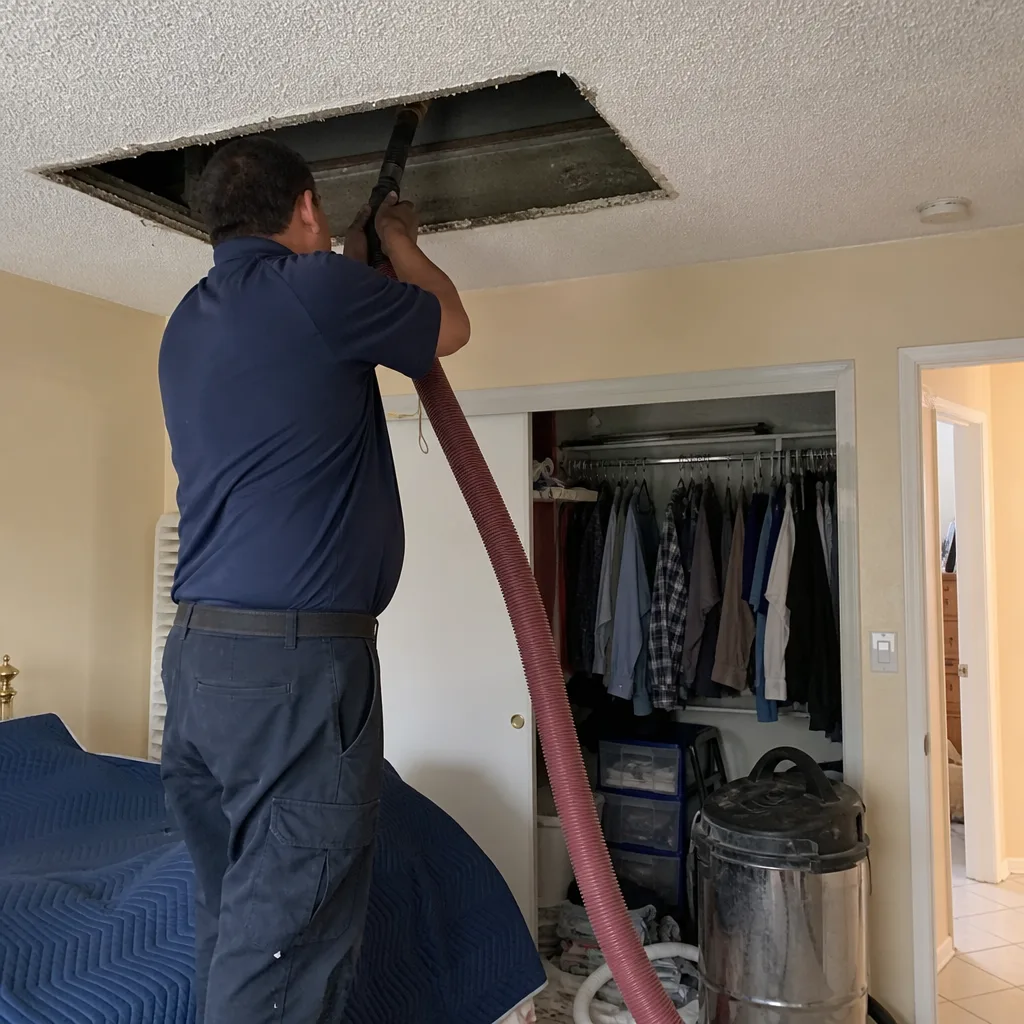 Before
 After
AfterReplacement Cost & What’s Included
In Ventura, expect to pay between $85 and $190 installed for a Rotobrush register and grille cleaning attachment replacement. The low end covers a vacuum collar swap or a brush head replacement on a tool where the hub is still solid. The high end covers a full tool replacement with a new OEM brush head, collar, and hub assembly. Parts are roughly 60% of the total, labor the rest, and the job usually takes under an hour.
What drives the price range is simple: whether the failure is confined to one wear component or whether the hub, collar, and brush head all need replacing at once. If the tool was dropped and the hub cracked, you’re buying a new tool. If only the collar gasket compressed, that’s a pocket-money fix. We’ll tell you which one you’re looking at before any money changes hands.
Every replacement we install carries our written guarantee, and if the part fails within 365 days, we come back and make it right at no charge. That’s the 365-Day Done Right Promise, and it’s in writing on every job, not just spoken. The price we quote on the phone is the price on the invoice, and we send you the tech’s name and photo before we arrive so you know exactly who’s coming to your door.
DIY or Call Us?
You can safely check a few things yourself before you call. Look at the bristles under good light. If they’re visibly worn or the tool body shows cracks around the hub, you’ve found the problem and it’s a part replacement. You can also remove the collar and check the gasket inside. If it’s flat instead of springy, that’s your suction leak.
Where DIY goes sideways is when owners try to re-glue a cracked hub or re-bristle a brush head themselves. The hub is under constant rotational load, and a glued joint fails mid-job. The brush head has to match the original bristle stiffness and density or the tool won’t clean evenly. Neither repair holds up. And because this tool is on the end of a powered rotating shaft, a failed repair while the system is running can throw bristles or send a cracked hub apart. That’s not a risk worth taking.
Marcus Veale has been in attics and crawl spaces long enough to know the register tool is one of the most abused attachments on any Rotobrush system. His usual line when someone calls describing a symptom: “Tell me what you’re seeing and I’ll tell you exactly what it costs to fix it.” Call (559) 315-0418 and we’ll sort it out on the spot.
FAQs
With regular use, expect two to three years from the brush head and collar before the bristles wear down and the gasket compresses, a bit less in Ventura’s dry, dusty conditions. The hub itself should last the life of the machine unless the tool gets dropped or cracked. Call (559) 315-0418 if your tool died early and you want to know why it failed the way it did.
Collars can be replaced by themselves, and brush heads can be swapped onto a healthy hub, but a cracked hub means the whole tool gets replaced. We’ll refurbish what’s salvageable and tell you straight when a repair doesn’t make sense. Call (559) 315-0418 for an honest read on your specific tool.
Most register tool replacements are done in under an hour. If the tool needs to be matched to an older machine, we handle the compatibility check on the phone before we come out. Call (559) 315-0418 and we’ll get you scheduled.
Yes. We carry OEM Rotobrush brush heads, replacement vacuum collars, and complete register tool assemblies on the truck, so in most Ventura homes the swap happens the same visit. Call (559) 315-0418 to confirm we have your part in stock before we head out.
Written by Marcus Veale, Owner, Linden Air Duct Ventura at Linden Air Duct Ventura, serving Ventura and nearby areas.