
Last updated October 15, 2026
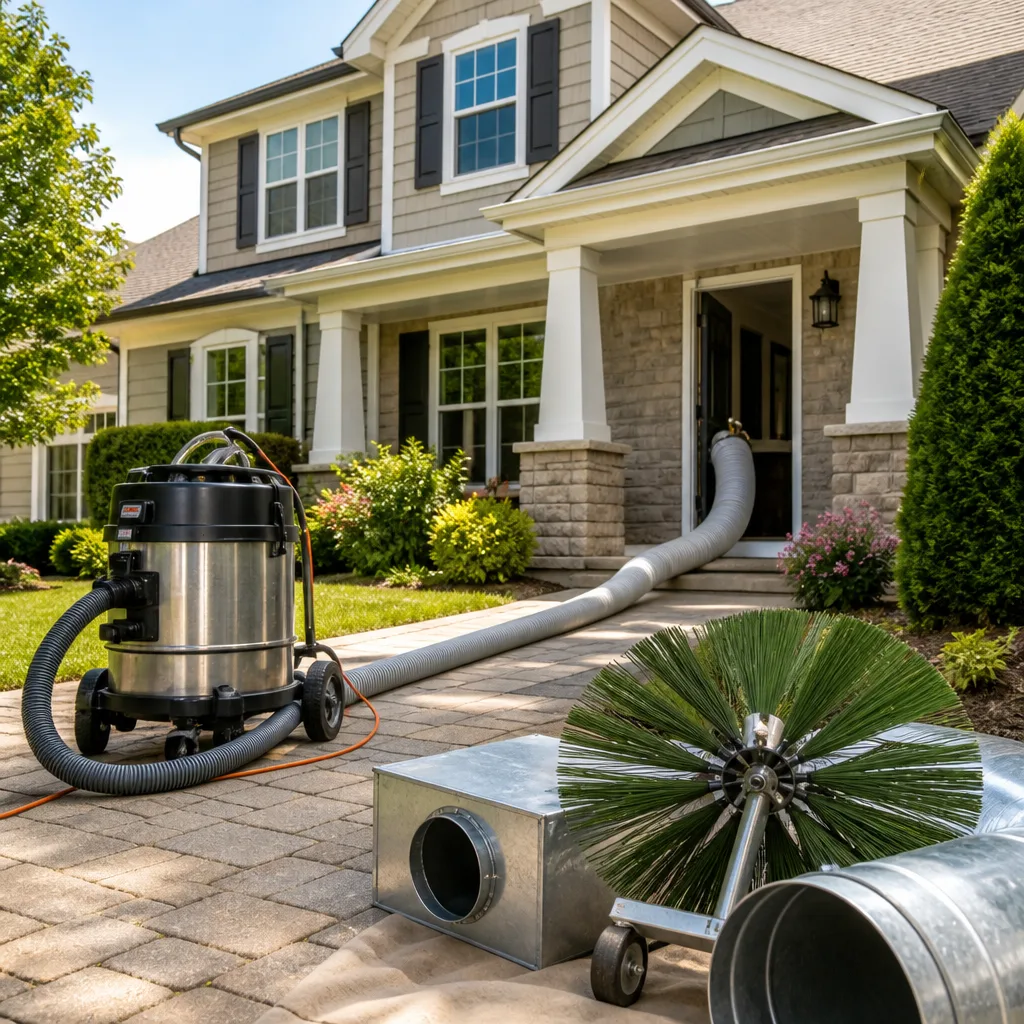 Whole-home duct cleaning
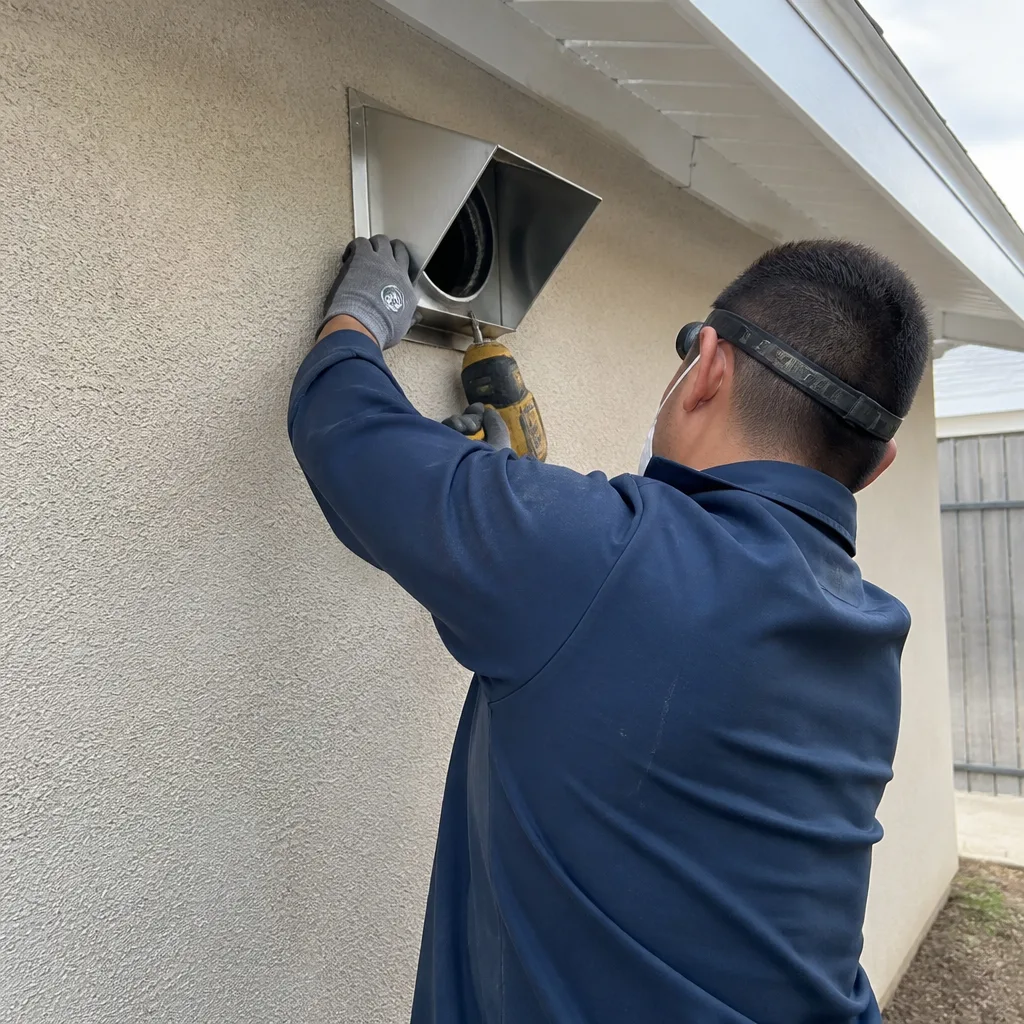
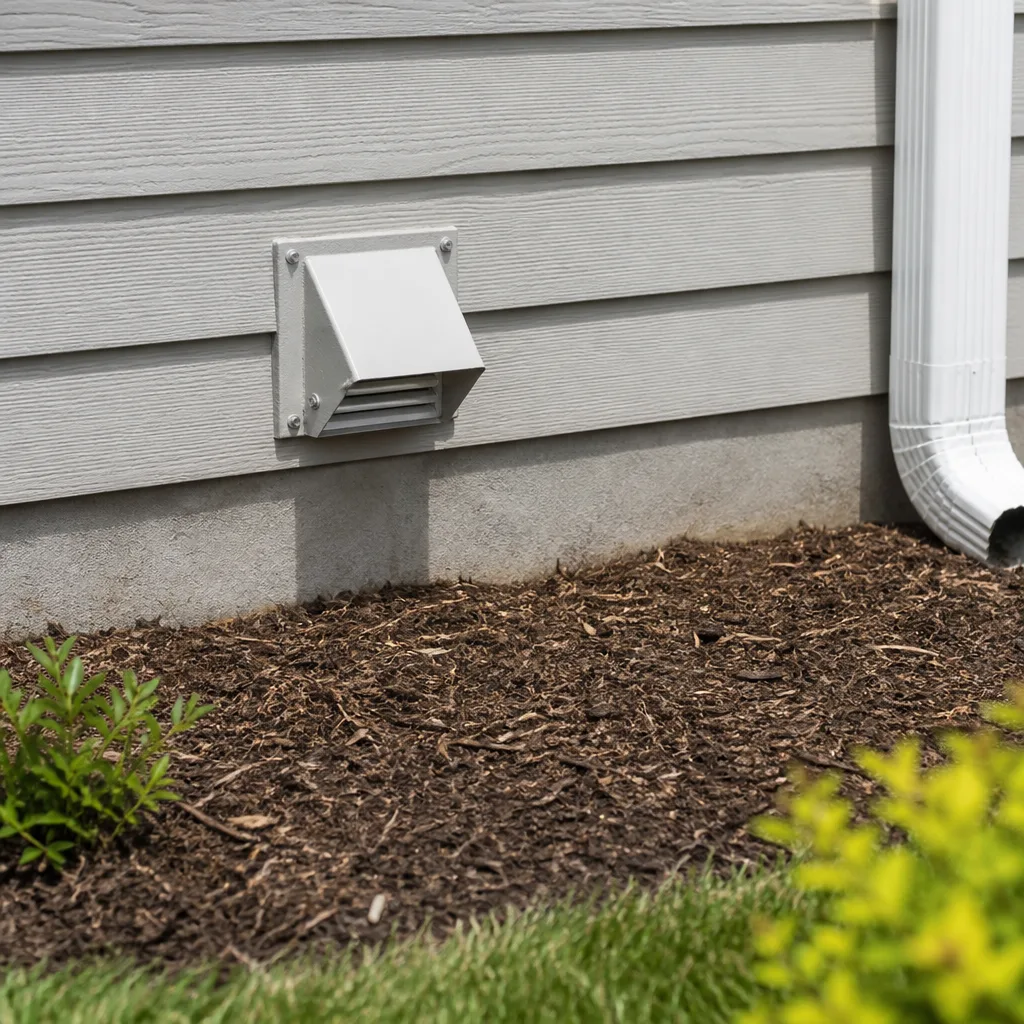 Dryer vent cleaning
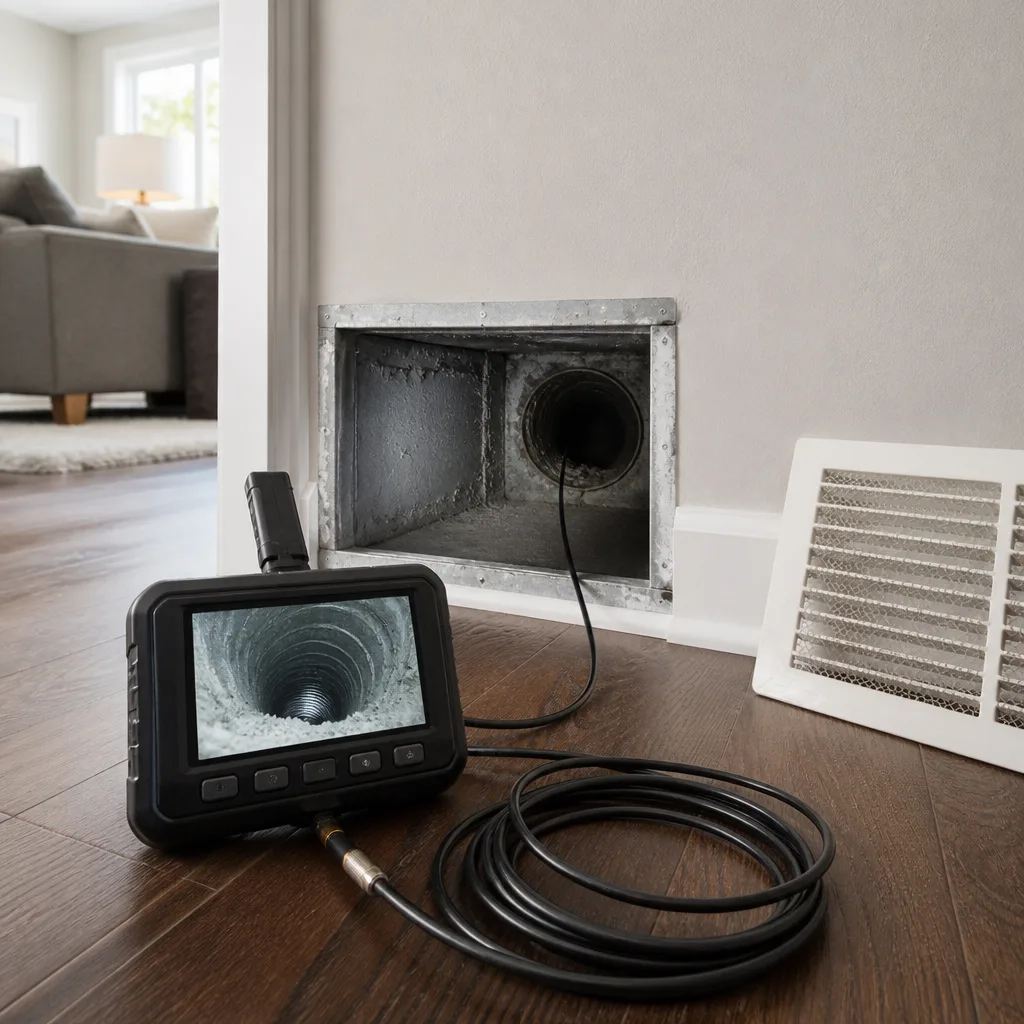 Camera inspection
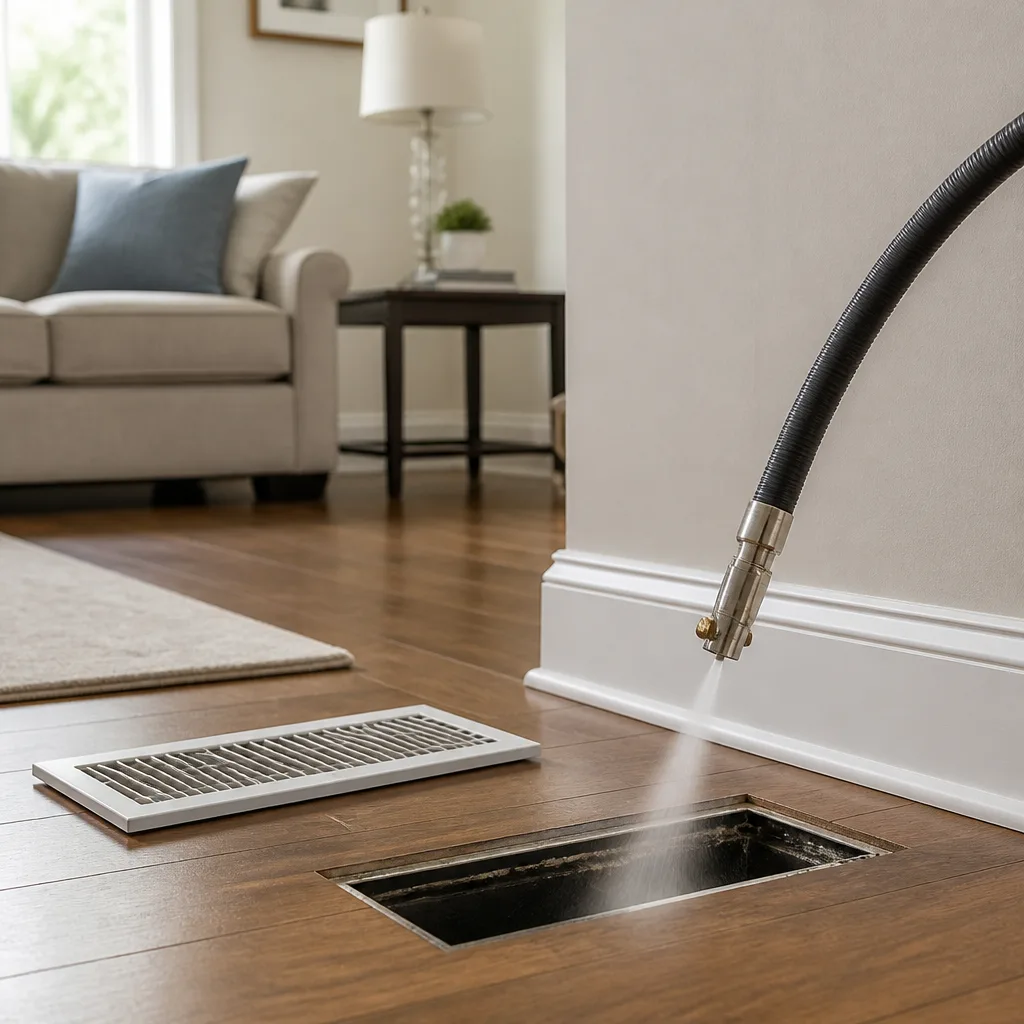 Sanitizing & deodorizing
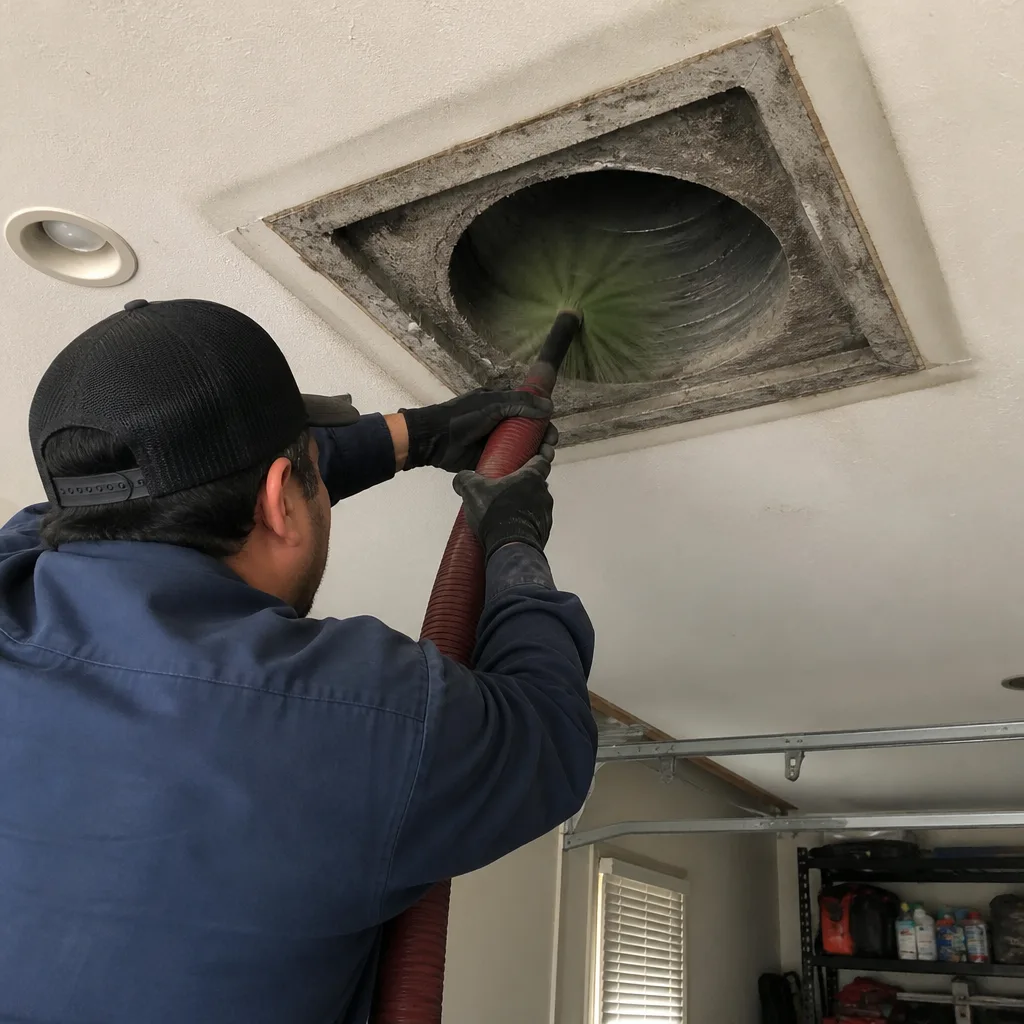
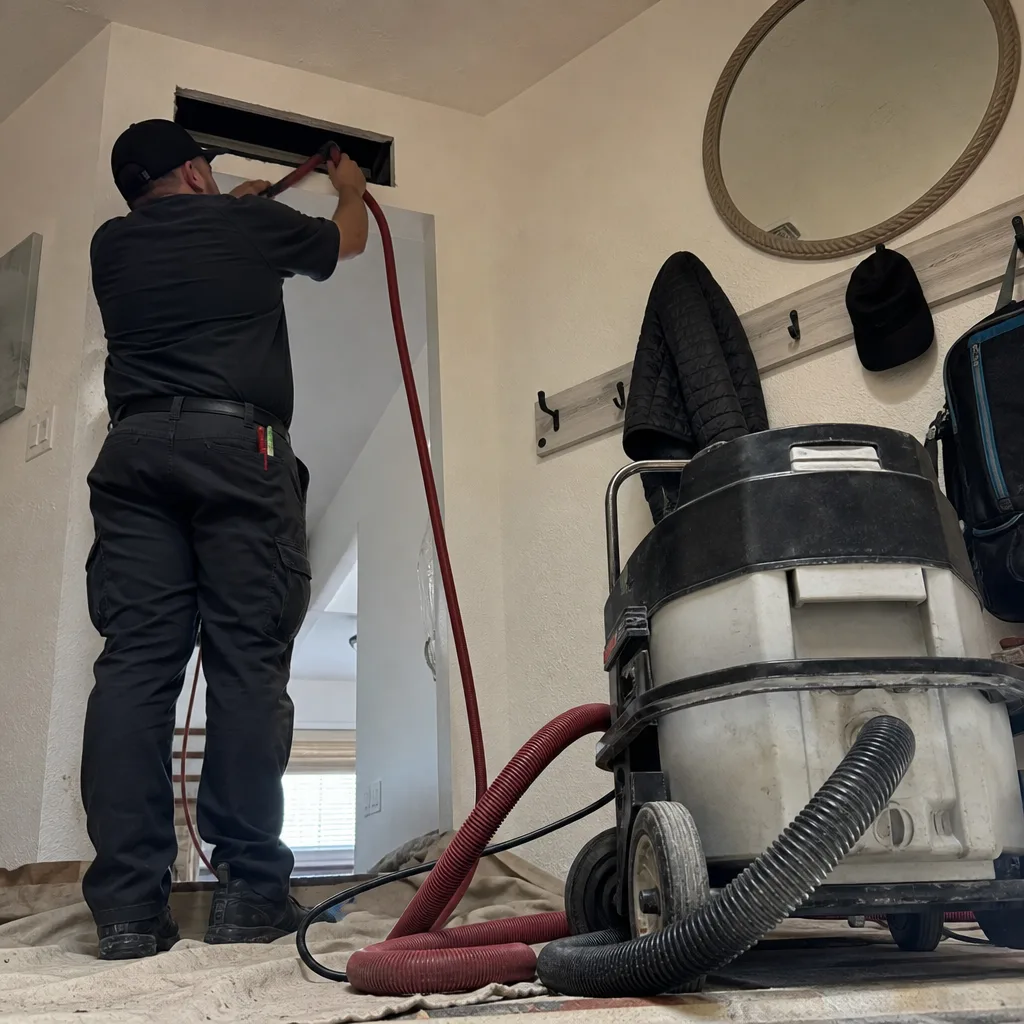
Whole-system duct and dryer vent check with before-and-after photos - you see exactly what came out of your vents
That "$99 whole-house special" is a bait ad - the real number appears once they are in your hallway, or the "clean" is a shop-vac at the register. We photograph the inside of your ducts before and after instead.
Air Duct Cleaning Permits, Codes & Inspections in CA: What You Need to Know
In California, a contractor who replaces a damaged duct section during a cleaning visit without a C-20 license is performing unlicensed HVAC work – even if it takes five minutes and a single sheet of flex duct. That’s the line most homeowners never see until a failed inspection or an insurance claim puts it in front of them. This guide walks through exactly where routine Air Duct Cleaning services in Ventura ends and regulated HVAC work begins, what Title 24 means for your system, how to verify a license before anyone touches your ducts, and what happens when no permit trail exists. By the end, you’ll know more about the regulatory side of duct work than most contractors will volunteer.
Quick Answer
Air duct cleaning itself does not require a permit anywhere in California, including Ventura. What requires a permit and a C-20 Warm-Air Heating, Ventilating and Air-Conditioning Contractor license is any modification or repair to the duct system – replacing a section, re-routing a run, modifying the plenum, or altering airflow. If the job stays inside the existing ducts with brushes and vacuum extraction, no permit is needed. The moment metal gets cut, a section gets replaced, or airflow gets re-engineered, California’s Contractors State License Board and Ventura County building codes apply.
Styles & brands we work with
Table of Contents
- The Regulatory Line: Cleaning vs. Repair in California
- What a C-20 License Actually Covers (and What Happens Without One)
- Title 24 and Your Duct System: What Ventura Homeowners Need to Know
- Ventura County Permits: When a Cleaning Visit Triggers a Building Permit
- How to Verify a Contractor’s License Before They Touch Your Ducts
- Homeowner Liability When There’s No Permit Trail
- What Inspectors Actually Look At During a Duct-Related Inspection
- Climate, Duct Codes, and Ventura’s Coastal Microclimates
The Regulatory Line: Cleaning vs. Repair in California
The California Contractors State License Board (CSLB) draws a clear distinction between maintenance and construction. Cleaning is maintenance. Repair is construction. That distinction governs everything: who can legally do the work, whether a permit is required, and who carries liability if something fails. Air duct cleaning – running brushes, negative-pressure extraction equipment, and HEPA-filtered vacuums through existing duct work – falls under maintenance. No license is required for cleaning alone. No permit. No inspection. The ducts are not being altered; they’re being restored to their original condition.
The line moves the moment a component gets replaced or modified. Here is the scope of work that stays permit-free versus what crosses into regulated territory:
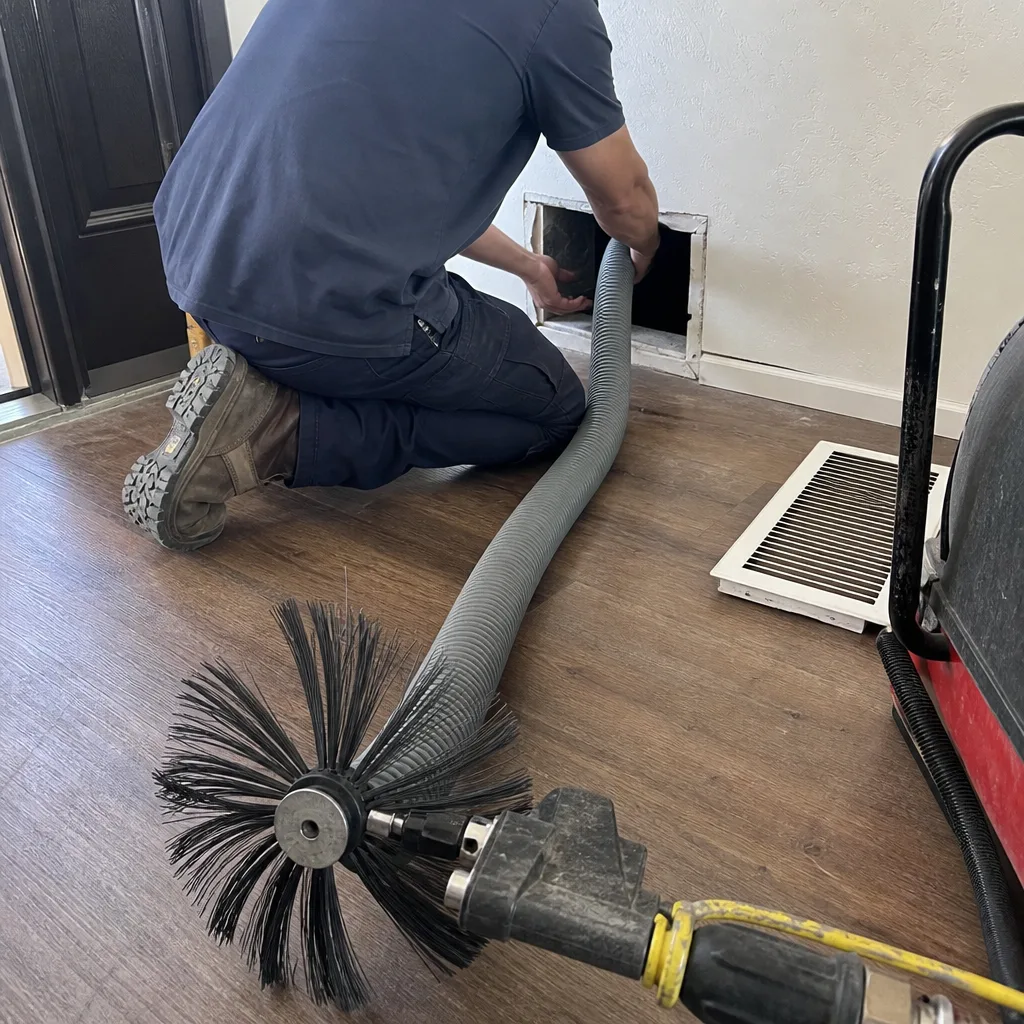
- Permit-free (maintenance): brush and vacuum cleaning of existing ducts, sanitizing or deodorizing interior surfaces, replacing a standard air filter, inspecting with cameras or scopes, sealing small gaps with mastic from inside the duct, and cleaning registers, grilles, and the visible portion of the plenum.
- Permit-required (construction or modification): replacing a damaged duct section, adding a new duct run, relocating a supply or return, modifying the plenum box, installing a bypass damper, re-routing flex duct through a new chase, replacing a section of rigid metal duct, or altering the system’s static pressure design.
- Licensed C-20 required (even if no permit): any repair to the structure of the duct system – even a five-minute flex duct patch – because California defines repair as construction, and construction on HVAC systems requires the C-20 classification.
In Ventura, we regularly see this distinction blur in practice. A technician cleaning ducts in a 1970s midtown Ventura ranch notices a collapsed section of flex duct under the house. It’s already torn. The homeowner says, “can you just patch that while you’re down there?” That patch – a single sheet of flex duct, two clamps, ten minutes – is a repair. Without a C-20 license, it’s unlicensed contracting. Without a permit where one is required, it’s unpermitted work. Both become the homeowner’s problem, not the technician’s, if the repair fails or an insurer gets involved.
We make the same distinction on every job. Our air duct cleaning in Ventura stays strictly within the maintenance scope unless we identify damage. When we do, the repair gets quoted separately, performed under the correct license classification, and documented with the same written guarantee we put on every air duct repair in Ventura. The cleaning invoice and the repair invoice exist as two separate records. That separation protects you.
What a C-20 License Actually Covers (and What Happens Without One)
A C-20 license is the California classification for Warm-Air Heating, Ventilating and Air-Conditioning Contractors. It covers the fabrication, installation, modification, and repair of warm-air heating, ventilating, and air conditioning systems – including every square inch of the duct work attached to them. A licensed C-20 contractor has passed trade exams, carries a bond, and maintains workers’ compensation insurance. The license number starts with a six-digit figure and is searchable in the CSLB’s public database at cslb.ca.gov.
A cleaning company without a C-20 is legal to clean. It is not legal to repair. That’s the distinction that matters. Here is what happens when an unlicensed technician performs a repair anyway:
- The work is unlicensed contracting. California Business and Professions Code section 7028 makes it a misdemeanor. The technician, not the homeowner, faces the criminal exposure. But the homeowner inherits the civil exposure.
- The repair has no permit trail. If the repair is significant enough to require a Ventura County building permit – replaced sections, new runs, plenum modifications – there is no record of it. When the home is sold, a diligent buyer’s inspection can flag it. The seller then discloses unpermitted work or repairs it retroactively.
- Insurance may deny the claim. Homeowners policies typically exclude damage caused by unlicensed contractors performing work requiring a license. A failed duct repair that leaks condensation into a ceiling cavity, grows mold, and costs $30,000 to remediate becomes a denied claim if the repair was done by an unlicensed technician.
- Warranties evaporate. Equipment manufacturers void warranties on altered systems when the alteration wasn’t done by a licensed contractor. That applies to the furnace and the air handler, not just the duct work.
- The work may fail inspection later. If you upgrade your HVAC system later and the city inspects, unpermitted duct modifications can hold up the permit for the new system until retroactive corrections are made.
We’ve been asked more than once why we don’t just “help out” with a quick patch during a cleaning. The answer is simple: the patch is the most legally consequential part of the job, not the least. In our experience across Ventura – from the pier-adjacent condos to the foothill homes off Foothill Road – the homeowners who understand this distinction are the ones who never end up in front of a claims adjuster trying to explain a repair that has no paper trail.
Title 24 and Your Duct System: What Ventura Homeowners Need to Know
California’s Title 24 Building Energy Efficiency Standards govern how HVAC systems must perform when they’re installed, modified, or replaced. Title 24 doesn’t apply to cleaning. It applies the moment you modify the duct system beyond its original condition – and it applies to any new HVAC installation in Ventura. Understanding this matters because it determines whether your “quick fix” becomes a code compliance project.
Title 24, Part 6 contains mandatory requirements for residential duct systems. The current standards (2022 code cycle, effective January 1, 2023) include specific requirements for duct insulation, leakage testing, and sealing. Here is what Title 24 means for ducts in practice:
- Duct leakage testing is mandatory for new systems and most duct replacements. Residential ducts in climate zones 6 and 7 (Ventura County spans both depending on proximity to the coast) must meet maximum leakage thresholds when installed or significantly altered. The test uses a duct blaster to pressurize the system and measure cubic feet per minute of leakage.
- Duct insulation minimums are specified by climate zone. Ventura’s coastal zones have lower R-value requirements than the inland zones, but the code still mandates minimums – typically R-6 for supply ducts in attics and R-4.2 for ducts in conditioned space, with variations by zone. A handyman replacing a duct section with uninsulated flex is not just unlicensed – the work itself fails Title 24.
- All joints and seams must be sealed. Title 24 requires specific mastic and tape standards. Duct tape (the cloth-backed gray tape) is explicitly not allowed for Title 24-compliant sealing. Mastic or UL-listed metallic tape is required.
- Filter access must be maintained. If any modification makes the filter inaccessible, it violates the ventilation requirements of Title 24.
If you’re planning an HVAC upgrade alongside a cleaning – replacing a furnace, adding a heat pump, or re-ducting for a room addition in Ventura – the Title 24 compliance path runs through your contractor’s permit. The permit triggers a plan review and a field inspection. A qualified C-20 contractor with HERS (Home Energy Rating System) rater access handles the leakage testing and documentation. We work with air-quality products from manufacturers including Abatement Technologies and Guardsman when a job calls for filtration or sanitizing above and beyond a standard cleaning, but we also point homeowners to our The Complete Guide to Air Duct Cleaning in Ventura for what code compliance requires when the system itself is being changed. The cleaning and the upgrade are two separate jobs, and only one of them needs a permit.
Ventura County Permits: When a Cleaning Visit Triggers a Building Permit
Ventura County building permits for HVAC work are governed by the California Mechanical Code (CMC) as adopted and amended by Ventura County. The county’s Building and Safety Division issues mechanical permits for HVAC installations, modifications, and replacements. Most cities within the county, including the City of Ventura, have their own building departments – the City of Ventura’s Community Development Department handles permits within city limits, while the county handles unincorporated areas like Oak View, Saticoy, and the Ojai Valley corridor.
The permit threshold is the same across both jurisdictions. Cleaning does not require a permit. These items do:
- Replacing any section of duct work – even a short run between the plenum and a register boot.
- Modifying the plenum – changing its size, adding a takeoff, or replacing it entirely.
- Adding a new register or return – cutting a new opening into a conditioned space.
- Re-routing existing duct work – moving a run to accommodate a remodel or addition.
- Replacing a furnace, air handler, or heat pump – which includes the duct connections at the unit.
- Converting a system – gas to electric, electric to heat pump, or adding zoning dampers.
A mechanical permit in Ventura County typically runs between $150 and $400 for residential duct repair or replacement depending on the scope and jurisdiction. The fee schedule is public. The permit includes one or more inspections – typically a rough inspection before insulation and drywall conceal the work, and a final inspection after the system is operating. Title 24 duct leakage testing is a prerequisite to passing the final inspection on most jobs that alter more than a single section.
What Ventura’s local amendments add to the state-level code is modest but real. The county’s adoption of the California Mechanical Code includes local amendments to the administrative chapters – permit expiration timelines, inspection scheduling requirements, and minor plan review thresholds. The moisture-resistant duct requirements for crawl spaces and attics common in Ventura’s marine layer climate are enforced through the state code, but local inspectors in Ventura pay particular attention to condensation control on duct surfaces in unconditioned spaces. It’s a climate-driven enforcement priority, not a code change, and it’s one of the reasons we take photos of every section we clean or repair. The visual record matters if an inspector ever asks how the system looked before the work began.
How to Verify a Contractor’s License Before They Touch Your Ducts
License verification in California takes four minutes and it eliminates the most common fraud pattern in the duct cleaning industry: companies that advertise cleaning but perform repairs without a license. The CSLB public database is free, current, and definitive. Here is the step-by-step process we recommend to every Ventura homeowner before any technician enters the house:
- Ask for the license number before the appointment. A legitimate contractor provides it voluntarily. A cleaning company that also holds a C-20 will have it printed on the estimate. Refusal to provide a license number before arrival is the first red flag.
- Look it up at cslb.ca.gov. The “Check a License” tool shows the classification, the license status (active, inactive, suspended), the bond status, the workers’ compensation coverage status, and the business name on file. Confirm that the classification is C-20 if any repair work is quoted.
- Verify the business name matches. The license holder’s business name should match the company on the van, the invoice, and the estimate. Subcontracting arrangements where a licensed company sells the job to an unlicensed crew are common. The person standing in your hallway needs to be working under the license you verified.
- Confirm workers’ compensation insurance is active. If a technician is injured on your property and the company lacks workers’ comp, the homeowner’s homeowners policy becomes the target. The CSLB database shows workers’ comp status directly.
- Ask who pulls the permit. On any repair requiring a Ventura or Ventura County permit, the contractor – not the homeowner – should pull it. A contractor who asks the homeowner to pull the permit is signaling that they’re not prepared to stand behind the work with their license attached.
Every Linden Air Duct Ventura technician is background-checked, identity-verified, and photo-badged. Before the appointment, we send the tech’s name and photo to the homeowner. At the door, the tech shows a photo ID badge that matches the person whose name and photo you already received. That’s the Threshold Standard we’ve operated under since 2004, and it’s a different kind of verification than the CSLB database – one confirms the license, the other confirms the human being.
Homeowner Liability When There’s No Permit Trail
The uncomfortable truth in California is that homeowners carry most of the civil risk from unpermitted and unlicensed HVAC work, even when they didn’t know the work required a permit. The legal doctrine is not forgiving. When you hire a contractor, you are presumed to have hired a competent professional. If that professional does unpermitted work and it’s discovered later, the homeowner is the one who must remediate. The contractor may be gone. The work remains.
Here is where the liability lands in Ventura specifically:
- Resale disclosure. California Civil Code requires sellers to disclose all unpermitted work known to them. Ventura’s real estate market has enough older housing stock – homes built in the 1950s, 1960s, and 1970s in the midtown and east end neighborhoods – that unpermitted HVAC work is a regular inspection finding. The seller either credits the buyer for remediation or delays the close.
- Insurance exclusions. Most homeowners policies exclude damage arising from unlicensed contractor work. A duct repair that fails, leaks, and causes mold or structural damage can generate a six-figure remediation bill that the homeowner pays personally because the exclusion applies.
- Lender requirements. Refinancing and HELOC applications often trigger an appraisal that flags obvious unpermitted work. Lenders can require retroactive permits before funding.
- Code enforcement. If a neighbor complaint or a city inspection reveals unpermitted HVAC work, the Ventura building department can issue a violation requiring correction, retroactive permits, and in some cases additional inspections of the entire system.
We’ve seen the pattern enough times in Ventura to speak plainly: the homeowner who saved $200 on an unlicensed repair spends $2,000 fixing it when the house goes into escrow. The paper trail is the protection. When we do any air duct repair in Ventura, the invoice describes exactly what was replaced, the method used, and the materials – and it’s backed by our written guarantee. That document goes into the homeowner’s file and becomes part of the home’s improvement history. If a future buyer’s inspector asks about the duct work, there is a record with a license attached. The alternative is a shrug and a remediation estimate.
What Inspectors Actually Look At During a Duct-Related Inspection
Ventura and Ventura County building inspectors evaluate duct work against the California Mechanical Code, Title 24 energy requirements, and the local amendments adopted by each jurisdiction. The inspection is not a deep performance audit – it’s a code compliance check. Knowing what the inspector looks at tells you why some repairs sail through and others get red-tagged.
On a typical residential duct inspection, the inspector reviews:
- Materials and sizing. Duct materials must match the approved plan. Flex duct must be properly sized for the airflow requirements of the system. Undersized flex run in a tight attic is a common red tag in Ventura because the marine layer drives humidity into unconditioned spaces and compounds airflow problems.
- Sealing and connections. All joints, seams, and connections must be sealed with mastic or UL-listed tape. The inspector will visually check connections at the plenum, register boots, and any splices. Exposed duct tape – gray cloth tape – is an automatic correction.
- Support and routing. Flex duct must be supported at specified intervals, typically every 4 to 5 feet, and must not kink or sag excessively. Rigid duct must be mechanically fastened. The inspector looks for crushed runs, tight-radius bends, and duct work resting on plumbing or electrical lines.
- Insulation integrity. In unconditioned spaces like Ventura attics and crawl spaces, duct insulation must be intact and continuous. Torn vapor barriers, gaps at connections, and compressed insulation get flagged because condensation forms on the cold duct surface – and condensation in a Ventura crawl space becomes a mold problem within months.
- Title 24 leakage test documentation. When the permit scope requires it, the inspector verifies the HERS rater’s leakage test results are on file and meet the required threshold. Without that documentation, the final inspection does not pass.
A cleaning inspection is different. We don’t pull permits for cleaning because the law doesn’t require them. What we do instead is document the before-and-after condition of the duct interiors. We run inspection cameras through the system before and after, and we provide the homeowner with visual proof. It’s not a code inspection, but it’s a record of what the system looked like when we arrived and what it looked like when we left. For homeowners who’ve had bad experiences with the industry’s bait-and-switch pricing, that visual record is the answer to “how do I know the work was actually done?” See our Air Duct Cleaning Warning Signs: A Ventura Homeowner’s Reference Guide for other red flags to watch for.
Climate, Duct Codes, and Ventura’s Coastal Microclimates
Ventura’s climate shapes how duct systems fail and why code requirements read the way they do. The city sits in a coastal transition zone – marine layer mornings, afternoon sun, and enough salt air near the ocean to accelerate corrosion on exposed metal components. Homes a half-mile from the beach in Ventura’s Pierpont district face different duct conditions than homes in the hills above Foothill Road five miles inland. The code treats these differently because the physics are different.
What Ventura’s climate means for your duct system in practical terms:
- Condensation is the primary failure mode. Ducts in unconditioned attics and crawl spaces carry cool air through warm, humid spaces. The marine layer keeps morning humidity high for months of the year. When insulation fails or connections leak, condensation forms inside and outside the duct. In our experience cleaning systems across Ventura, a significant share of the “dust” homeowners assume is normal is actually dried condensation residue carrying attic or crawl space particulate.
- Salt air accelerates corrosion on exposed metal. Metal duct components, register grilles, and fasteners within a mile or two of the coast corrode faster than inland. The code’s material requirements don’t change, but the service life of the components does. A galvanized register that lasts twenty years in eastern Ventura County may need replacement in ten years near the beach.
- Flex duct in hot attics degrades faster. Ventura’s inland microclimates, particularly east Ventura and the Saticoy corridor, see summer attic temperatures that are hard on flex duct’s outer jacket and inner liner. The plasticized jacket becomes brittle, the liner separates, and the duct collapses. This is the damage we most often find during a cleaning that prompts a repair conversation.
- Pest intrusion is a real code-adjacent concern. Rats and mice in Ventura’s older crawl spaces chew through flex duct. A torn duct is not just an energy loss – it’s a pathway for rodent waste into the air stream. Code requires the repair, but the practical reason homeowners call us is the smell. The repair itself is a C-20 job with a paper trail.
We clean systems from the beach neighborhoods to the east end with the same equipment – Rotobrush and Nikro negative-pressure extraction systems – but the conditions vary enough that no two jobs look the same. A midtown bungalow with a 1970s metal duct system needs different attention than a 2010s tract home in east Ventura with flex duct throughout. The code baseline is identical. The real-world condition of the ducts is not.
Common Mistakes to Avoid
- Letting a cleaning technician “patch” a duct section. That patch is a repair requiring a C-20 license and possibly a Ventura permit. If the technician is not licensed for the repair, you’ve accepted unlicensed HVAC work. The correct move is to ask for the license number and verify the C-20 classification before the patch happens.
- Assuming a permit isn’t needed because the repair is “small.” California code doesn’t have a de minimis exception for duct repair. Replacing a five-foot section of flex duct requires the same permit as replacing fifty feet. Scope doesn’t matter; the act of modification does.
- Pulling the permit yourself at the contractor’s request. When a homeowner pulls the permit, the homeowner becomes the responsible party of record. The contractor walks away with cash and no paper trail. A legitimate C-20 contractor pulls their own permits in Ventura and stands behind the inspection.
- Skipping license verification because the company “looks professional.” Vans are vinyl-wrapped for $500. Websites are templates. The only verification that matters is the CSLB database entry showing an active C-20 classification and matching business name.
- Accepting a verbal guarantee on repair work. Verbal guarantees don’t exist when a repair fails. Every Linden air duct repair in Ventura includes a written guarantee with a free second visit if the repair fails – and that’s exactly what homeowners should demand from any contractor: the terms on paper, not a promise at the door.
- Waiting until a home sale to address unpermitted work. The most expensive time to remediate unpermitted duct work is during escrow, when the buyer has leverage and the timeline is compressed. Fixing it now costs less and keeps the disclosure clean.
- Treating the cleaning as optional while the ducts are aging. In Ventura’s marine layer climate, dirty ducts are not just an indoor air quality issue – they’re a warning sign that condensation, pest intrusion, or insulation failure is happening inside the system. A thorough cleaning with a camera inspection catches issues before they become code violations.
See the difference
 Before
 After
After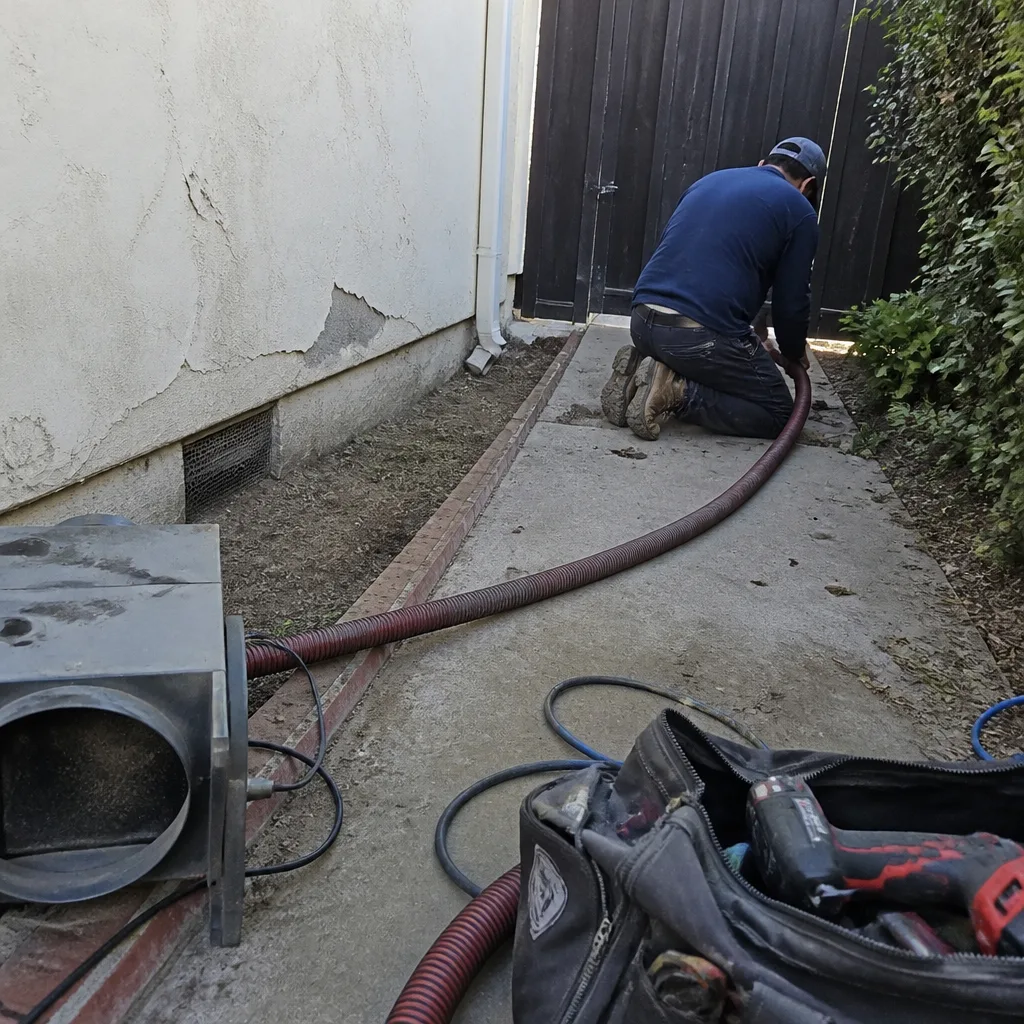 Before
 After
After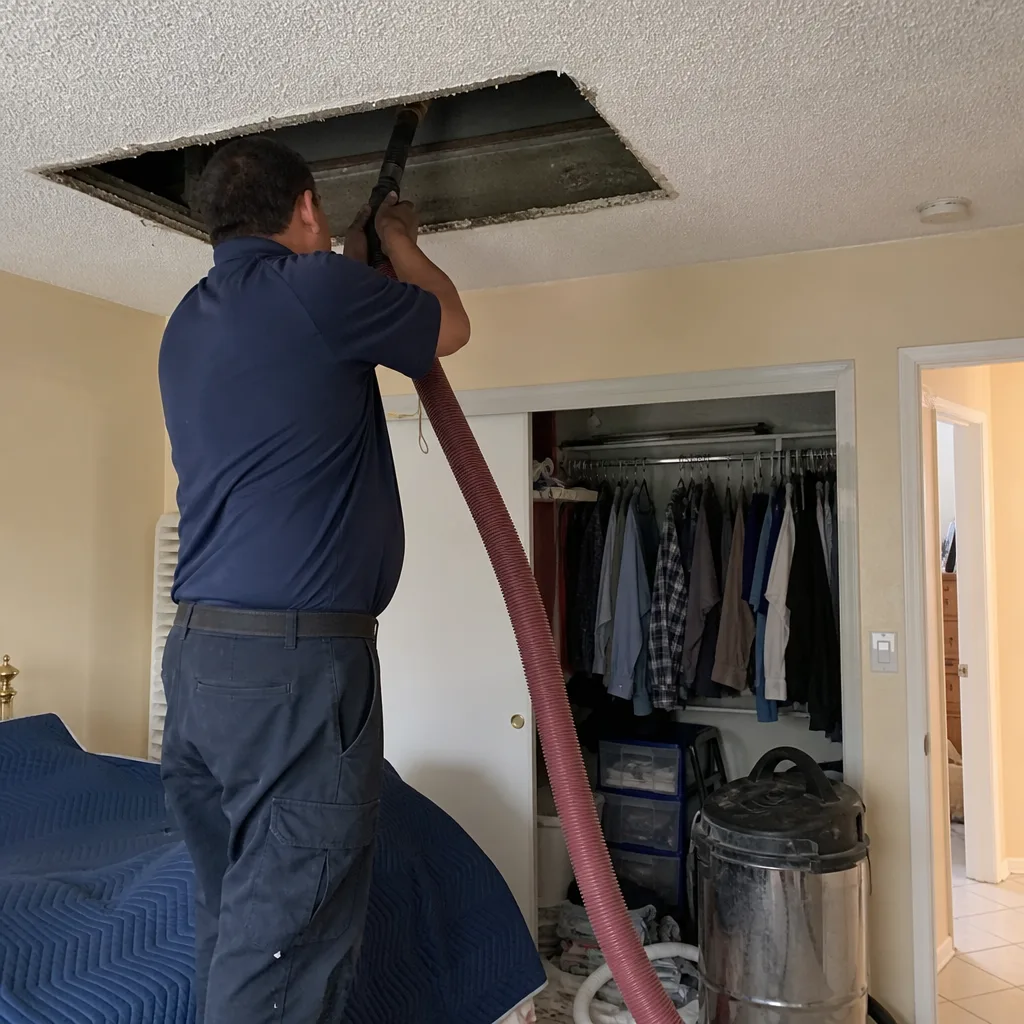 Before
 After
AfterWhen to Call a Professional
Call a professional when the scope crosses from cleaning into any form of modification – a collapsed section, a torn flex run, a leaking connection at the plenum, or a register that no longer delivers air. Call a professional when you see signs of condensation staining on ceilings or walls near duct runs, when you smell rodent activity coming from the vents, or when an inspection camera reveals internal damage during a cleaning. Call when your allergen symptoms spike at home and no surface cleaning moves the needle. And call when you want a written record of the condition of your system before you put the house on the market. Linden Air Duct Ventura offers free estimates in Ventura for air duct cleaning, dryer vent cleaning, and air duct repair – and we’ll tell you honestly whether a permit is part of the job before any work begins. Call (559) 315-0418.
Frequently Asked Questions
No. Air duct cleaning is classified as maintenance, not construction, and requires no permit anywhere in California, including Ventura. A permit becomes necessary only when the work modifies the duct system – replacing a section, adding a run, modifying the plenum, or altering airflow. Call (559) 315-0418 for a free estimate and we’ll tell you up front whether your job crosses the permit threshold.
A contractor must hold a C-20 Warm-Air Heating, Ventilating and Air-Conditioning Contractor license issued by the California Contractors State License Board. Cleaning alone requires no license, but any repair to the duct system falls under the C-20 classification. Verify any contractor’s license at cslb.ca.gov before agreeing to repair work.
You inherit the civil liability. The insurance claim may be denied because homeowners policies typically exclude damage caused by unlicensed contractors performing work requiring a license. The repair itself must then be redone by a licensed C-20 contractor, with a permit if the repair scope requires one. This is why verifying the license before work begins is the single most important step a homeowner can take.
Title 24 applies when you modify or replace your duct system, not when you clean it. If you replace a furnace, add a heat pump, change duct runs, or add registers, Title 24 requirements take effect – including duct leakage testing, minimum insulation levels, and approved sealing materials. A licensed C-20 contractor with HERS rater access manages the compliance documentation as part of the permit.
Expect to pay roughly $150 to $400 in permit fees for residential duct repair or replacement in Ventura or unincorporated Ventura County, depending on the scope and jurisdiction. The permit includes at least one inspection. Your contractor should pull the permit and include the fee as a line item on the written estimate.
Before-and-after photos are the standard. A reputable company runs an inspection camera through the ducts before starting and again after finishing, and provides you with visual proof of the results. We do this on every job in Ventura – the photos show the interior condition of each main run and the plenum, and they become your record that the work was done. Call (559) 315-0418 for an exact quote.
The Bottom Line
Cleaning your air ducts in Ventura is maintenance – no permit, no C-20 license, no inspection. For more guides & resources on protecting your home and knowing your rights, visit our blog. Repairing or modifying them is construction – a C-20 license, a permit when the scope requires one, and a paper trail that protects you as the homeowner. The line between those two categories is where most of the trouble lives. Verify the license. Demand the permit when it applies. Get every guarantee in writing. And when the job crosses that line, make sure the person holding the tools has the credentials to stand behind the work. A four-minute license check at cslb.ca.gov costs less than any repair it prevents.
Written by Marcus Veale, Owner at Linden Air Duct Ventura, serving Ventura since 2004.