
Last updated October 15, 2026
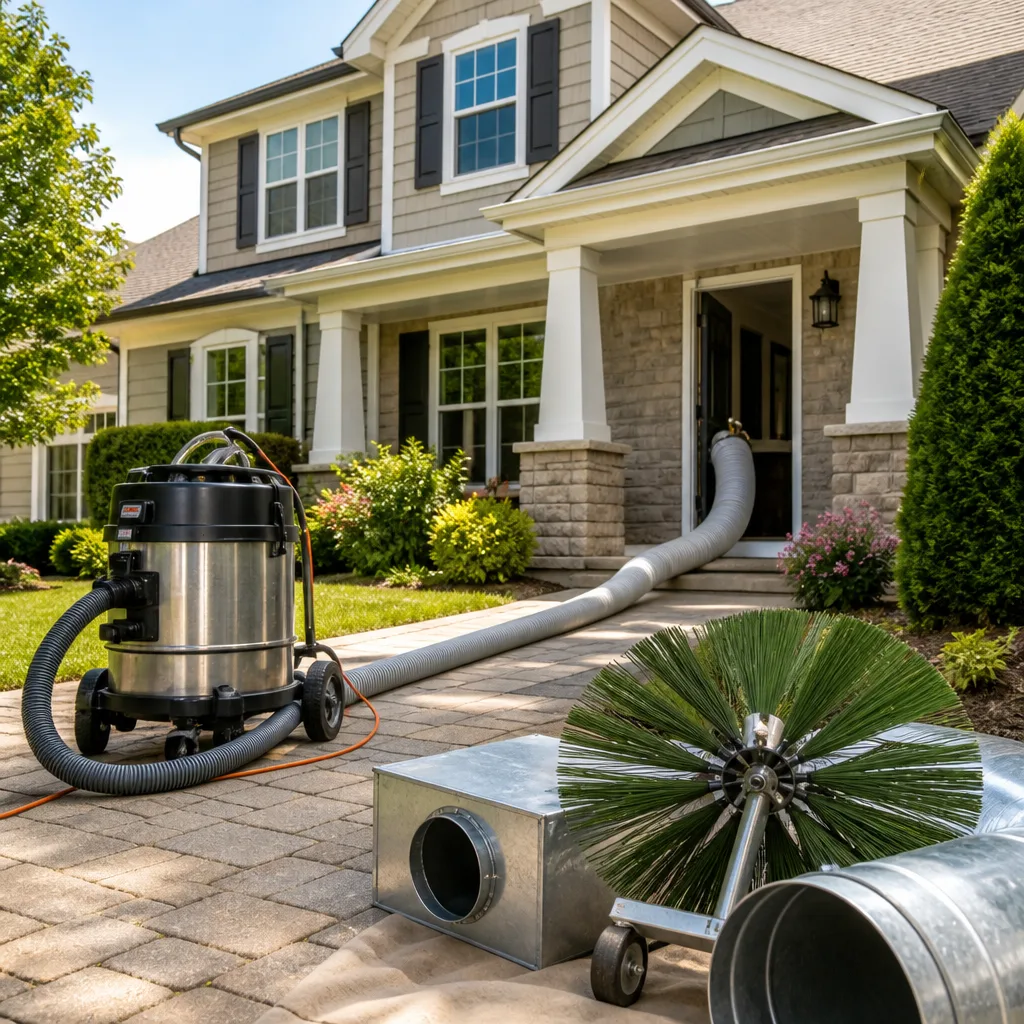 Whole-home duct cleaning
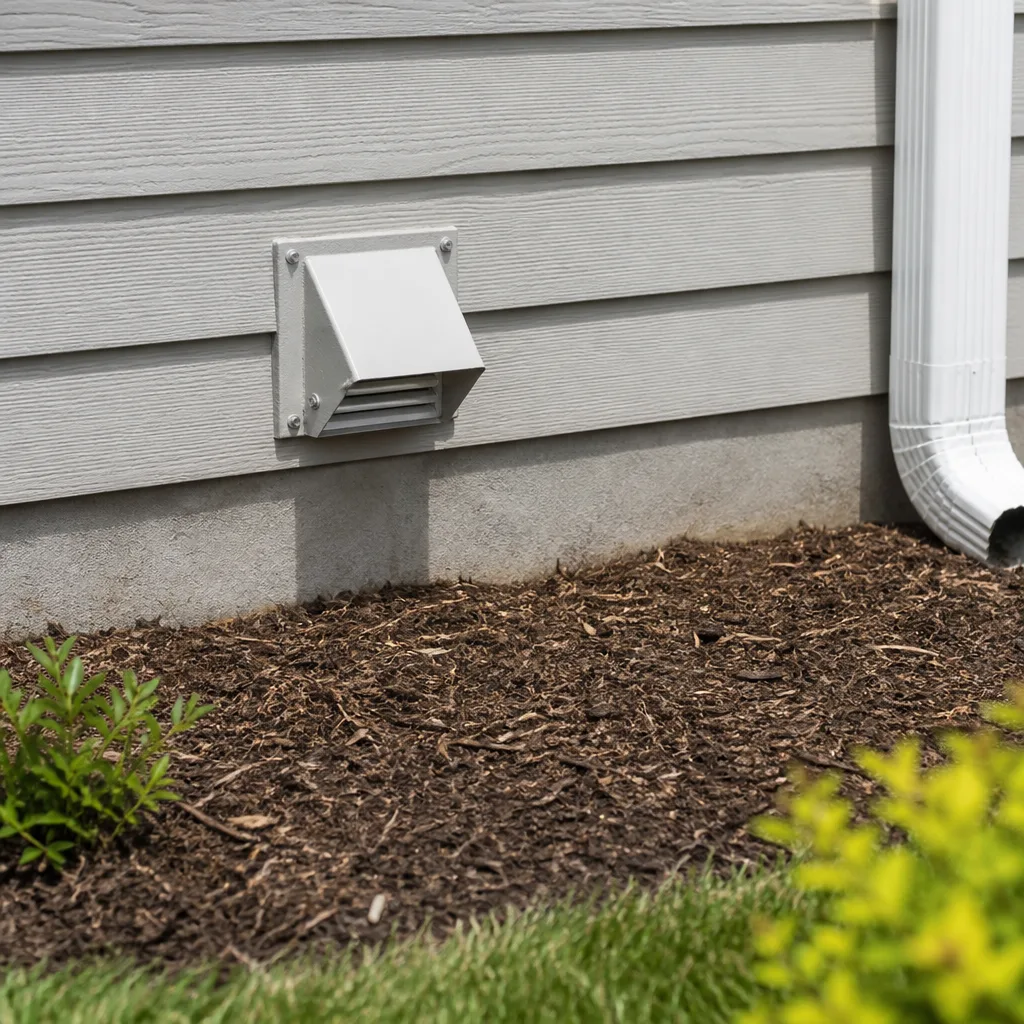 Dryer vent cleaning
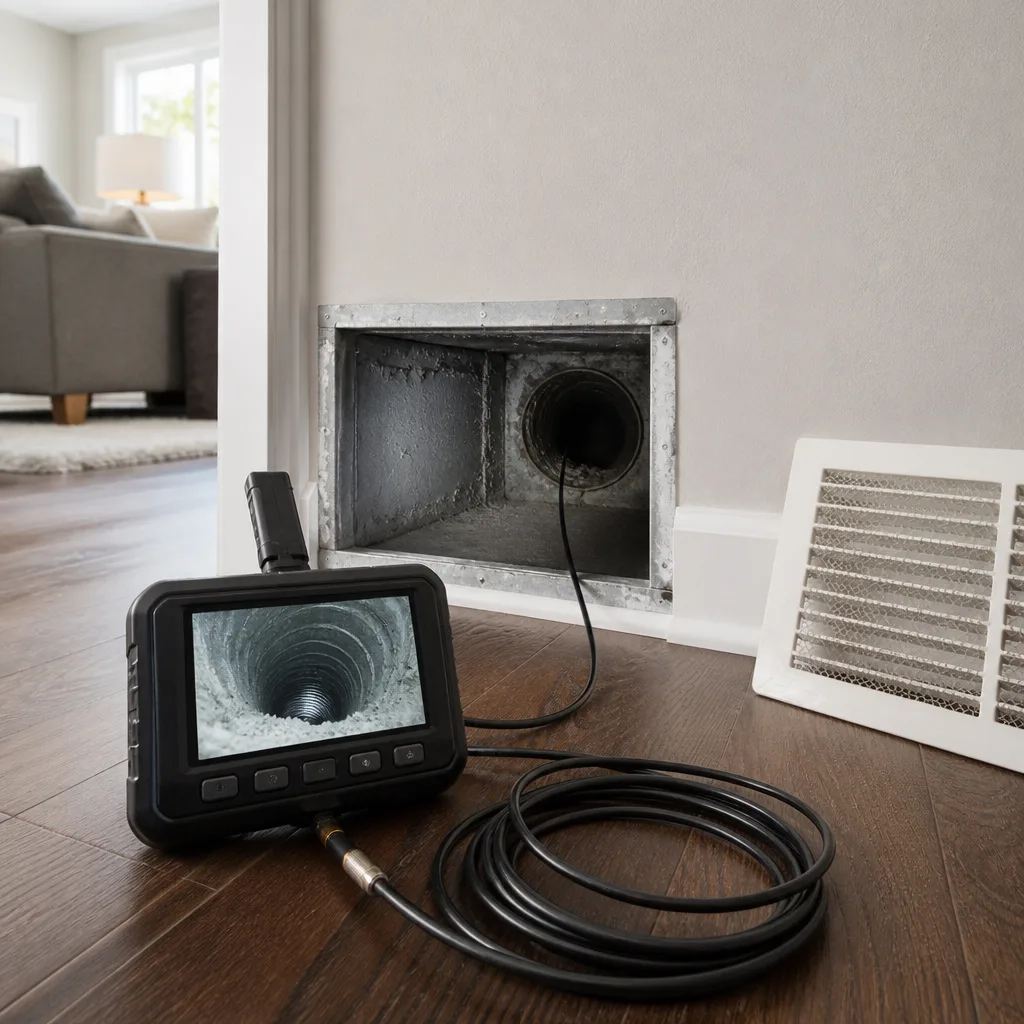 Camera inspection
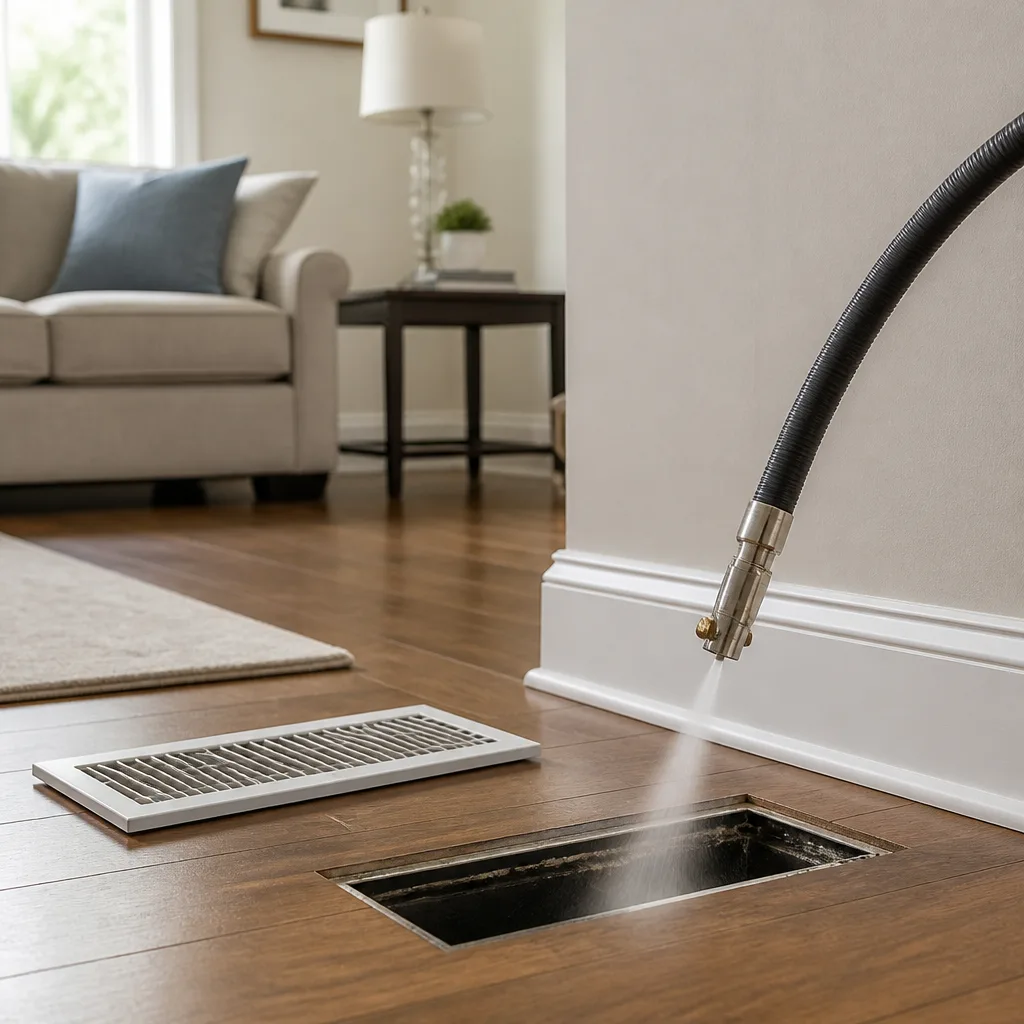 Sanitizing & deodorizing
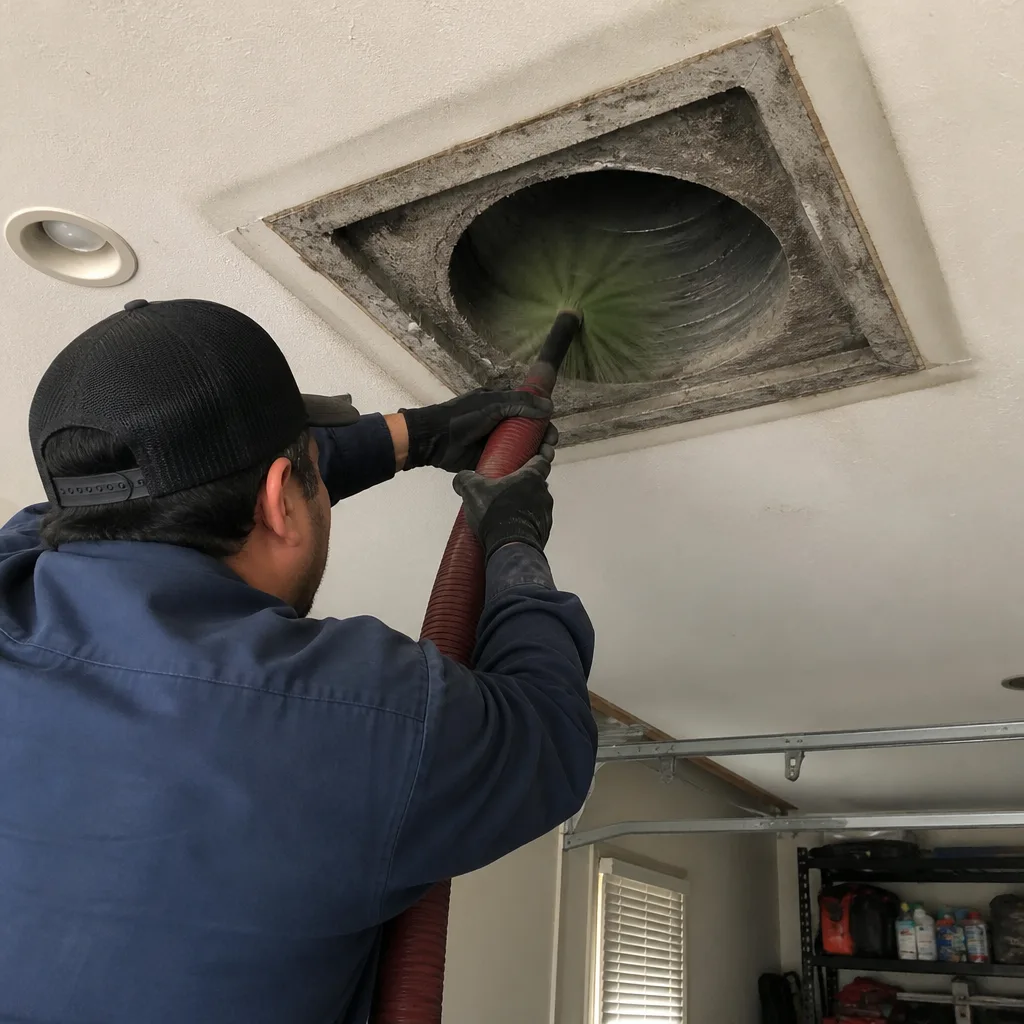
Whole-system duct and dryer vent check with before-and-after photos - you see exactly what came out of your vents
That "$99 whole-house special" is a bait ad - the real number appears once they are in your hallway, or the "clean" is a shop-vac at the register. We photograph the inside of your ducts before and after instead.
Seasonal Air Duct Cleaning Care for Ventura: Year-Round Homeowner’s Guide
Most Ventura homeowners assume their HVAC system works less than inland systems because our coastal climate rarely produces extreme heat or cold. The opposite is true. Ventura systems run in short, frequent cycles nearly every day of the year, which means they pull air through ductwork constantly and accumulate particulate faster than systems that run hard for two months and sit dormant for ten. Understanding how our four distinct micro-seasons affect what collects inside your ducts is the difference between scheduling Air Duct Cleaning when it makes sense and paying for service you don’t need yet.
This guide explains what each Ventura season does to your ductwork, when a professional cleaning actually pays for itself, and how to tell the difference between routine maintenance and a system that needs attention now-see our Air Duct Cleaning Maintenance Checklist for Ventura Homeowners for the full routine. By the end, you’ll know exactly what to check at each register, what timeframe offers the best value for professional service, and why fall is the highest-stakes season for duct systems in this city.
Quick Answer
There is no single “right” month for air duct cleaning in Ventura, but the most valuable timing is late spring or early fall. A pre-summer cleaning prevents your first AC run from distributing months of settled dust throughout the house, while a post-fire-season cleaning addresses the smoke and ash particulate that Ventura’s fall winds push into duct systems. Most Ventura homes benefit from a professional cleaning every 2 to 4 years, with annual DIY filter and register checks in between.
Styles & brands we work with
Table of Contents
- Ventura’s Four Functional HVAC Seasons (And What Each One Deposits in Your Ducts)
- Spring: The Marine Layer Moisture Problem
- Summer: First AC Run and the Winter Dust Dump
- Fall: Wildfire Smoke and the Highest-Stakes Season
- Winter: The Infrequent-Heat Cycling Effect
- DIY Filter Swap or Professional Inspection: How to Decide
- Best Seasonal Timing for Professional Duct Cleaning in Ventura
- What Duct Cleaning Costs in Ventura (And Why Prices Vary)
Ventura’s Four Functional HVAC Seasons (And What Each One Deposits in Your Ducts)
Coastal Ventura doesn’t get a dramatic autumn leaf drop or a hard winter freeze, and that’s precisely why conventional seasonal advice written for the Northeast or Midwest falls flat here. What we get instead is a cycle of marine air, coastal inversion, wildfire smoke season, and shoulder-season temperature swings. Each of these creates a distinct type of contamination, and each requires a different response from homeowners.
Here is what our technicians have observed across thousands of Ventura duct inspections since 2004:
- Spring (March through May): Marine layer moisture compresses against the coastal hills, raising indoor humidity. Dust that has been sitting dry in ducts all winter becomes heavy and sticky. This is when dust mites and microbial growth inside ductwork become most active.
- Summer (June through August): The first sustained AC demand of the year. Air velocities through ducts increase, which dislodges the particulate that settled during months of low-speed heating cycles. This is when homeowners notice dust blowing from registers.
- Fall (September through November): Santa Ana wind season and residual wildfire smoke risk. Ash and fine particulate can be pulled into return ducts from outside air intakes. The Thomas Fire in December 2017 demonstrated how far smoke travels and how persistently it lingers inside home ventilation.
- Winter (December through February): Infrequent heating cycles with long periods of system idleness. Temperature swings between warm days and cold nights cause condensation cycles inside ducts that settle particulate unevenly and can create odor compounds.
Most Ventura homes have ducts that are never fully dormant, which means contamination builds steadily rather than in one seasonal burst. This is why a seasonal awareness approach works better than a one-time annual cleaning habit. You’re not cleaning for one season; you’re cleaning for the cumulative effect of all four.
Spring: The Marine Layer Moisture Problem
Late spring in Ventura means the marine layer sits low over the city for weeks at a stretch. May Gray and June Gloom are not just outdoor phenomena. They are indoor humidity events. When outdoor relative humidity stays above 70 percent for days at a time, the air moving through your ductwork carries that moisture with it. Duct interiors, especially in unconditioned attic spaces, become condensation surfaces.
Moisture changes the behavior of everything already inside your ducts. Dry particulate sits loose and inert. Humid particulate cakes, clings, and becomes a substrate for biological growth. This is why Ventura homeowners sometimes notice a musty or “old” smell from registers in June that wasn’t there in April. The ducts didn’t get dirtier. They got damper.
What to check in spring:
- Run your HVAC fan on “on” (not “auto”) for 10 minutes, then smell the air at each register. A soil or damp-paper smell indicates particulate is holding moisture.
- Check visible dust accumulation around register covers. If dust appears darker or slightly sticky rather than dry and light, moisture is present.
- Pull one register cover and shine a flashlight into the duct boot. If you see what looks like caked rather than fluffy dust, you’re seeing moisture-bound particulate.
- Inspect attic ductwork for visible condensation drips or water stains on the insulation wrap. This is especially common in older Ventura homes where duct insulation has degraded.
If spring inspection reveals moisture-bound duct buildup, the best response is a professional cleaning during the summer or early fall when indoor humidity naturally drops. Cleaning during peak marine-layer months means you’re working against the moisture that caused the problem in the first place.
Summer: First AC Run and the Winter Dust Dump
The first genuinely hot week in Ventura, usually in late June or early July, triggers something our technicians hear about every year. Homeowners switch their thermostats to cooling for the first time in months, and within hours they notice dust particles in the air, a stale smell from registers, or visible debris blowing from vents. This is the “winter dust dump,” and it’s one of the most common reasons Ventura residents call us in July.
Here is what’s happening. During winter and spring, your system runs in heating mode or sits idle more often. The air moving through ducts is slower and warmer. Particulate settles. Dust that would otherwise be carried through to filters simply rests inside the ductwork. Then summer arrives, the AC coil runs cold, and airflow velocity jumps. That settled material breaks loose all at once.
The pre-summer check that prevents this:
- Replace your filter before the first anticipated AC run of the season, not after. A fresh filter catches dislodged particulate before it reaches living spaces.
- Vacuum all register covers and visible duct openings. The first few inches of duct are often the dirtiest and easiest to address yourself.
- Run the system in cooling mode for 15 minutes while watching the air at each supply register. Look for visible particle streams in direct sunlight.
- If you see particle discharge that lasts more than a few minutes, you’re seeing evidence of substantial internal buildup, and a professional cleaning is in order.
One detail worth knowing: the particulate that blows out during the first AC run is only a fraction of what remains inside the ducts. What you see at the register is the material light enough to become airborne at current airflow speeds. Heavier settled layers remain until a professional negative-pressure extraction removes them.
Fall: Wildfire Smoke and the Highest-Stakes Season
For Ventura duct systems, fall is the season that carries the most serious contamination risk. Santa Ana winds push dry, particulate-laden air through the region from September through November. Any wildfire smoke within range, whether close or hundreds of miles away, becomes a duct contamination event. And once smoke particulate has entered your HVAC system, it stays there until actively removed.
The Thomas Fire of December 2017 taught local HVAC technicians some hard lessons about smoke infiltration. Homes miles from an active fire perimeter still showed fine ash inside return plenums and supply ducts. In some cases, smoke particulate entered through outside air intakes while systems were off. In others, families evacuated with systems running, which pulled smoky air through the ductwork continuously for days. What we learned in the years after is that even a single significant exposure can leave ducts holding combustion particulate that smells, irritates, and recirculates every time the system runs.
Why fall is the highest-stakes season:
- Santa Ana wind conditions create low humidity and high dust mobility, which pulls exterior particulate toward air intakes.
- Wildfire smoke contains compounds that bond to duct surfaces and resist simple filtration.
- Late fall often brings a transition back to occasional heating, which warms duct interiors and activates odor compounds from any smoke particulate present.
- Homes are closed up more often in the fall, which concentrates indoor air and makes residual smoke odor more noticeable.
What to do if you’ve had smoke exposure:
- Change your filter immediately, even if it’s not due. Smoke loads filters quickly.
- Call for a professional duct inspection if you can smell smoke from registers when the system runs. That smell indicates particulate is inside the ductwork, not just the filter.
- Have the system professionally cleaned if smoke odor persists for more than a week after replacing the filter. Smoke particulate does not dissipate on its own.
Our team has been handling smoke-related duct cleaning in Ventura since long before the Thomas Fire, but our post-fire years sharpened our understanding of how thoroughly smoke infiltrates residential systems. If you had significant smoke exposure, don’t wait until spring to address it. The odor compounds will only become more embedded.
Winter: The Infrequent-Heat Cycling Effect
Ventura winters are mild, which means your heating system runs in short bursts rather than long stretches. The furnace fires for 20 minutes on a cold morning, shuts off, fires again in the evening, sits idle overnight. This cycling pattern has a specific effect on duct interiors that differs from both hard-use systems and fully dormant ones.
Short heating cycles mean ductwork constantly moves between warm and cool states. Warm air expands the metal or flex duct slightly. Cool air contracts it. This cycle loosens particulate from duct walls, but the airflow in a 20-minute cycle isn’t strong enough to carry that loosened material all the way to the filter or out through registers. So detached particulate accumulates in low points of the duct system, especially in flat runs and angled transitions.
This is also the season when dust that has been building in the system since summer gets redistributed unevenly. Some registers will show dust discharge while others stay clean. That asymmetry is a clue: when one area of the house shows visible dust while another doesn’t, you’re likely seeing a localized buildup point inside a specific duct run.
Signs your Ventura home needs winter attention:
- Dust appears only in certain rooms or at certain registers, suggesting localized buildup rather than uniform filter-level issues.
- A slight “burning” smell during winter system startups. This is often dust burning off heat exchange components, but persistent dust on hot coils and exchangers can be distributed through the duct system.
- Heating is uneven: some rooms warm quickly while others stay cool. Blocked or debris-laden duct branches restrict airflow to specific zones.
- You notice a musty smell that appears only when the heater runs, indicating moisture-bound particulate being warmed by the heat source.
Winter is the most common time for Ventura homeowners to notice that something is off with their ducts, because they’re indoors more and the system is actively moving air. But winter is not always the most efficient time to schedule a full professional cleaning. We discuss timing in more detail below.
DIY Filter Swap or Professional Inspection: How to Decide
Not every seasonal register observation requires a professional service call. Homeowners who know what to look for can handle routine seasonal checks themselves and recognize the boundary between maintenance and a job that requires negative-pressure extraction equipment. Here is the honest breakdown.
What a homeowner can legitimately handle seasonally:
- Filter replacement. This is not a substitute for duct cleaning, but it is the single most effective routine task for keeping airborne particulate from entering your ductwork in the first place. In Ventura’s coastal air, every 60 to 90 days is a reasonable interval, more often during fall smoke season.
- Register and grille cleaning. Remove each visible register cover and wash it with warm water and mild soap. Vacuum the accessible duct opening with a household vacuum and a brush attachment. You’re reaching the first few inches of the duct only, but that’s often where the most visible accumulation sits.
- Visual inspection. With a flashlight, examine the first few inches of every accessible duct opening. Look for caked dust, visible microbial growth, or debris that looks like it came from construction rather than household dust.
- Airflow testing. With the system running, hold a tissue near each register. Compare airflow strength between rooms. Consistent airflow suggests relatively clear ducts; major differences between rooms can indicate a blockage.
When a professional inspection is the right call:
- You see visible particulate discharge from registers after changing the filter and running the system. This indicates buildup inside the duct runs beyond the filter’s reach.
- You smell musty, smoke, or organic odors from the supply air that persist. Surface cleaning cannot remove odor compounds embedded inside ducts.
- You have visible microbial growth inside any accessible duct opening. This is beyond homeowner scope and requires professional-grade cleaning and potentially antimicrobial treatment.
- A register shows zero airflow while others show normal flow. That’s a duct blockage or collapse and needs professional diagnosis.
- Your home had significant renovation work. Construction dust settles inside ductwork and will distribute through the house for years unless removed.
When you’re not sure, the right move is a professional inspection. At Linden Air Duct Ventura home, we inspect before we quote. A camera inspection tells you exactly what’s inside your ducts and whether cleaning is justified. We’d rather tell a homeowner their ducts are fine than sell a cleaning they don’t need.
Best Seasonal Timing for Professional Duct Cleaning in Ventura
If you’re going to invest in a full professional air duct cleaning in Ventura, the timing has a real impact on both value and convenience. Here is our honest guidance based on two decades of scheduling Ventura jobs.
The two best windows:
- Late spring (May through early June). The marine layer has done its moisture work, and the first AC run hasn’t happened yet. Cleaning now removes the accumulated winter and spring buildup before the system moves into high-speed summer cooling. Your first AC run distributes clean air, not months of settled dust.
- Early fall (September through mid-October). If your home had any smoke exposure from the fire season, this is when you address it. You’re also preparing for the system’s transition back to occasional heating, and you’re completing the cleaning before the cooler months, when technicians get busier with heating-related calls.
Why shoulder season booking protects your scheduling flexibility: most Ventura homeowners call for duct cleaning when something goes wrong, which is typically during the first heat wave of summer or the first cold snap of winter. By then, good contractors are booked out. Booking in May or September means you choose your date rather than getting assigned whatever’s left, and the work is done before you actually need to rely on your system.
Timing considerations by household type:
- Homes with allergy-sensitive occupants: Clean in late spring so the entire summer cooling season runs with clean ducts.
- Homes in wildfire-risk areas or with smoke exposure history: Clean in early fall, after the worst of the fire season has passed.
- Recently renovated homes: Clean immediately after renovation completion, regardless of season. Construction dust is a different animal than seasonal accumulation.
- Homes that have never been cleaned and are 10+ years old: The season matters less than the fact that a cleaning is overdue. Schedule the earliest available appointment.
- Smaller homes (under 1,500 sq ft, 1 system): $300 to $500
- Average Ventura homes (1,500 to 2,500 sq ft, 1 to 2 systems): $450 to $750
- Larger homes (2,500+ sq ft, 2+ systems, or long attic duct runs): $650 to $1,100+
- Add-on dryer vent cleaning: $75 to $150, with the caveat that this should be listed as a separate line item on a written quote
- Air duct repair work: Diagnosed and quoted separately, since repair scope varies too widely for flat pricing
What Duct Cleaning Costs in Ventura (And Why Prices Vary)
If you’ve started researching duct cleaning prices, you’ve probably noticed a wide range. Some companies advertise very low per-room teaser prices. Others quote per-vent pricing that looks straightforward until the final invoice arrives. Here is what you should actually expect to pay in Ventura, and why the spread exists.
Typical whole-system duct cleaning prices in Ventura:
Why the range is wide: Ventura’s housing stock spans 1940s beach bungalows, mid-century tract homes in East Ventura and Midtown, and newer builds in the hills. Duct system sizes, configurations, and accessibility vary wildly. A single-story home with easily accessed ductwork in a crawlspace is a different job than a two-story with vaulted ceilings and ducts in inaccessible attic chases.
The bait-and-switch problem in this industry is real. A low teaser price becomes a much larger invoice once the technician arrives, inspecting your system and adding on per-vent charges, sanitation fees, and “required” add-ons. We built our pricing philosophy around avoiding exactly that dynamic. You get a written price before any work begins, and that price covers the complete system, no per-vent upcharges.
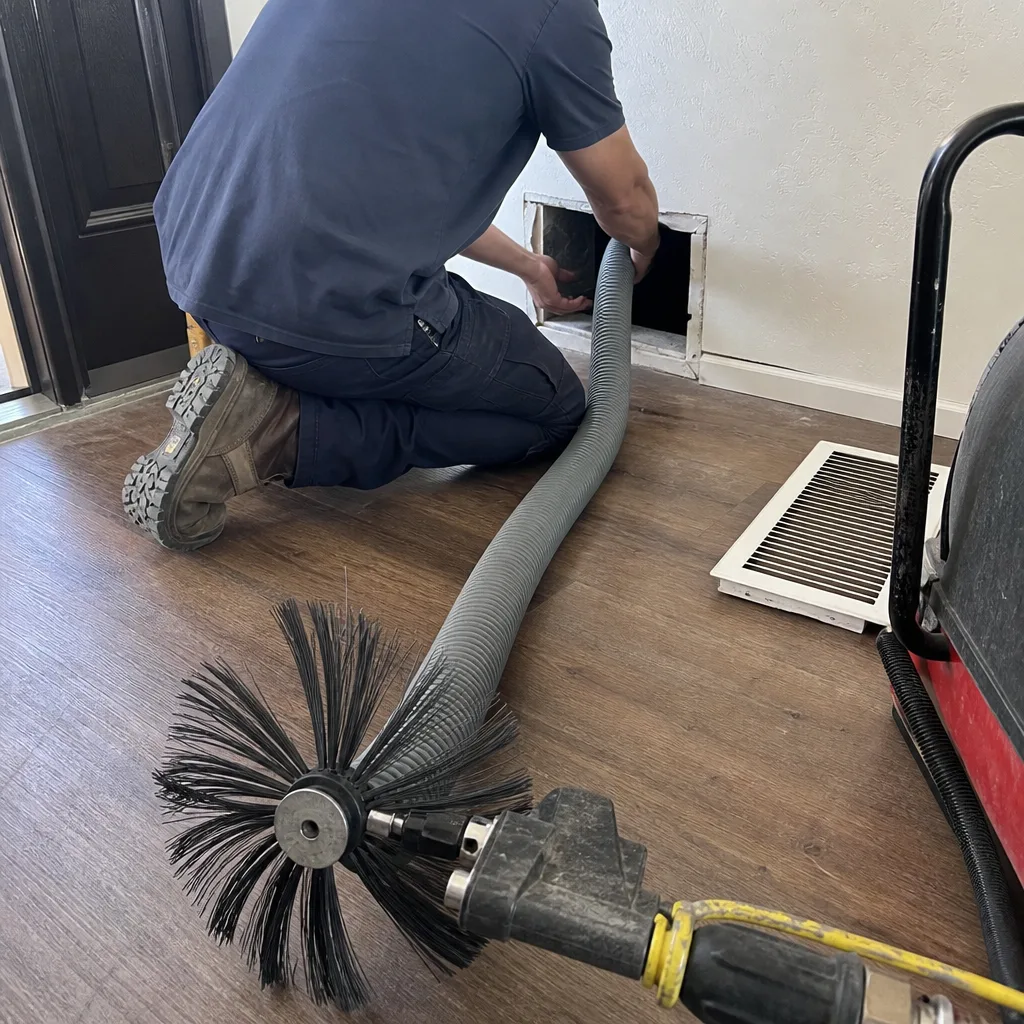
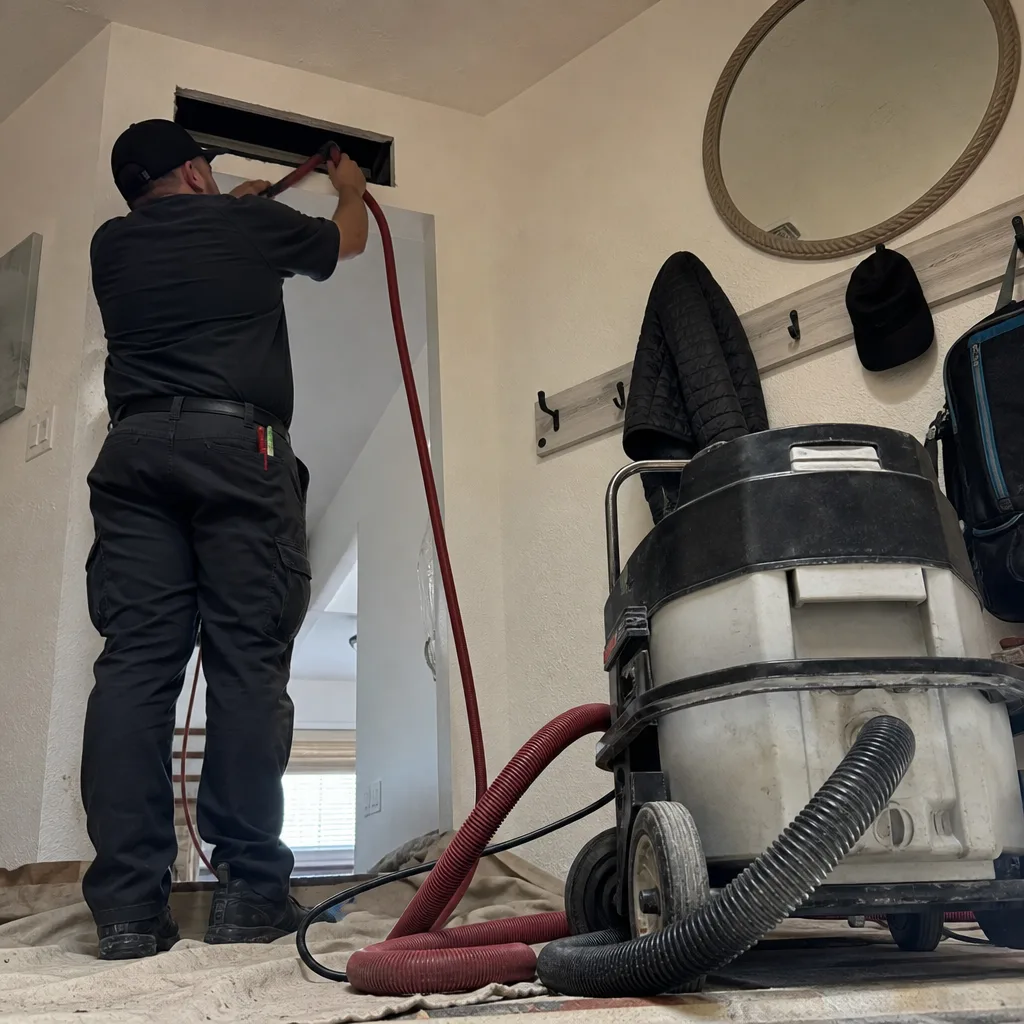
Our equipment matters to this conversation too. We run Rotobrush and Nikro negative-pressure extraction systems, which are the standard for professional duct cleaning. Cheap operators running a shop vac on a stick are not doing the same job at all, and their prices reflect that. Ask any company you’re considering what equipment they use and whether they can show you before-and-after photos from inside your own ductwork. A professional company will have answers to both.
For air duct repair in Ventura, the pricing is different because the work is different. A torn flex duct, a crushed return, or a disconnected boot costs what it costs based on the repair scope. What matters is that the repair price is written before work starts and that it comes with a written guarantee. Every repair we do includes a written guarantee, and if a covered repair fails, we come back at no charge.
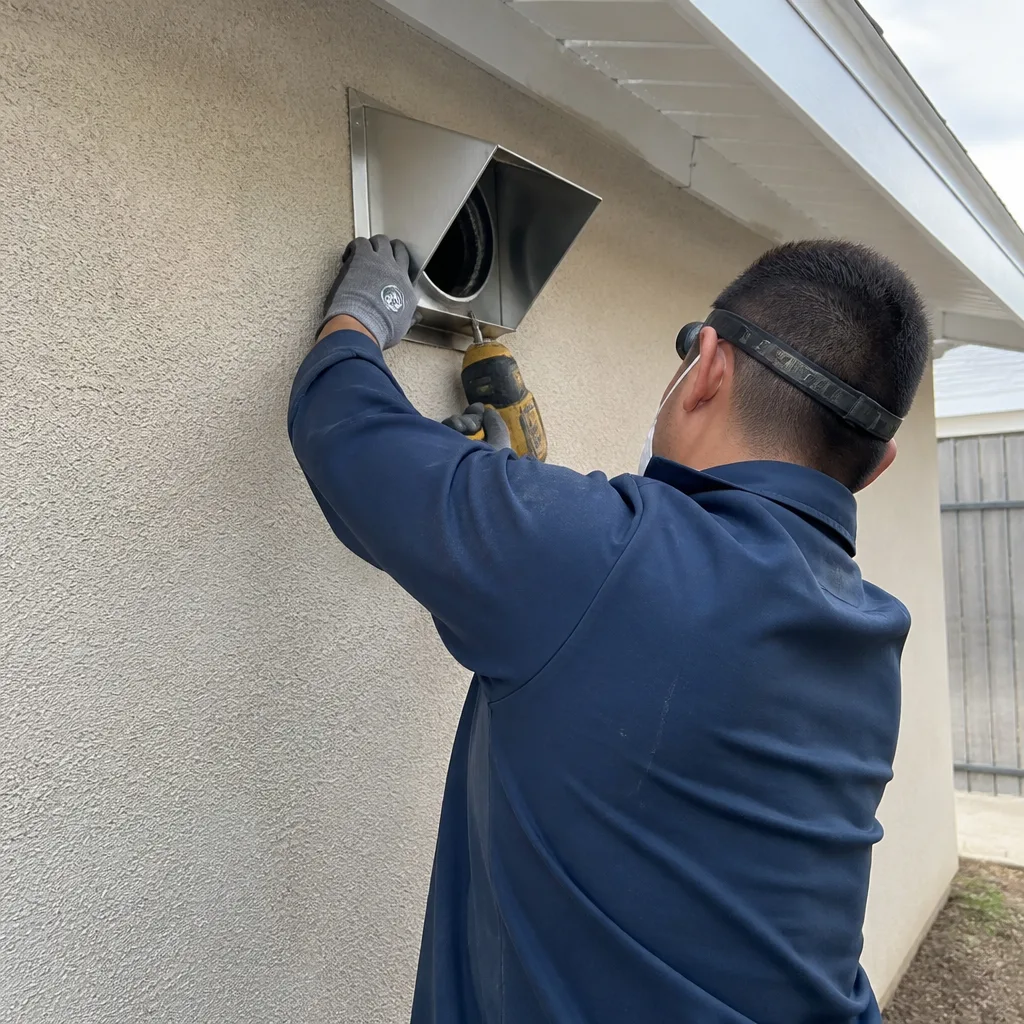
And dryer vent cleaning in Ventura should be on every homeowner’s radar too. Clogged dryer vents are a fire hazard and a drag on appliance efficiency. We include dryer vent cleaning as a standalone service with a written price, never as a last-minute add-on sprung on you during a duct cleaning appointment.
Common Mistakes to Avoid
- Using an annual-only mindset. Ventura’s conditions don’t align with a strict “once a year” calendar. Some years and some households need more or less. Let actual observations at registers guide you.
- Ignoring the first AC run of summer. The first warm week is your best diagnostic window. Run the system for 15 minutes and actually look at the air coming from registers. Most of what you need to know shows up right then.
- Waiting until a smoke event to think about smoke. If you wait until Santa Ana season to prepare, you’re already behind. Smoke particulate can infiltrate within hours. Have a plan for filter replacement and inspection before you need one.
- Confusing a new filter with a clean system. A filter catches particulate moving toward your HVAC equipment. It does not clean what has already settled inside duct runs. Different mechanism, different job.
- Choosing a duct cleaner on price alone. This is the trap the whole industry has set. Per-vent pricing and teaser coupons are structured to close the deal before the real price is revealed. Written whole-system pricing before work begins is the only reliable comparison point.
- Not factoring in renovation history. If you had work done, especially drywall or flooring work, your ducts got construction dust inside them. This dust won’t fully leave on its own. It continues circulating for years unless actively removed.
- Scheduling cleaning during peak outage windows. Calling for a cleaning in the middle of a July heat wave means waiting weeks. Shoulder-season booking, May or September, gets you service when you want it, not when a technician happens to have a cancellation.
See the difference
 Before
 After
After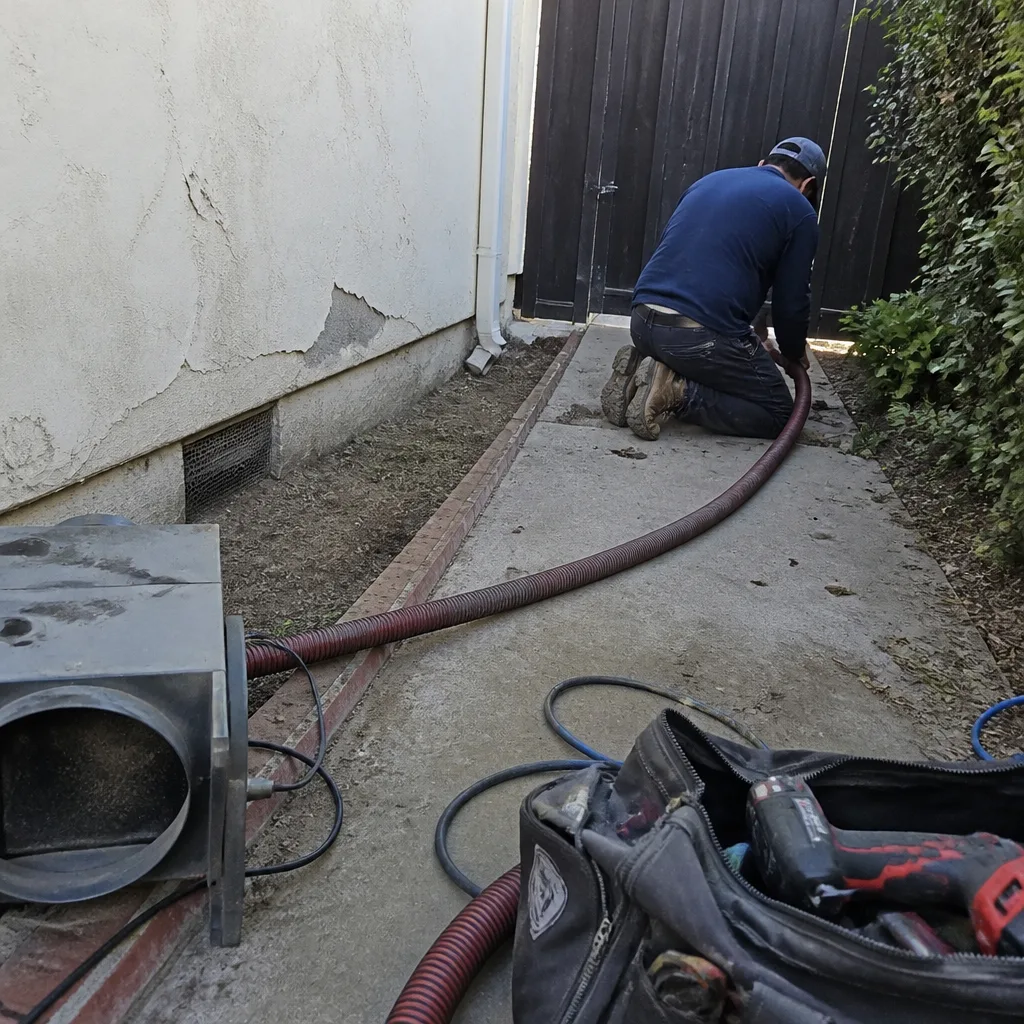 Before
 After
After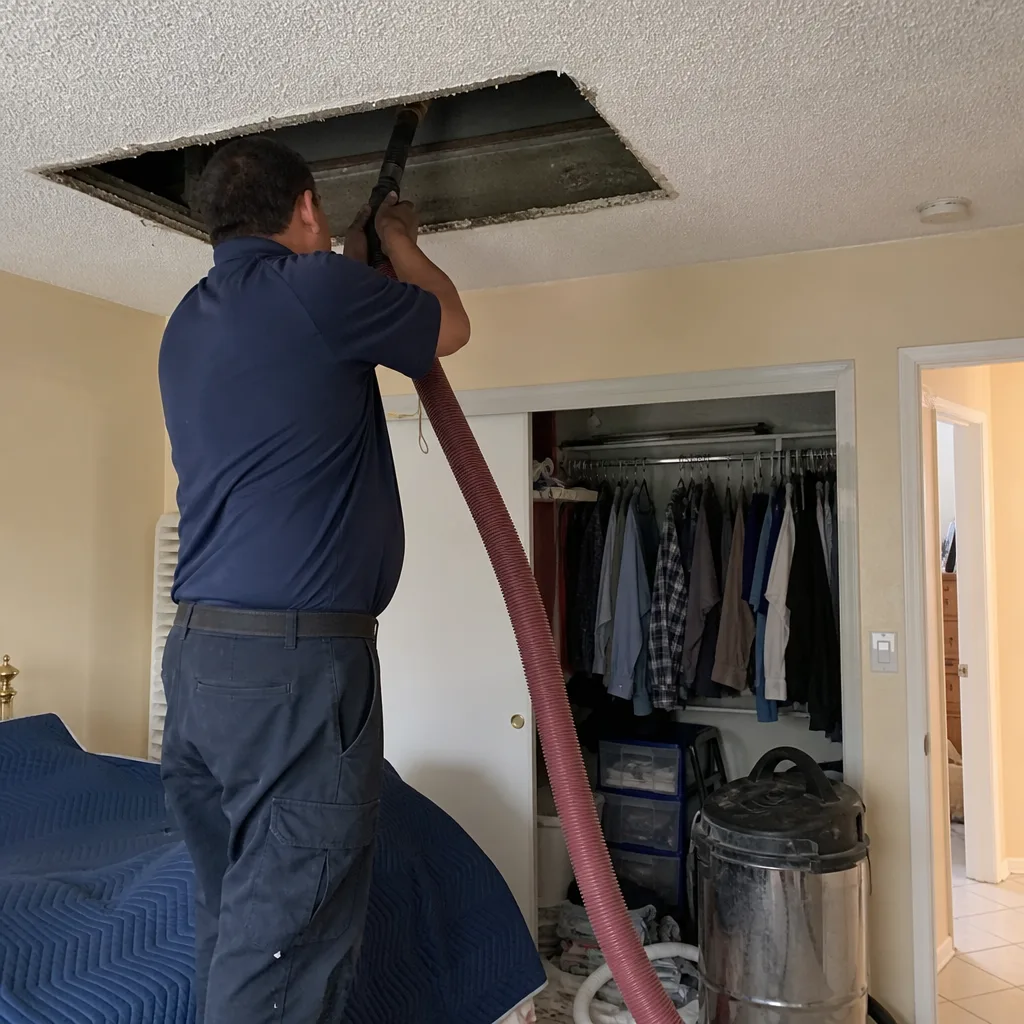 Before
 After
AfterWhen to Call a Professional
If you see visible particulate discharge from registers that continues beyond the first few minutes of system startup, call. If you smell smoke or musty odors from the supply air that don’t clear after a filter change, call. If certain rooms have dramatically different airflow than others, call. If you see visible growth inside any accessible duct opening, call immediately. If your home had a smoke event and you can smell it indoors weeks later, call. These are all conditions that homeowner-level maintenance cannot resolve.
Linden Air Duct Ventura offers free estimates in Ventura. Call (559) 315-0418 to schedule an inspection. We’ll show you what’s inside your ducts before we recommend anything at all.
Frequently Asked Questions
Most Ventura homes benefit from professional cleaning every 2 to 4 years, but this depends on household factors like pets, renovations, smoke exposure, and the age of the home. Homes in wildfire-prone areas or with allergy-sensitive occupants may need cleaning annually. The best way to know is a camera inspection that shows what’s actually accumulated inside your ducts. Call (559) 315-0418 for a free inspection and an honest recommendation.
Cheaper quotes usually come from operators using light-duty equipment, charging per-vent rates that expand on site, or both. The low price gets the van in your driveway, and the final invoice lands much higher. A whole-system written price before work starts protects you from this. Ventura homeowners who call (559) 315-0418 get a written price for the complete job before any equipment comes off the truck.
Ask for before-and-after photos from inside your own ductwork. Any professional company using proper negative-pressure extraction equipment should be able to show you camera images from inside the same duct runs before and after the work. If a company can’t or won’t show you internal photos, that’s a signal about what their equipment can actually do. We show every Ventura customer their own before-and-after images as a standard part of the job.
Yes. Smoke particulate is fine enough to enter through outside air intakes, door gaps, and the natural air exchange of your home. If your HVAC system runs during a smoke event, it actively pulls smoky air through return ducts and circulates it. Once smoke particulate settles inside ductwork, it stays until professionally removed. Call (559) 315-0418 for a smoke-exposure inspection if you’ve had significant wildfire smoke in your Ventura neighborhood.
April is slightly early but workable. The marine layer is still active, which means we’re cleaning in higher humidity conditions. Late May through early June is the sweet spot: the May Gray moisture has done its damage, and your first AC run is imminent. A cleaning in this window means the system starts summer clean. Call (559) 315-0418 to schedule a pre-summer inspection or get on our calendar for the season.
A seasonal check is what you do yourself: filter change, register cleaning, visual inspection of the first few inches of each accessible duct opening, and airflow comparison between rooms. A professional inspection uses camera equipment to see the full length of your duct runs, identifies what’s accumulated, and determines whether cleaning is justified. We’d rather show you that your ducts are clean than sell you a cleaning you don’t need. Call (559) 315-0418 to schedule either.
The Bottom Line
Ventura’s climate creates four distinct HVAC stress periods, and each one changes what collects inside your ductwork. Spring brings marine-layer moisture that binds dust. Summer’s first AC run dislodges months of settled particulate. Fall brings wildfire smoke risk that can embed odor compounds deep in the system. Winter’s infrequent cycling redistributes debris unevenly. Understanding these patterns tells you when to do simple DIY checks and when professional cleaning is genuinely justified-explore more guides & resources to stay ahead of each season. Book during shoulder seasons for better scheduling, expect whole-system written pricing, and don’t let a teaser rate become a surprise invoice. Your ducts work year-round in Ventura, and keeping them clean means matching your maintenance to the season you’re actually in.
Contact Linden Air Duct Ventura
If you’re ready to know exactly what’s inside your ducts, call (559) 315-0418 for a free estimate. We serve Ventura homeowners with written whole-system pricing before any work begins, technician introductions by name and photo before every visit, and a 365-Day Done Right Promise on every job. Live people answer our phones 24/7, and every repair comes with a written guarantee and a free second visit if it doesn’t hold. That’s the standard we’ve held since 2004.
Written by Marcus Veale, Owner at Linden Air Duct Ventura, serving Ventura since 2004.